


Quick Overview:
To download Amazon Music to a USB drive, you first need to save the songs in MP3 or another common audio format. There are two scenarios:
- For purchased Amazon Digital songs: You can download them as MP3 files directly from the Amazon Music Web Player.
- For streaming music: You’ll need to use a third-party tool, such as TuneFab Amazon Music Converter, to download and save the songs before transferring them to your USB drive.
100% Secure
100% Secure
To download Amazon Music to USB for playback, you need usable local audio files first. Purchased MP3 downloads and ordinary exported audio files can be copied to a flash drive. Subscription downloads saved inside the Amazon Music app cannot be copied for playback on a car stereo or USB music player directly, so it requires conversion before transfer.
In this guide, we’ll cover both methods, walk you through fixing common USB detection problems, and explain how to move your music from mobile devices to a USB so you can enjoy your playlists anywhere.
Which Amazon Music Files Can You Transfer?
Start by checking what you actually have. Amazon Music offers two types of content, and their transferability differs significantly:
1. Purchased Music (Direct Transfer Allowed): If you bought individual songs or albums, these are standard, unprotected files, like MP3s, saved on your computer. You have full ownership rights, meaning you can copy them directly to a USB drive and play them on any device without restrictions.
2. Streaming Music/Prime & Unlimited Downloads (Requires Third-Party Tools): Songs marked with the Prime or Unlimited logo are protected by DRM (Digital Rights Management). Even if you download them for offline listening inside the Amazon Music app, they are locked to that app. You cannot copy these files directly to a USB drive. To transfer these, you must use a third-party tool, like TuneFab Amazon Music Converter, to download Amazon Music and convert them into standard, unprotected formats first.
How to Download Streaming Amazon Prime Music to USB Stick
Therefore, if you have any favorite Amazon Prime Music songs want to download and save to a USB stick to enjoy more flexible offline playback, like playing Amazon Music on a car, you will need to remove DRM protection first. That means third-party software working to unlock Amazon Music DRM is a must. So in the following, the best required Amazon Music to USB converter, TuneFab Amazon Music Converter, will be recommended as the best choice for you.
TuneFab Amazon Music Converter is mainly developed for downloading streaming music from Amazon Music platforms. By adding the official Amazon Music Web Player inside the software, you can directly sign in with your music account, and choose all streaming music resources to convert Amazon Music to FLAC, MP3, M4A, WAV, or AIFF format, no matter if they are Amazon Music Prime, Amazon Music Unlimited, or Amazon Music HD songs.
While downloading these streaming resources, TuneFab Amazon Music Converter will also unlock DRM protection, so once you get the DRM-free music files, you can directly move them to your USB sticks without any limitations.
Step 1. Sign in Amazon Music Web Player
Firstly, after installing TuneFab Amazon Music Converter, open the software and enter its built-in Amazon Music Web Player. You need to sign in with your Amazon Music account in order to use its streaming and downloading functions.
Step 2. Select Amazon Music Free/Prime/Unlimited/HD Songs
After signing in, you can use the web player to find and stream Amazon Music online as usual. No matter for Amazon Music Free, Prime, Amazon Music Unlimited, or Amazon Music HD titles, you can stream them even without the premium plan subscriptions. Once find any of them you’d like to copy to the USB drive, just drag and drop them to the conversion list on the right side and get ready to download.
Step 3. Adjust Format and Quality
Now, you can choose the output format and quality to download Amazon Music to USB. When downloading music for USB playback, the format you choose affects both audio quality and device compatibility. Here is how the three most common formats compare:
- For maximum compatibility: Choose MP3.
- For the best balance of quality and size: Choose FLAC (if supported).
- For uncompromised studio quality: Choose WAV (if supported and storage space is not an issue).
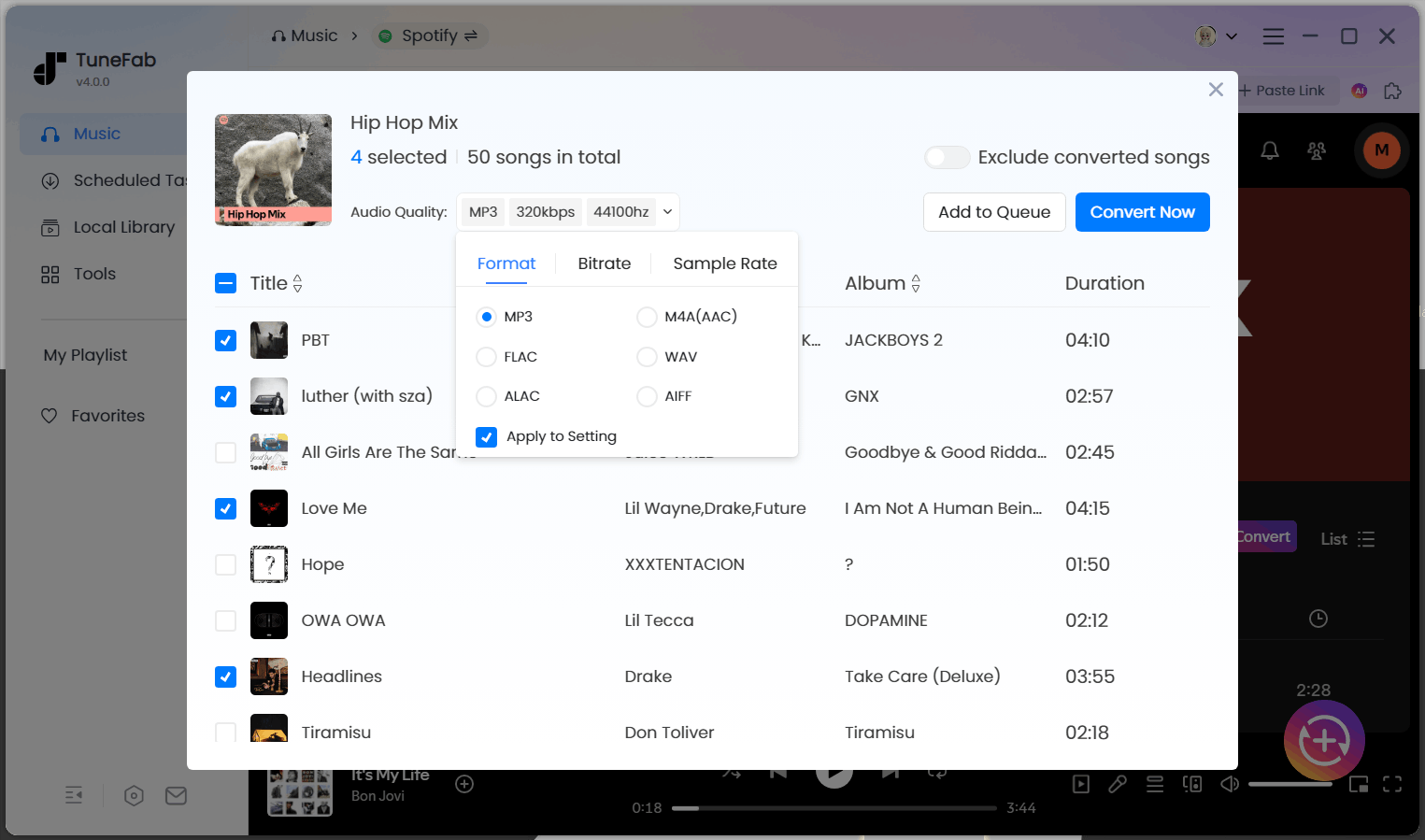
Step 4. Download Amazon Music As Common Music Files
After all settings are completed, you only need to click the "Convert All" button and TuneFab Amazon Music Converter will begin to batch download Amazon Music offline for you. Just wait for a minute, you can get all DRM-free Amazon Music Prime/Unlimited/HD songs saved in common formats without DRM protection.
Step 5. Copy Amazon Music to USB
Finally, just insert your USB stick into the computer. Once you open the folder, directly drag the downloaded Amazon Music to it, and then you can bring the USB drive everywhere and enjoy the playback without limitations!
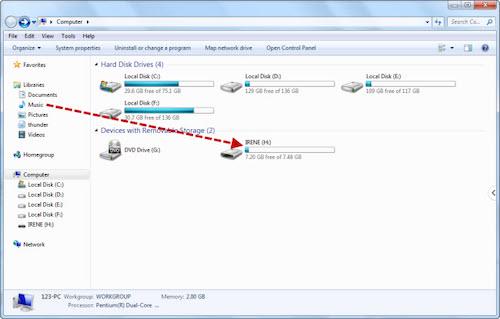
Tip: Organize Folders When Downloading with TuneFab Amazon Music Converter
When using TuneFab Amazon Music Converter to download your music, it allows you to organize your tracks into folders. Here is why this step is crucial for USB playback:
- Bypass Directory Limits: Many car stereos and media players have strict limits on how many files they can read in a single location. A simple folder structure, like a main "Music" folder with subfolders per album or playlist, prevents playback errors on these devices.
- Easier Browsing: Instead of a massive, cluttered list of files, organized folders make it much faster and easier to find the exact album or playlist you want to listen to while driving.
- Proper Sorting & Metadata: TuneFab allows you to keep important tags (track numbers, titles, artists) and use numbered filenames (e.g., "01 - Artist - Song.mp3"). This ensures your device displays and sorts the songs in the correct order, rather than randomly.
Pro Tip: Always test a few organized songs on your actual playback device, like your ca, before downloading your entire library. This confirms the device reads your folder structure and file formats correctly. Remember that the USB port must support media data, not just charging.
How to Export Purchased Music from Amazon Music to USB
As mentioned, if you purchase Amazon Music’s single music items, you can directly download them on your computer and then move to USB without installing any third-party software to help. Now, simply see the steps below to do it and play Amazon Music through USB later more conveniently.
Step 1. Firstly, use a web browser and go to Amazon Music’s webpage. You need to sign in with your Amazon Music account as well.
Step 2. Then go to "Library" and find those purchased items saved here.
Step 3. Select them and click the "Download" button on the top menu bar to download purchased Amazon Music immediately.
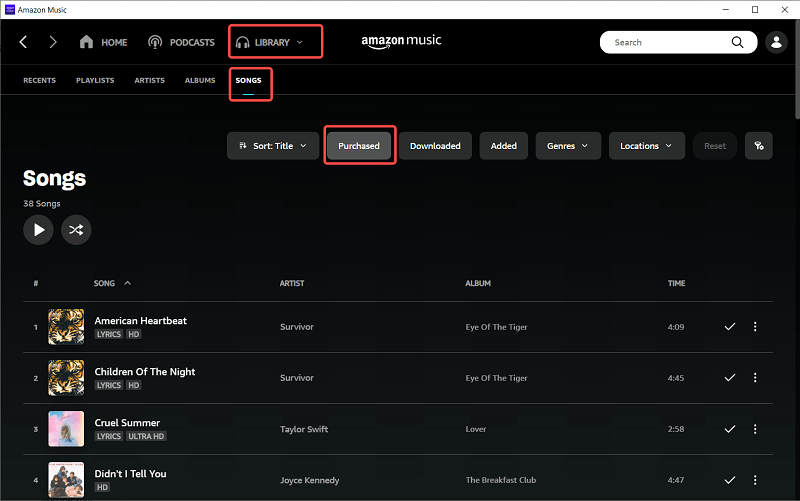
Step 4. When the download is completed, also insert the USB drive into your computer and directly copy Amazon Music to USB.
Something You Can Learn When You Move Amazon Music to USB Drives
Choose FAT32 or exFAT Based on the Device
Two different formats matter: the USB drive's file system and each song's audio format. Your car stereo, speaker, or media player must support both. The drive stores the files; the playback device decodes them.
Check the manual for your exact device model before changing the drive. Look for supported file systems, USB capacity, folder limits, and whether the USB port accepts music files.
| USB file system | File size consideration | When to use it |
| FAT32 | Each file must be smaller than 4 GiB, often described as a 4 GB limit. | When the playback device specifies FAT32. |
| exFAT | Supports individual files larger than FAT32's limit. | When the playback device explicitly supports exFAT. |
| NTFS or APFS | Computer access does not establish playback compatibility. | Only if the target device specifically supports the format. |
FAT32's limit applies to each file, not your total music collection. A drive can hold many songs whose combined size exceeds 4 GB. Microsoft's file system comparison documents the different limits.
To check the existing format, right-click the drive in Windows File Explorer and select Properties. On Mac, select the drive in Finder and choose File > Get Info. Disk Utility can also show its format.
If the drive is already compatible and working, keep its format. Reformat only when needed, after backing up its contents, because formatting erases data. On Mac, Disk Utility uses the labels MS-DOS (FAT) and ExFAT; Apple explains these options. Confirm the result matches the playback device's requirements.
Fix USB Detection and Car Playback Problems
First identify whether the device cannot detect the drive or can detect it but cannot play the songs. The checks are different. Work through the relevant row before changing formats or copying everything again.
| Problem | Check first | Next action |
| The computer cannot see the USB drive | Connection, adapter, and another USB port | Try another port or computer. If detected in Disk Management or Disk Utility, inspect its status before making changes. |
| The computer reads the drive, but the car does not | Media-capable port, file system, capacity, and device limits | Check the exact vehicle manual and test with a supported drive. |
| The drive appears, but no songs are listed | ZIP archives, shortcuts, audio support, and folder depth | Put a few actual, supported audio files in a simple folder or the root if the manual requires it. |
| Only some songs play | Encoding parameters, file damage, and indexing limits | Compare a failing file with a working one, test it on the computer, and recopy if needed. |
| Copying fails despite available space | Individual file size, write protection, and format | Check whether one file exceeds FAT32's limit or the drive is read-only. |
| Songs play in the wrong order | Filename sorting, track tags, and shuffle mode | Disable shuffle and adjust filenames or tags to match the device's sorting method. |
| Titles or artwork are missing | Metadata and player display support | Inspect the tags and check what the device can display. |
| Windows or Mac refuses to eject the drive | Open players, files, or background activity | Close applications using the drive, wait for activity to finish, and retry ejection. |
If the operating system asks to initialize or format a drive containing files you need, stop before accepting. Those actions can affect existing data. Back up or recover the files before making changes.
FAQ
Can You Download Amazon Music to a USB Wtihout Computer?
Yes. If you’ve purchased songs from Amazon Digital, you can open the Amazon Web Player in your mobile browser, sign in to your account, download the purchased tracks as MP3 files, and then transfer them to a USB drive.
If you want to download Amazon Prime Music or Amazon Music Unlimited streams to a USB, you’ll first need to use a third-party tool to convert the songs to MP3 before transferring them.
To move already-downloaded MP3s from a mobile device to a USB drive:
- Android – Use an OTG (On-The-Go) adapter to connect the USB drive to your phone, then move the files over.
- iOS – If your iPhone or iPad has a Lightning port (common on most non–USB-C Apple devices), use a Lightning-to-USB adapter to connect the USB drive, camera, or other USB devices.
Related Reading:
How to Download Amazon Music to iPhone [2025 Full Solutions]
Should I Use FAT32 or exFAT for Music?
Use the file system specified by your playback device. FAT32 has a single-file limit just below 4 GiB; exFAT supports larger individual files. Neither choice guarantees compatibility with every car or speaker.
Does Copying Music to USB Reduce Audio Quality?
A normal file copy does not re-encode the audio or reduce its quality. Any quality change would come from earlier conversion, a damaged file, or playback differences. Keep the original files while testing your setup.
Conclusion
No matter what type of Amazon Music, you now can download and export them to save on your USB stick! For purchased Amazon Music items, simply sign in to your library and you can download from the official. But for streaming Amazon Music Prime/Unlimited/HD titles, you need help from a powerful third-party downloader, TuneFab Amazon Music Converter. Now, based on your needs and follow the guide to download Amazon Music to USB immediately!

