


You can download Amazon Music to an SD card through the app's storage settings where supported, or copy ordinary audio files to a card using Android or a computer. The first route stores app-managed offline content for listening in Amazon Music. The second puts local files on the card for a compatible music player.
Choose based on where you want to listen. To free phone storage while using Amazon Music, start with Path 1: Choose SD storage inside Amazon Music. To load a card for another player, start with Path 2: Use TumeFab Amazon Music Converter to copy local audio files to an SD card.
Related Article:
How to Download Amazon Music on Any Device [Ultimate Guide]
How to Convert Amazon Prime M4A to MP3 (Full Guide)
Part 1. Choose SD Storage Inside Amazon Music App to Save Amazon Music to SD Card Directly
When you download Amazon Music on an Android device, if you let the app download to internal storage by default, it can easily fill up your storage and make your phone lag. If you want to manage your storage, switching the download location to an SD card is your best bet.
Check Your Device and SD Card First:
Confirm that your phone, tablet, or player has a working SD or microSD slot. Check its manual for supported card types and maximum capacity. A card that works in a computer may still be incompatible with a particular phone or player.
On Android, open the device's storage settings and confirm the card is detected. Then check whether it is configured as portable storage or internal storage. Menu names vary by manufacturer.
| Storage mode | What it means for music |
| Portable storage | Suitable for storing ordinary files and moving the card between compatible devices. |
| Internal or adoptable storage | The card becomes part of that Android device's storage. Do not assume a computer or another player can read it. |
Android's SD card setup guide explains these modes. Adopted storage is formatted and encrypted for one device, according to the Android platform documentation. If you plan to remove the card for another player, check its mode before copying music.
Keep a backup before changing storage modes or formatting. You do not need to reformat a compatible card that is already working.
Step 1. Run the Amazon Music app on your mobile phone and tap "My Music" in the bottom menu.
Step 2. Select "Settings" and then choose "Storage" options.
Step 3. Select SD card to be the storage path.

Amazon's offline download guidance confirms that subscription downloads remain accessible within Amazon Music and cannot be exported for playback in other apps or devices. SD storage changes where supported content is stored, not those playback rules.
Part 2. Download and Copy Local Audio Files to an SD Card
Use this route for an Android local music player or a dedicated player with a card slot. You need ordinary audio files that play outside Amazon Music. Copying subscription download folders does not turn their contents into transferable MP3s.
TuneFab Amazon Music Converter is a reliable tool to remove DRM from Amazon Music and convert Amazon Prime/Unlimited music to multiple formats including the common MP3, WAV, and FLAC. During the music conversion process, the converting speed can reach 35X faster while keeping the original quality of Amazon songs. These downloaded Amazon music can also be saved with ID3 information, including titles, artists, and albums, making it easier for you to manage your music collection.
The Key Features of TuneFab Amazon Music Converter:
● Mainstream output formats: It can convert almost all the Amazon Music files (playlist/album/song/podcast) to commonly used audio formats, including MP3, M4A, WAV and FLAC.
● Output parameters can be adjusted flexibly: To make sure you get high-quality output files, TuneFab Amazon Music Converter allows you to customize SampleRate and Bitrate based on personal preference.
● Original ID3 Tags can be preserved well: In order to have better management of these downloaded files later, the program can help you save the ID3 information to check back offline.
● 35X conversion speed and batch conversion: According to the actual network condition and the computer performance itself, the converting speed can be up to 35X, and even the function of batch conversion can be offered to save your time.
● Converted sound quality can remain at its origin: Ensuring you have a better offline music experience, the tool retains the Amazon Music HD sound quality to the maximum extent.
● Easy operation and user-friendly interface: You can download and convert Amazon Music without installing Amazon Music software, and the conversion steps are quite simple even if you are a beginner.
● Cater to Prime users and Free users: TuneFab allows both Amazon Prime users and Free users to enjoy resources of Amazon music, letting you freely access and download your favourite Amazon songs.
How to Download Amazon Music via TuneFab
Step 1. Download and Launch TuneFab Amazon Music Converter
After you launch TuneFab Amazon Music Converter, please sign in to your Amazon account if you have had one or create one to log in. The converter will fail to convert the songs without getting access to the Amazon Music library.
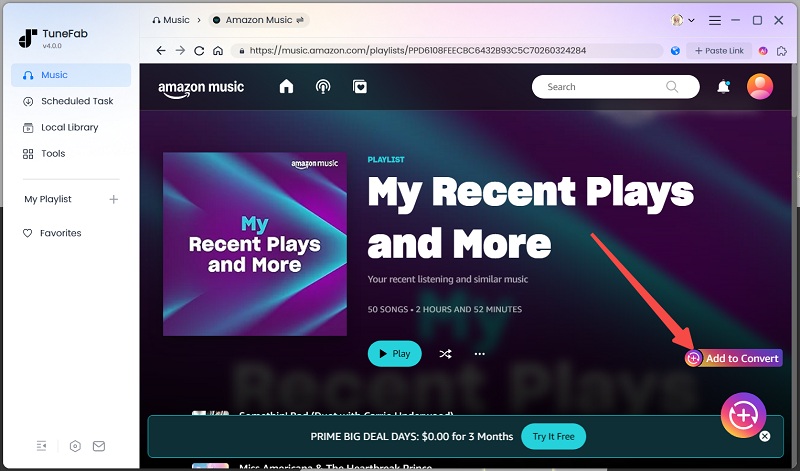
Step 2. Choose A Playlist to Convert
After you sign in to your account and finish the settings, you can begin to choose a playlist that you want to download and add songs to the convertion list.
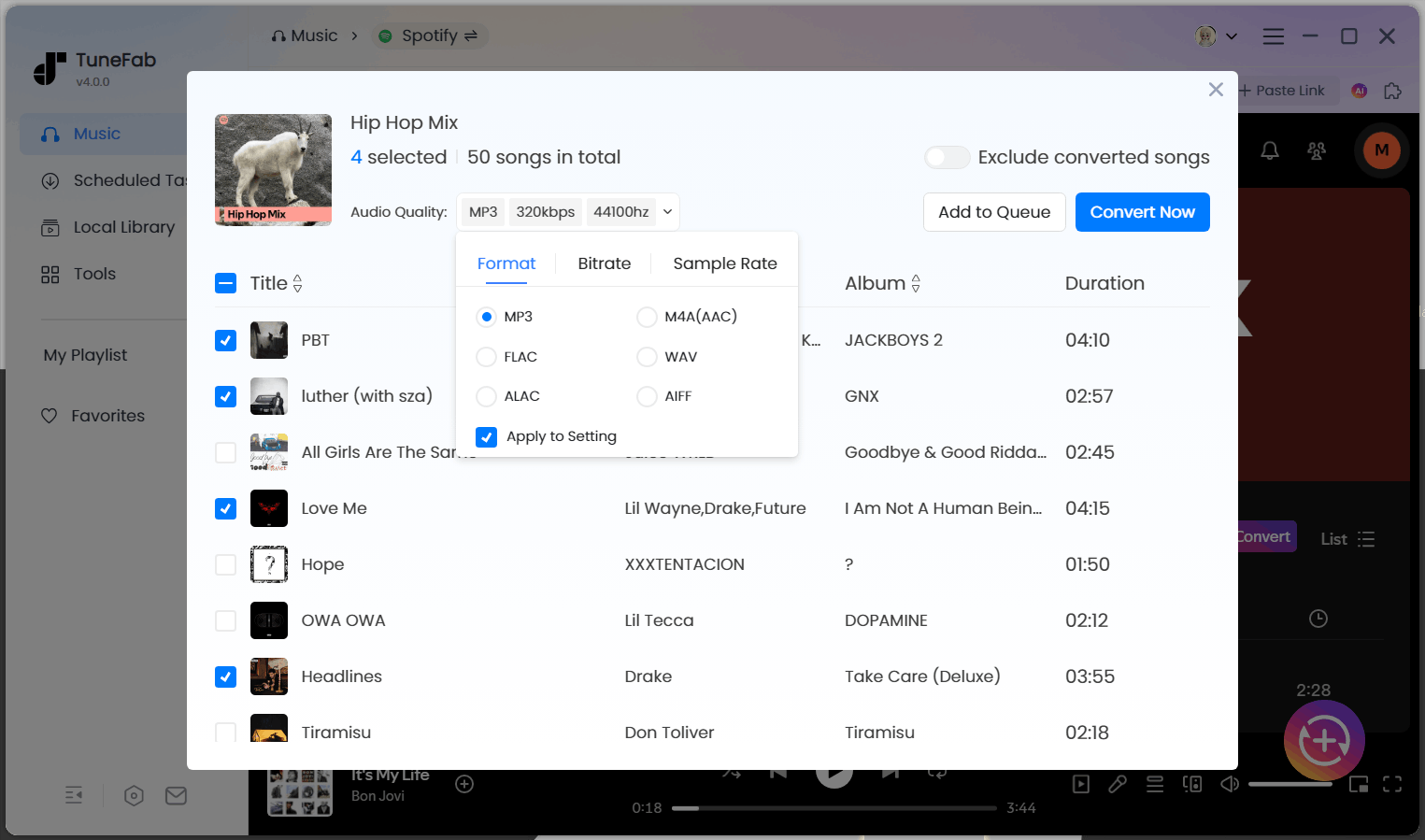
Step 3. Set Output Folder and Output Format
When you finish selecting and adding the playlist to the converting list, you can choose a new output location of the converting window. The output format can be for each song or changed for all at the top-right of the page.
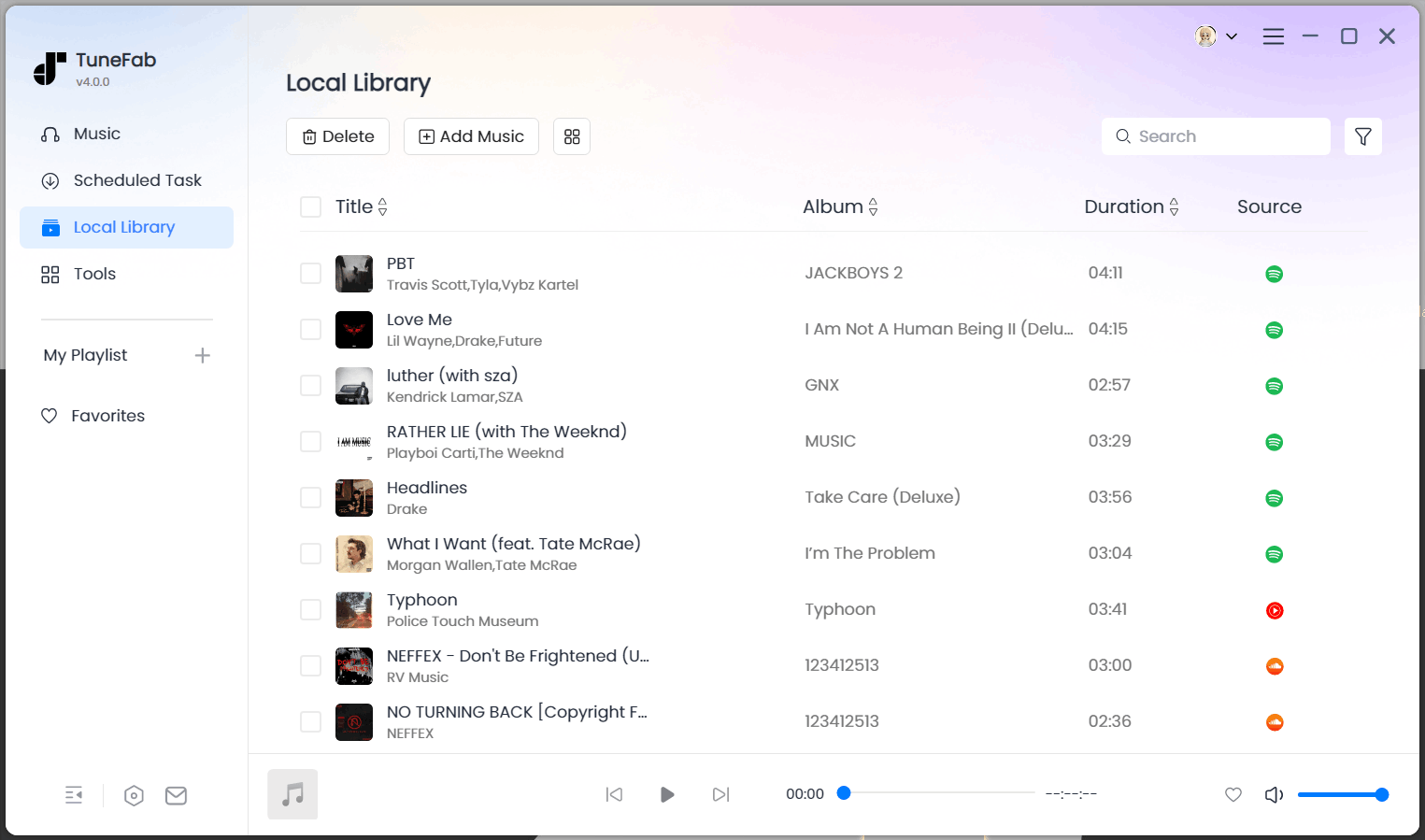
Step 4. Convert Amazon Music Songs
After all preparation is done, just wait for the conversion to be completed. Songs that are successfully converted will be placed in the "Finished" column. You can click “View Output File” to check the offline files on your device.
How to Save Converted Amazon Music to SD Card
When you have converted and downloaded the songs to your computer, you can now save converted Amazon Prime/Unlimited Music to an SD card or to any other devices you like. Here is the detailed guide on how to move the music files to the SD card.
Step 1. Insert the SD card into your computer via a card reader.
Step 2. Find the downloaded Amazon music folder on your computer.
Step 3. Right-click to copy and paste all the Amazon songs to the SD card folder.
With all the steps done, you are now successfully finishing the whole process of downloading Amazon Music to SD card.
Learn Some Tips If Needed
What to Do If the SD Storage Option is Missing?
Check whether Android can see the card, restart the device, and update Amazon Music. Reopen the app's settings and check its available options. If Android detects the card but Amazon Music still offers no SD destination, your current device or app configuration may not support this route.
Granting extra permissions does not create a storage setting that the app does not provide. Do not move its private download folders with a file manager. For further help, record your device model, Android version, Amazon Music version, and the storage option shown before contacting support.
How to Handle Downloads Already in Internal Storage?
Changing the destination for new downloads does not move existing downloads. Check whether your app explicitly offers a transfer function. If it does, follow the on-screen instructions and verify playback afterward.
If there is no transfer option, first test the new location with one downloaded item. When that works, remove the old device download through Amazon Music and download it again. Choose the action that removes the offline copy, rather than deleting the item from your library. Avoid removing your entire offline collection before the test succeeds.
Some app data may remain in internal storage even when music uses the SD card. Moving the app installation itself is also a separate operation from changing where it stores downloads.
How to Fix SD Card Storage and Read Errors?
Check the card's file system against the phone or player's requirements. FAT32 has an individual-file limit just below 4 GiB, commonly described as 4 GB. exFAT supports larger individual files, but the destination device must support it. Neither the file system nor the card's capacity alone guarantees compatibility.
On Windows, inspect the card's Properties in File Explorer. On Mac, use Get Info or Disk Utility. Reformat only when required and after backing up its contents. A computer prompt to format or initialize a card is not proof that its existing files can be discarded.
Use the symptom to choose the next check:
| What happens | Check first | Next step |
| Android cannot detect the card | Seating, card type, capacity, and device support | Follow the device's removal procedure, then test the card with another compatible reader. |
| Android sees the card, but Amazon Music has no SD option | App settings, version, and storage mode | Update and recheck. If unsupported, use internal app storage or ordinary local files for another player. |
| Internal storage keeps growing after selecting SD | Old downloads, new downloads, and other app data | Test one new download and compare storage use before removing existing content. |
| Files are visible, but the player lists no songs | Folder access, permissions, format, and indexing | Open one file directly, select the music folder, and rescan. |
| Only some songs play | Encoding parameters or incomplete files | Compare a failing file with a working one and recopy if needed. |
| Copying fails despite free space | Individual file size, read-only status, or card errors | Check FAT32's file limit and any lock switch on a full-size SD adapter. |
| The reader works, but the player rejects the card | Card capacity, file system, and device limits | Check the exact player's manual and test a supported card. |
| Files disappear or reads fail repeatedly | Reader connection and card reliability | Back up readable files, test another reader, and avoid relying on the card until resolved. |
A small playback test is more useful than repeatedly copying the whole library. Resolve the failure with a few files first, then transfer the rest.
FAQs about Amazon Music on SD cards
Q1: Why Amazon Music Won't Download to SD Card?
If you have met such a difficulty, you can follow the below instructions to get it fixed.
1. Make sure you have set the SD card as the storage path.
2. Ensure there is free space on your SD card.
3. Check your settings to make sure the Amazon Music app has the necessary permissions to access and write on your SD card.
4. Update the Amazon Music app to the latest version.
5. Remove and reinsert the SD card to your device.
Q2: How to Play Local Music from SD Card on Amazon Music?
Yes. You just need to check out the following steps.
1. Click the top-right corner and you will find your account and "Settings".
2. Go to the "Settings" column and find the "Music Management" list.
3. Find the option “Automatically Import Music From” and choose it.
4. Tap “Select Folder” button and choose your SD card folder to be the import folder.
After that, the songs already downloaded to your SD card will appear in the Amazon Music Library, and you can play them on Amazon Music.
Q3: Does Changing the Download Location Move Existing Downloads?
Not necessarily. Check for an explicit transfer feature. If none is available, verify a small new download uses the selected location before removing and downloading old offline copies again through the app.
Q4: Can Another Player Use Amazon Music Downloads Stored on an SD Card?
Subscription offline content remains managed by Amazon Music, even on a card. Other players need ordinary local audio files they can access and decode. Purchased MP3 downloads and usable exports follow the manual-copy route.
Q5: Should I Use Portable or Internal Storage?
For moving ordinary music files between devices, use a supported portable card setup. Internal or adoptable storage is tied to the Android device and is not an interchangeable music card. Back up your files before changing modes.
Q6: Does SD Storage Free All the Space Used by Amazon Music?
No. The app installation and some data may remain in internal storage. Existing downloads may also remain there unless explicitly transferred or downloaded again to the selected destination. Check actual usage after a small test.
Q7: Do I Need to Format the Card Before Copying Music?
Only if its existing setup does not meet the destination device's requirements or a diagnosed problem requires it. A working, compatible card can be used as it is. Formatting erases its contents, so back them up first.
Choose app-managed SD storage for Amazon Music listening where supported, or copy ordinary files for a compatible local player. Verify the destination with a few songs, keep a backup, and expand your collection once storage and playback both work.
Conclusion
This post presents 2 trustworthy ways to download and save Amazon music to SD card. For Prime/Unlimited members, you can directly save your favorite Amazon songs to SD card by changing the storage path to the SD card. If you want to save the downloads even after your subscription ends or you are an Amazon free user, TuneFab Amazon Music Converter will be an optimal solution, due to its versatility in converting Amazon music to diverse formats, like MP3, while preserving lossless quality and ID3 tags. Don't hesitate to give it a go with TuneFab! Unlock the freedom to get a massive music collection!

