


Have you ever wondered how to edit Spotify playlists to create the perfect mix for every mood? You may want to remove a song that just doesn't fit, rearrange tracks for a smoother flow, or even edit Spotify songs for more advanced customization. Whatever your reason, you're in the right place. This guide will walk you through everything you need about how to edit Spotify playlists and songs on desktop and mobile, helping you curate the ultimate listening experience.
Why Edit Spotify Playlists and Songs?
Editing your Spotify playlists and songs is all about taking control of your music and making it truly yours. Whether you want to edit Spotify songs for video use or simply customize a Spotify playlist, personalization helps improve your experience. Here’s why you should consider editing your Spotify playlists and songs regularly:
- Reflect Your Unique Taste: Editing allows you to curate the perfect soundtrack for any mood or activity, making sure your playlists reflect your unique preferences.
- Enhance Your Listening Experience: By removing tracks or rearranging songs on Spotify playlists, you can create smoother transitions and better flow. This eliminates interruptions from songs you no longer like and significantly improves your overall listening experience.
- Keep Your Playlists Fresh: Regular updates are key to effective Spotify playlist management. Adding new favorites, deleting overplayed tracks, and even updating playlist covers or descriptions can keep your playlists fresh and engaging.
How to Edit Spotify Playlists on Desktop and Mobile (11 Easy Ways)
Ready to edit Spotify playlist and take control of your music? Whether you are using the desktop software, the mobile app, or the web player, managing Spotify playlists is simpler than you might expect. Based on our testing and community user suggestions, below are effective ways to tailor your music library to your preferences.
1. Create a Playlist
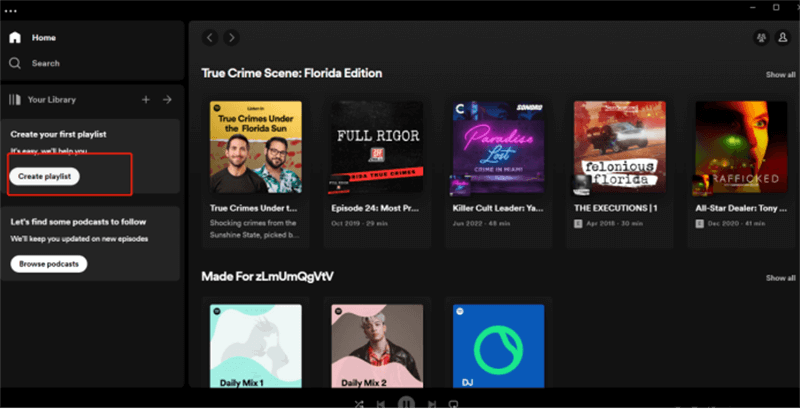
To create a new playlist on Spotify, click the "+" (Create Playlist) button in the left sidebar on desktop, or tap "+" at the bottom bar on mobile.
Once created, give your playlist a name that reflects its vibe or purpose, like workout, study, or travel, and add a description if you'd like to provide more context. Then, start adding songs by searching or dragging tracks directly into the playlist area.
2. Add Songs to a Playlist
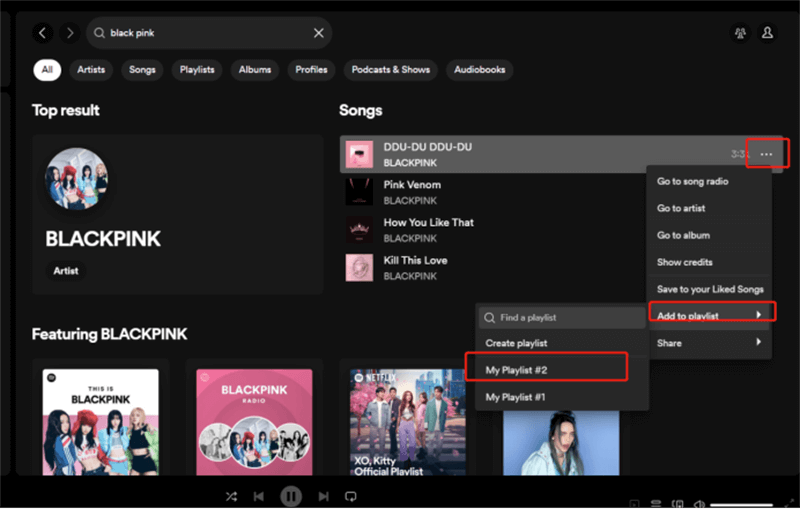
To edit Spotify playlists with new songs, locate the desired song in Spotify, click the three dots next to it, and select "Add to Playlist." Then, choose the specific playlist you want to add the song to.
You can also add songs directly to your Liked Songs by clicking the "+" icon next to the track name in the tracklist on desktop/web player or in the "Now Playing" view on mobile.
3. Add Songs to Spotify Playlist that Isn't Yours
If you want to add songs to a Spotify playlist you do not own, the first thing is to make sure the owner has enabled the Collaborative feature. This way, you can effortlessly edit the Spotify playlist using the standard method.
For non-collaborative playlists, you cannot edit directly. Here is a workaround for the desktop software and web player:
Step 1. Open your wanted playlist owned by others.
Step 2. Use the desktop shortcut Ctrl+A (Windows) or Cmd+A (Mac) to select all songs. Then, drag them to your new playlist.
Step 3. Add songs to the playlist.
4. Create a Collaborative Playlist
What if you want to manage a Spotify playlist with your friends? The built-in Collaborative feature helps. Here is how to make a collaborative playlist on Spotify.
On Desktop & Web Player
Step 1. Open your playlist.
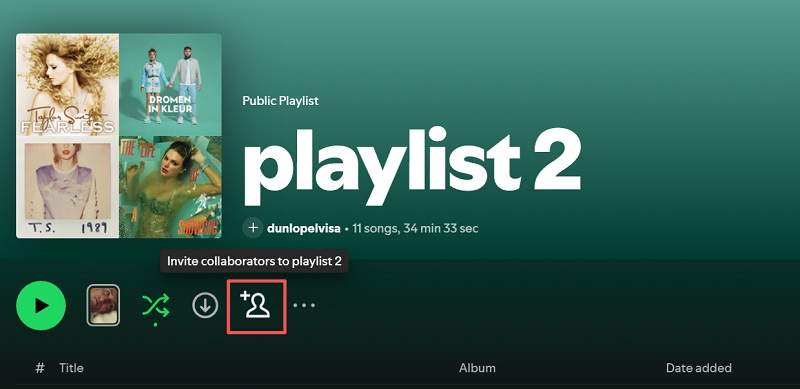
Step 2. Click the "Invite collaborators to" icon.
Step 3. Share the copied invite link with your friend.
On Mobile
Step 1. Go to your playlist in the "Your Library" tab.
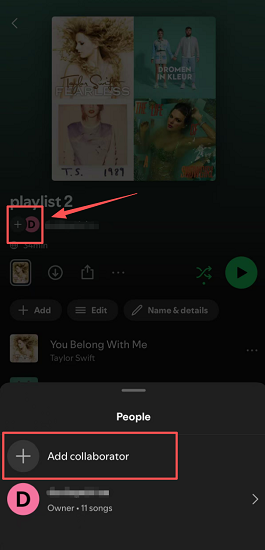
Step 2. Tap on the "+" icon under the playlist title and choose "Add collaborator".
Step 3. Send the invitation message to others.
5. Reorder Spotify Playlist
You may want to group songs with similar tempo or mood to avoid abrupt genre transitions by rearranging songs on a Spotify playlist.
On Desktop/Web Player:
- You can directly click and drag them into your desired order.
- Alternatively, you can use the "Sort" dropdown menu in the top right to organize by: Title, Artist, Album, Recently added, and Duration.
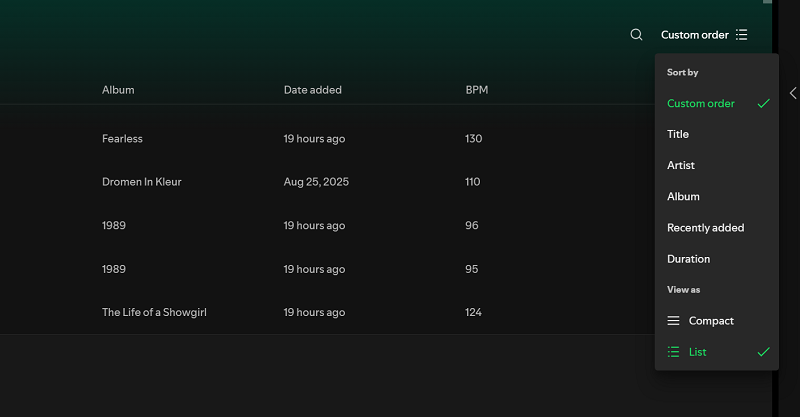
On Mobile:
Open the playlist and tap the "Edit". Then, press and hold the three-line icon on the right of the song and drag it to the new order.
6. Organize Created Playlists Using a Folder (Desktop Only)
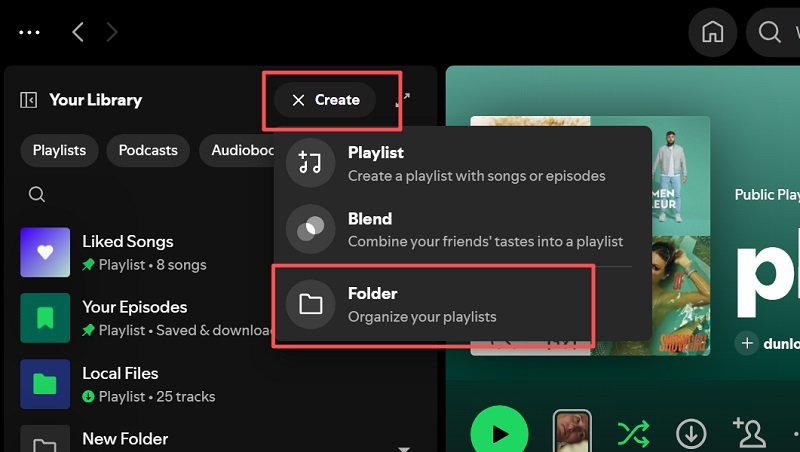
If you have a large music library with a bunch of playlists, it is advisable to organize them into folders by specific categories like commute, travel, running, etc. This can greatly improve Spotify playlist management.
Step 1. Open the Spotify desktop app or web player and click the "+" icon in "Your Library".
Step 2. Choose "Create a playlist folder" and name it according to your preference.
Step 3. Drag and drop playlists into the folder.
7. Use Smart Reorder to Rearrange Mixed Playlists (Premium Only)
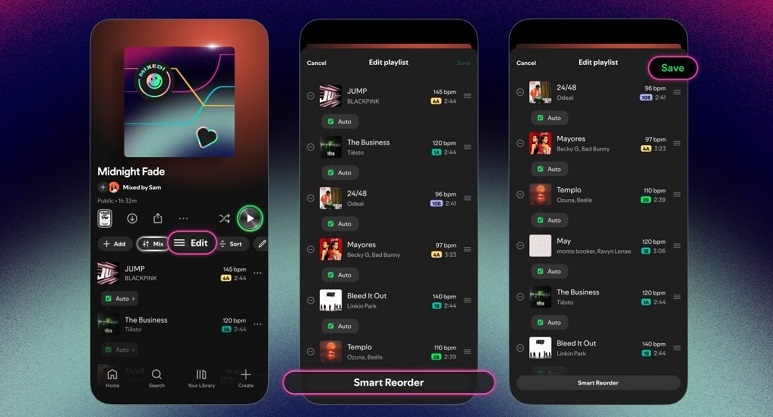
Last year, Spotify introduced its AI-driven "Mix" feature, offering presets like "Fade" or "Rise" to create smoother transitions between tracks. In 2026, the new "Smart Reorder" feature takes your listening experience to the next level. Once enabled, it intelligently rearranges mixed playlists based on BPM and key, ensuring a better flow. Here is how to use it:
Note. This feature is currently available on the mobile app only.
Step 1. Open a Spotify playlist and tap "Mix" to select your preferred transition style.
Step 2. Select "Edit" > "Smart Reorder." Your Spotify playlist will then be automatically rearranged.
8. Remove Songs from a Playlist
To remove a song from a playlist, simply hover over the song and click the three dots that appear. Then, select "Remove from this Playlist."
9. Edit Playlist Name and Description
You can rename your playlist and update its description to improve organization.
Step 1. Open the playlist, click the three-dots menu, and click "Edit Details" on desktop or "Name & details" on mobile.
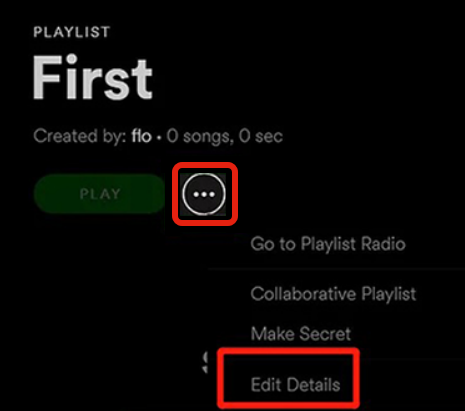
Step 2. Edit Spotify playlist name with keywords like mode, activity, genre, etc, making it easier to manage. You can also edit the playlist description. After that, select "Save" to confirm your changes.

10. Change Playlist Cover Image
To edit Spotify playlist covers, here are two viable methods:
Method 1. Hover over the current playlist cover, click on it, and then select a new image from your computer.
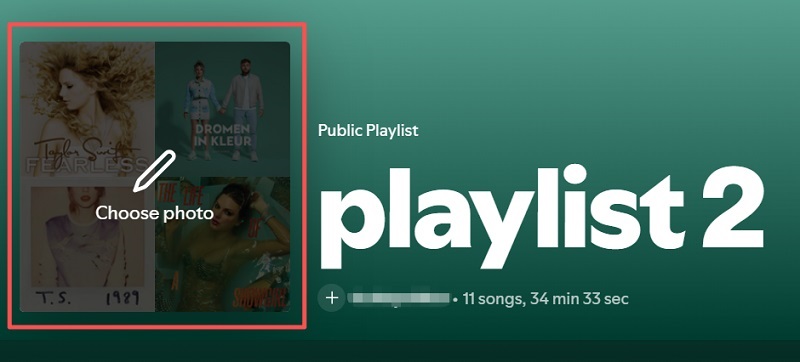
Method 2. Spotify uses the cover art of the first four songs in your playlist to generate the playlist cover image. Therefore, you can rearrange the top four tracks to change the grid.
11. Add Local Files to Spotify Playlists
Sometimes, the song you want isn't on Spotify. In this case, you can edit a Spotify playlist by adding your own local audio files. Supported formats include MP3, MP4, M4A, and FLAC.
On Desktop
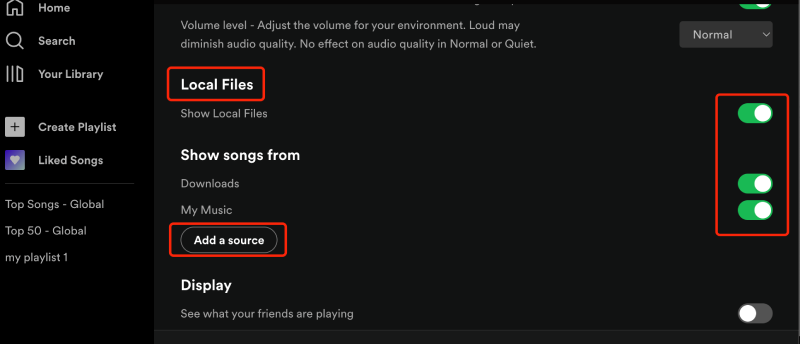
Step 1. Open the Spotify app on your computer and click your profile icon to go to "Settings".
Step 2. Toggle on the option of "Show Local Files".
Step 3. Click "Add a source" to upload a folder containing your local audio files to Spotify.
Step 4. Navigate to "Your Library" > "Local Files". Then, add these songs to your wanted playlist.
On Mobile
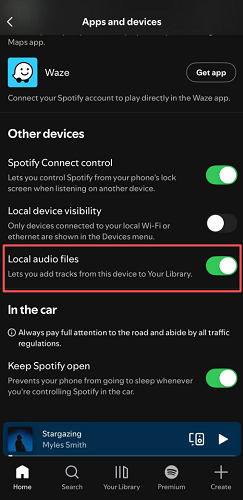
Step 1. Tap on your profile icon and go to "Settings and privacy" > "Apps and devices".
Step 2. Enable "Local audio files". Then, Spotify will automatically find and add any playable local audio files on your mobile device.
How to Edit Spotify Songs (Step-by-Step Guide)
For the best listening experience, you might want to edit Spotify songs as well. However, it is important to know that Spotify does not support directly editing or modifying songs within its app due to DRM protection and copyright restrictions.
If you want to trim Spotify songs, remix tracks, or use Spotify music in video editing, you'd better convert music to common formats using professional tools. Below is a proven method widely used on PC and Mac.
Process 1. Download Spotify Songs to Computer:
To edit songs from Spotify without limitations, the first step is to make them editable outside Spotify. This is where TuneFab Spotify Music Converter comes in handy on Windows and Mac.
Whether you are a Free or Premium user, it helps effortlessly download music from Spotify to MP3 and other common audio formats with original audio quality for a premium listening experience. Once converted, you can keep your music permanently and edit Spotify music offline with tools like Audacity without restrictions.
Key Features of TuneFab Spotify Music Converter
- Convert Spotify songs to MP3, M4A, WAV, FLAC, AIFF, AAC, and ALAC.
- Support 35X faster batch conversion for Spotify playlists and albums.
- Preserve original audio quality, up to lossless or 320kbps MP3.
- Keep full ID3 tags for better Spotify playlist management and organization.
- Include the official Spotify web player to ensure seamless conversion.
Ready to unlock your Spotify music? Follow these simple steps with TuneFab Spotify Music Converter:
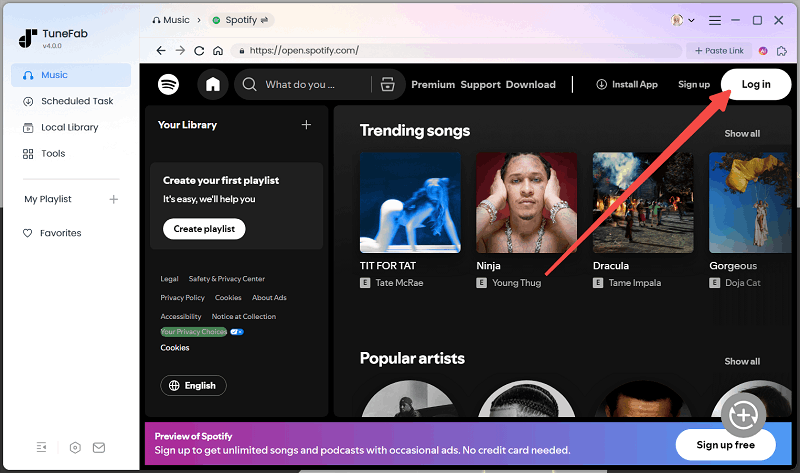
Step 1. Launch TuneFab and Sign In to Spotify
Run TuneFab Spotify Music Converter on your Windows or Mac. Enter the built-in Spotify web player and sign in to your Spotify account to access the full music library.
Step 2. Choose Songs or Playlists You Want to Convert
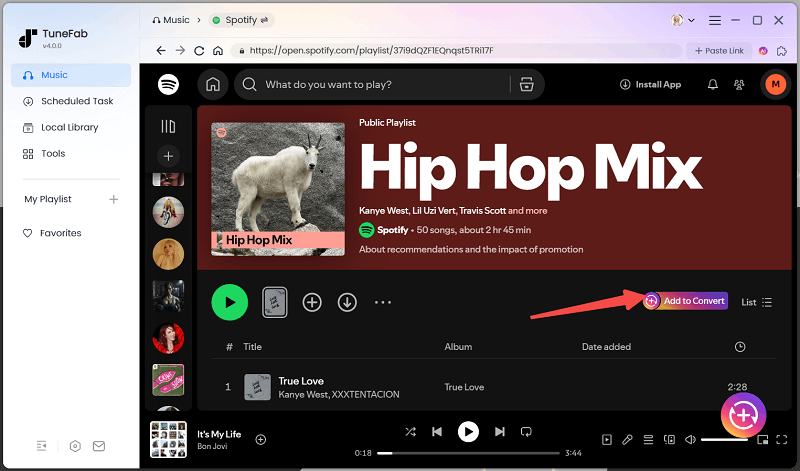
Browse your library or use the search bar to find the music you want to edit. Click "Add (to Convert)" or "+" to add it to the conversion queue.
Step 3. Adjust Output Settings for Audio Editing
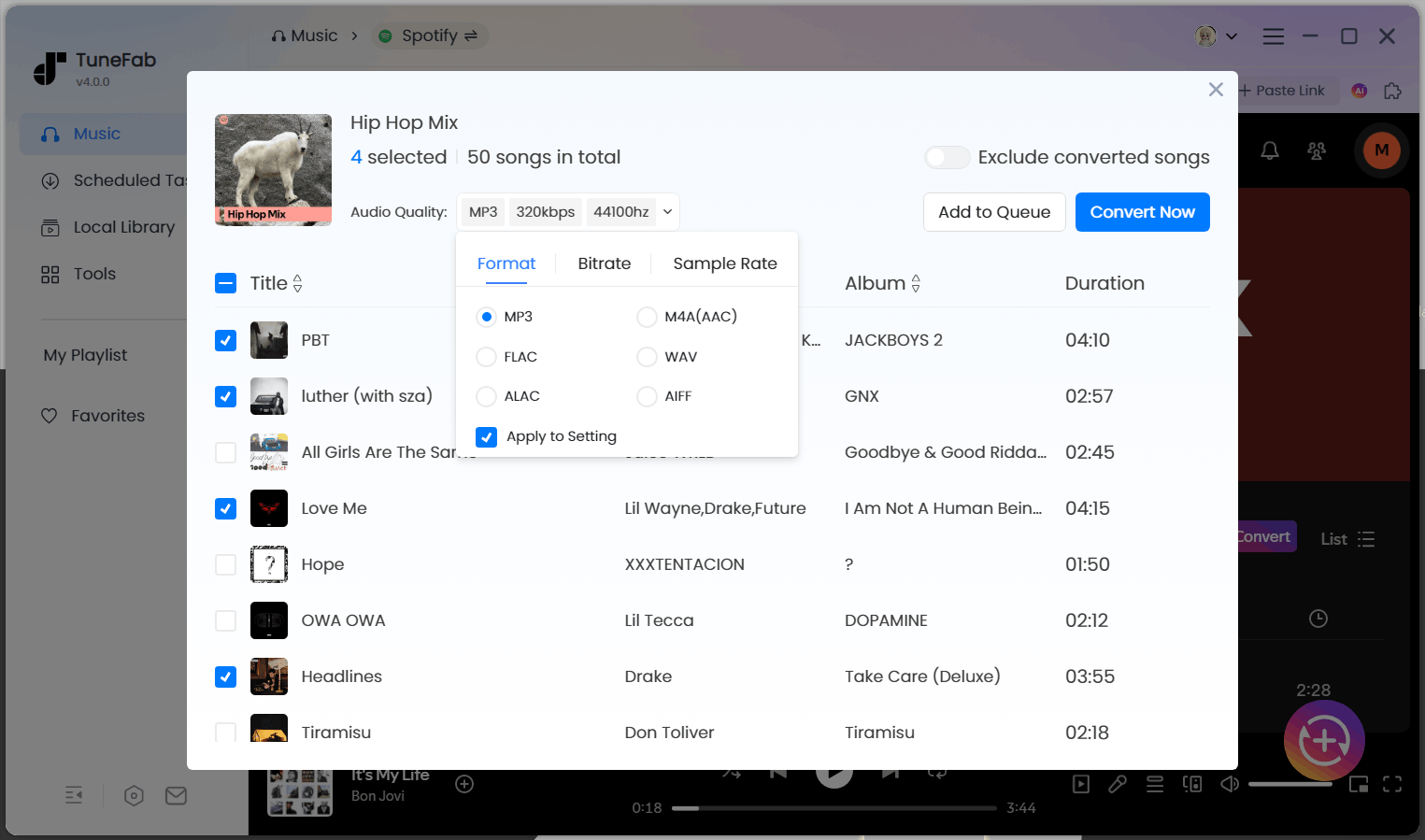
When the pop-up appears, pick an output format like MP3, AIFF, FLAC, etc. You can also customize bitrate and sample rate to ensure optimal editing performance.
Step 4. Start the Conversion Process
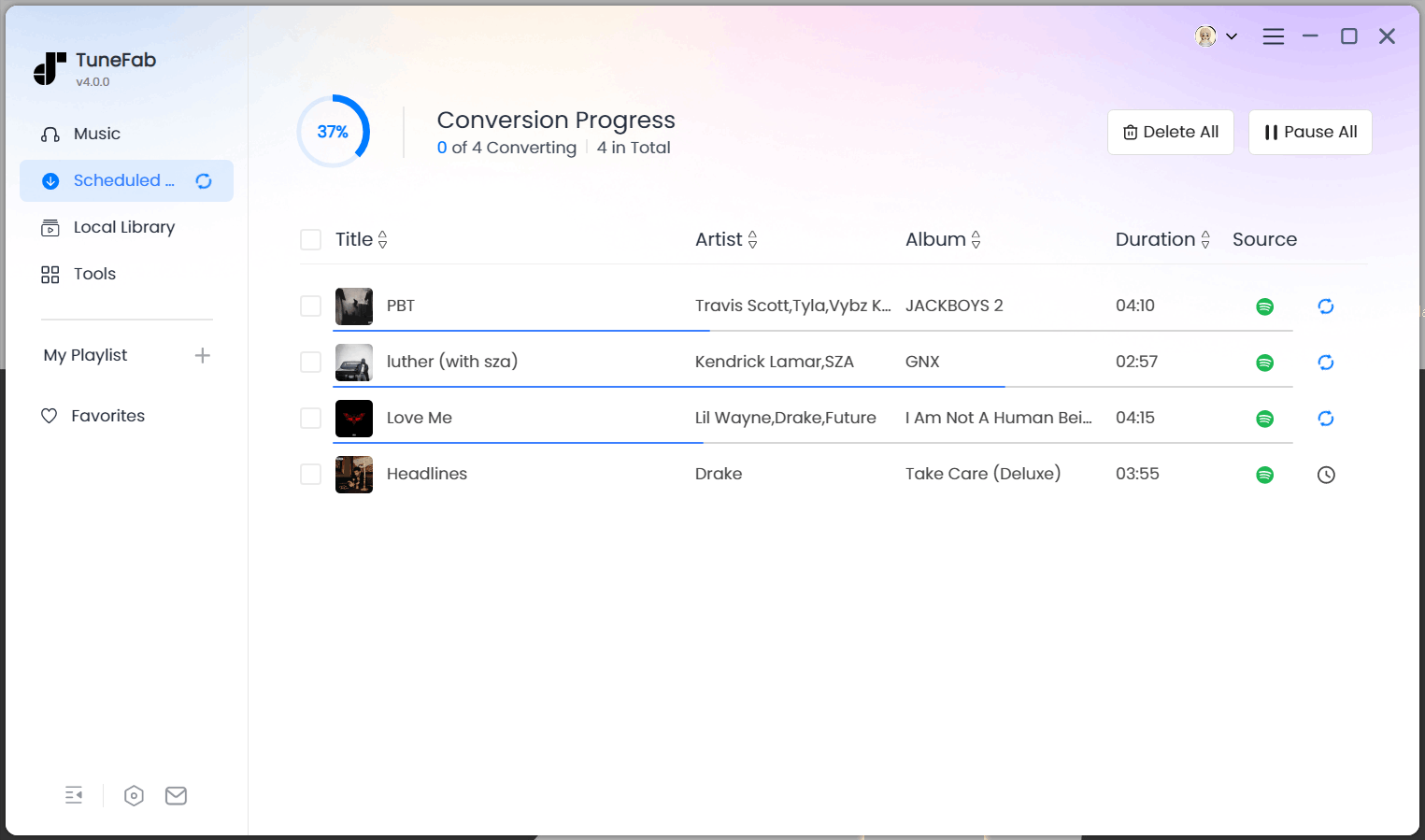
Click the "Convert Now" button to begin. TuneFab will export your Spotify tracks as standard audio files ready for editing.
Step 5. Access Downloaded Spotify Music
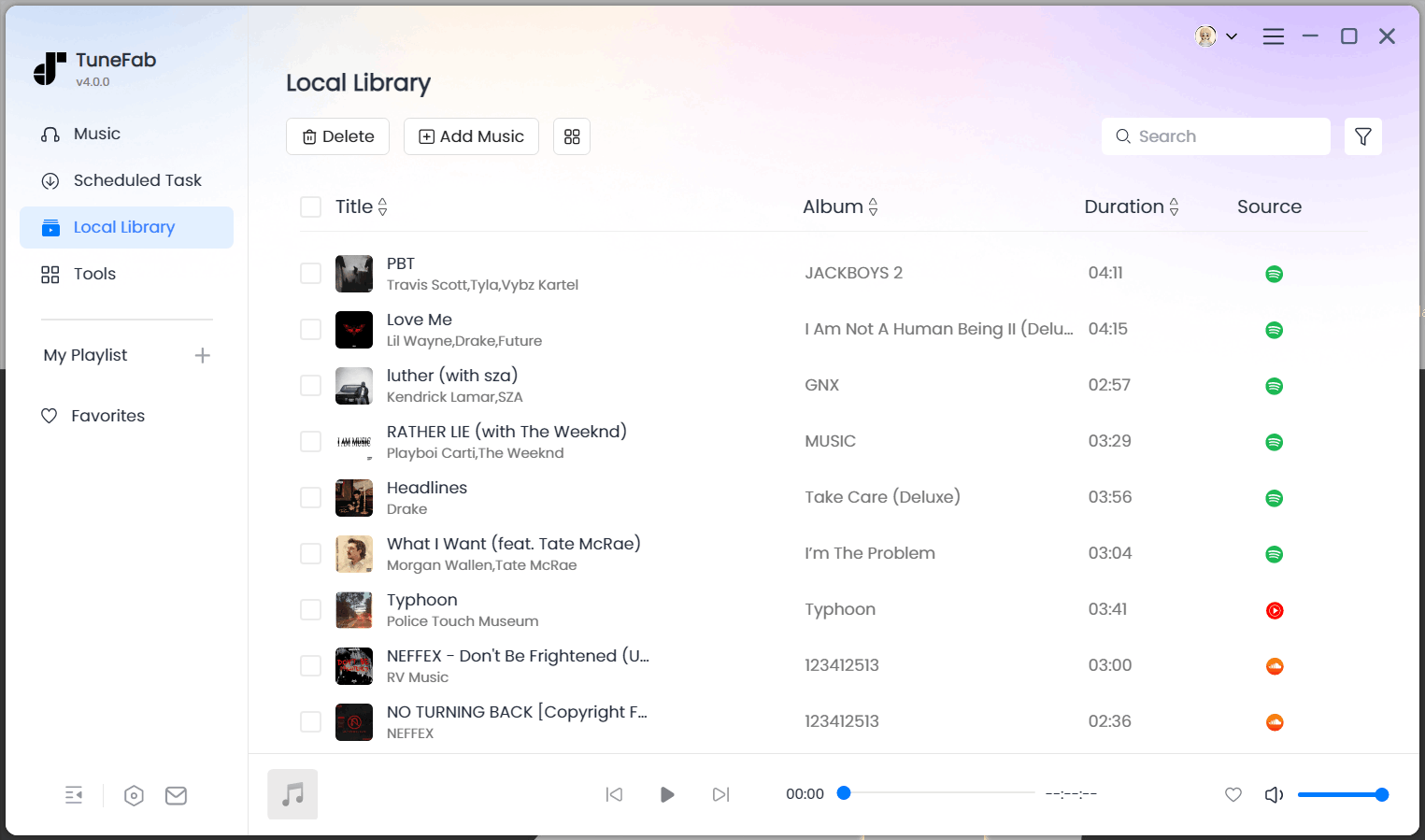
Go to the "Local Library" tab and open the output folder. Now you can freely import the converted Spotify music into any audio editor for trimming, cutting, or mixing.
Process 2. Edit Downloaded Spotify Songs with Audacity
Now that you have unlocked platform restrictions, you can use free and trusted tools like Audacity to edit Spotify music on PC or Mac. Follow the steps below to transform your downloaded Spotify tracks into masterpieces.
Step 1. Ensure Audacity is installed, launch it, and directly drag the downloaded Spotify song into the Audacity window, or you can follow File > Import > Audio.

Step 2. Audacity provides a wide array of editing tools. Trim out unwanted parts for your downloaded track, add fades or layer effects, and you can even try your hand at remixing.

Step 3. Once your editing is complete, click "File" > "Export" > "Export Audio" to save it in your desired format.
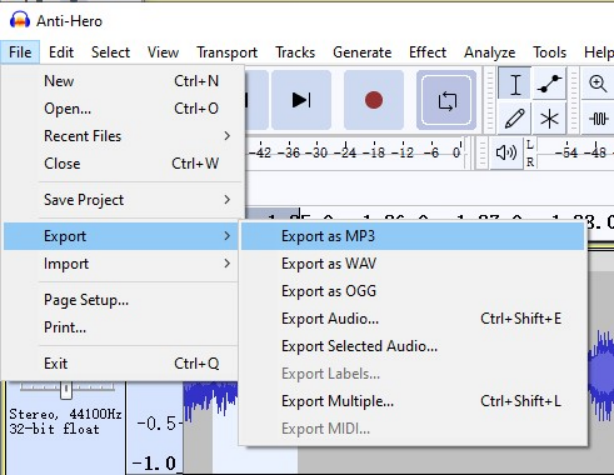
You've successfully edited your Spotify song and are ready to share your unique creation.
FAQs About Editing Spotify Songs and Playlists
Can I edit Spotify track ID3 tags and metadata within the official app?
Technically, no. While you can easily manage Spotify playlist details like titles and descriptions, Spotify does not allow users to modify track metadata directly within the app. In this case, you can try using the built-in ID3 Editor in TuneFab Spotify Music Converter to get things done.
Can I edit a playlist on Spotify without Premium?
Yes. Free users can still manage Spotify playlists by adding songs, deleting tracks, rearranging Spotify playlist order, and updating playlist names or descriptions. However, keep in mind that some features, like Smart Reorder, are Premium only.
How to edit Spotify music for ringtone?
As mentioned above, Spotify does not support trimming or cutting tracks directly. To create custom ringtones, you will need to first convert the track into a standard audio format using a reliable Spotify music converter, such as TuneFab.
👉 Check the full guide: How to Make Ringtones from Spotify
The Bottom Line
Learning how to edit Spotify playlists and songs is the first step to creating a truly personalized music library. With the tips and methods in this guide, you can customize your Spotify playlists, rearrange tracks, and prepare music for different needs with ease. If you need a reliable way to customize Spotify tracks, tools like TuneFab Spotify Music Converter can help you convert Spotify music to MP3 for editing, making it easier to use tracks in video editors or offline projects.

