


Using your Mac laptop for travel, remote work, or daily listening often means you don't want to rely on unstable Wi-Fi. Whether you're preparing playlists for a flight, organizing your music library locally, or making sure your entire Apple Music collection is available offline, downloading songs to your Mac can make listening much smoother.
Some users want offline playback in the Music app, while others prefer to keep local copies on their Mac, especially when syncing across devices or considering long-term access. Therefore, this guide walks you through the different ways to download Apple Music on a Mac, so you can choose the approach that fits how you actually listen.
Related Articles:
How to Download Apple Music on Mac (Official Way)
If you only need offline playback on your Mac, the simplest option is Apple's built-in Music app (macOS Catalina and later). To make downloads work smoothly, make sure you're signed in with the Apple Account linked to your Apple Music subscription, "Sync Library" is enabled, and your Mac has enough storage for offline content.
Tips: If you want Spatial Audio, you can choose to download tracks in Dolby Atmos (when available) from Music settings.
Download Songs, Albums, or Playlists
Use this option when you only want to save specific items for a trip, commute, or offline listening:
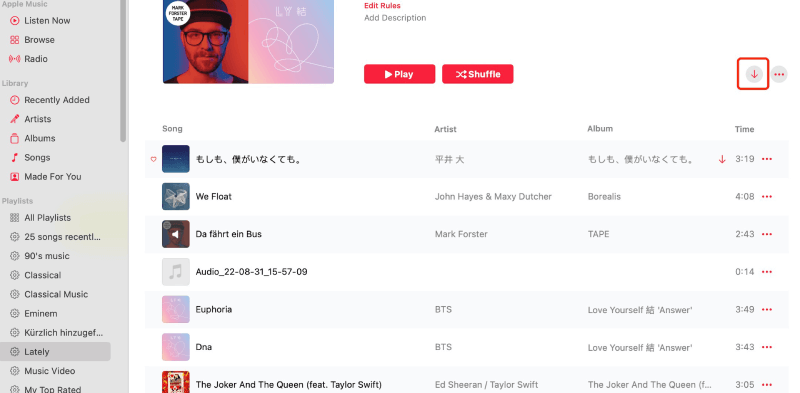
1. Open the "Music" app on your Mac and find a song, album, or playlist.
2. Click the "Download" button next to the song, or use the "Download" button at the top of an album/playlist (you can also choose "More (… ) > Download".
Once downloaded, you can play these tracks offline, but only inside the Music app.
Download Your Entire Apple Music Library on Mac
If your goal is to keep your Mac fully synced for offline listening, for example, you have everything downloaded on your iPhone and want the same on your Mac, you can batch download your Library:
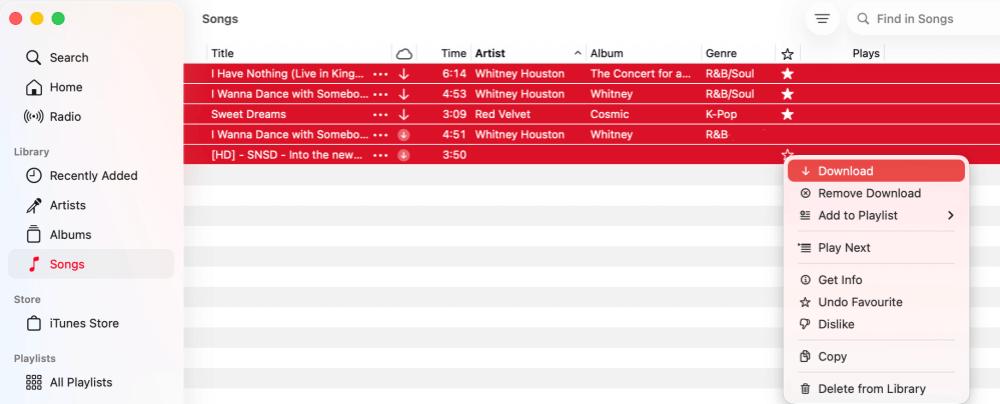
1. In the "Music" app, go to "Library > Songs".
2. Press "Command + A" to select all songs.
3. Control-click (or right-click) the selection and choose "Download".
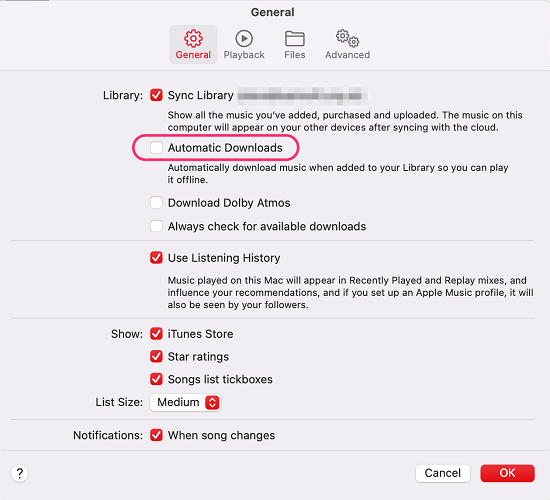
For future additions, you can also turn on the "Automatic Downloads" feature in "Music > Settings > General", so items you add to your Library download automatically.
Please note that you can access the music downloads in the Apple Music app for offline streaming on your Mac whenever you like. Nevertheless, you need to make sure that your Apple Music subscription will renew monthly, or all your downloads will be deleted. If you want to keep them permanently or you want to convert Apple Music to MP3 for storing and playing outside the official app, please 👉 jump to the alternative solution 👈.
Where Are Apple Music Downloads Stored on Mac?
On macOS, Apple Music downloads are stored inside the Music app's media folder. If you use the default setup, the location is usually: "/Music/Music/Media/". Within this folder, you'll find subfolders like "Music" or "Apple Music", depending on whether your library was migrated from iTunes or customized in the past.
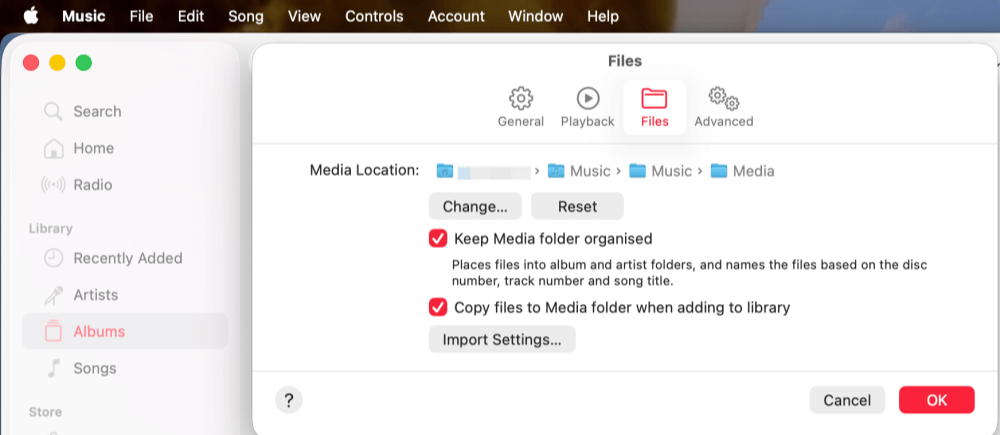
However, the exact location can vary if you've changed your media folder settings or moved your library to an external drive. The most reliable way to confirm the storage path is directly inside the Music app:
1. Open "Music" on your Mac.
2. Go to "Music > Settings".
3. Click "Files", and check the "Music Media folder location" shown there.
Even though you can see downloaded tracks inside Finder, Apple Music subscription downloads are intended for offline playback within the Music app. They are stored in a protected format and are not designed to function like regular MP3 or FLAC files that can be freely copied to USB drives or played in third-party software.
Why Can't I Download Apple Music Songs on My Mac?
If the Download button is missing or songs won't download on your Mac, the issue is usually related to account settings or system configuration rather than the Music app itself. Here are the most common causes to check:
- Sync Library is turned off: Apple Music downloads require "Sync Library" to be enabled. Go to "Music > Settings > General" and make sure Sync Library is checked. If it's disabled, songs may not appear correctly or may not be downloaded at all.
- You're not signed in with an active subscription: Make sure you're signed in to the correct Apple Account and that your Apple Music subscription is still active. Downloads are tied to your subscription status.
- Insufficient storage space: Offline downloads are saved locally on your Mac and take up storage. If your disk space is nearly full, downloads may fail or pause automatically. Check available storage in "System Settings > General > Storage".
- "Automatic Downloads" is disabled: If you expect songs added from another device (like your iPhone) to download automatically on your Mac, make sure Automatic Downloads is enabled in "Music > Settings > General".
- App or macOS compatibility issues: On Apple Silicon Macs or after a macOS update, temporary app glitches can sometimes interrupt downloads. Updating to the latest version of macOS and the Music app usually resolves unexpected behavior.
In most cases, reviewing these settings restores normal downloading functionality. If downloads still don't work, signing out of your Apple Account in Music and signing back in can also help refresh the connection.
How to Save Apple Music as Local Audio Files on Mac
The official Apple Music download feature is designed for offline playback inside the Music app. For many users, this is sufficient. However, if you prefer to keep standard audio files stored locally on your Mac, for example, to back up your music, transfer it to external storage, or play it in other media players, you'll need a different approach.
Tools such as TuneFab Apple Music Converter are designed to export Apple Music tracks as common audio formats, allowing you to store them as local files on your Mac. It runs on macOS and includes an integrated Apple Music web interface. After signing in with an active Apple Music account, you can select songs, albums, or playlists and export them to local audio formats.
Key Features of TuneFab Apple Music Converter:
- Embed with Apple Music web player to access the full library.
- Batch-convert Apple Music to common formats e.g., MP3, FLAC, M4A, and WAV.
- Support ripping Apple Music songs/playlists/albums at a 35x faster speed.
- Preserve the highest music quality (up to 320kbps) of each Apple Music download.
- Retain original ID3 tags and metadata info for easier management.
Follow these super easy steps and learn how to download all Apple Music to the local drive on Mac.
Step 1: Launch TuneFab Apple Music Converter and select Apple Music to get started. You need to sign in to Apple Music with an available subscription to access the embedded web player.
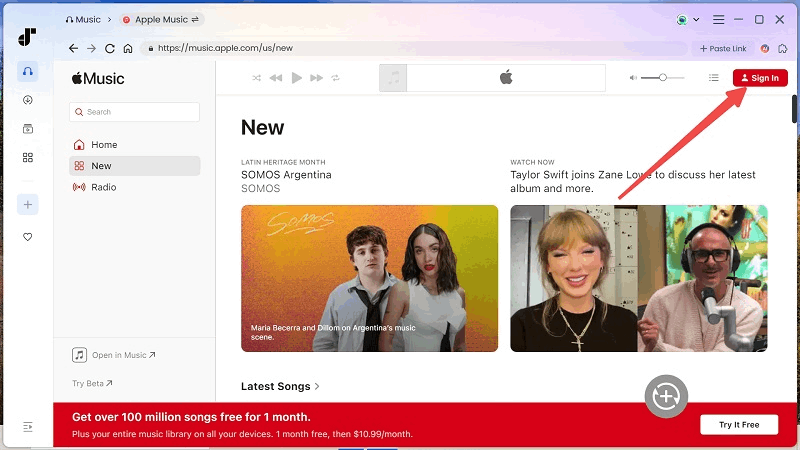
Step 2: On the web player's interface, search for your desired songs/playlists/albums, and drag & drop them to the conversion list on the right-side panel.
Tip: Placing your cursor on the covers of Apple Music songs or albums and tapping the Add to the conversion list button can also add songs to the conversion list in batches effortlessly.
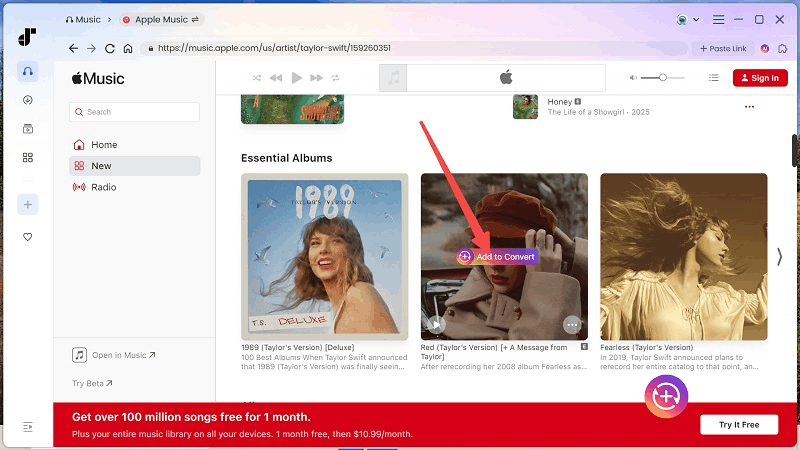
Step 3: Customize the output settings such as the bit rate and sample rate. You can also change the output format to MP3 or any other of your choice. Click the folder icon at the bottom to choose the location on your Mac where you want to save the songs.
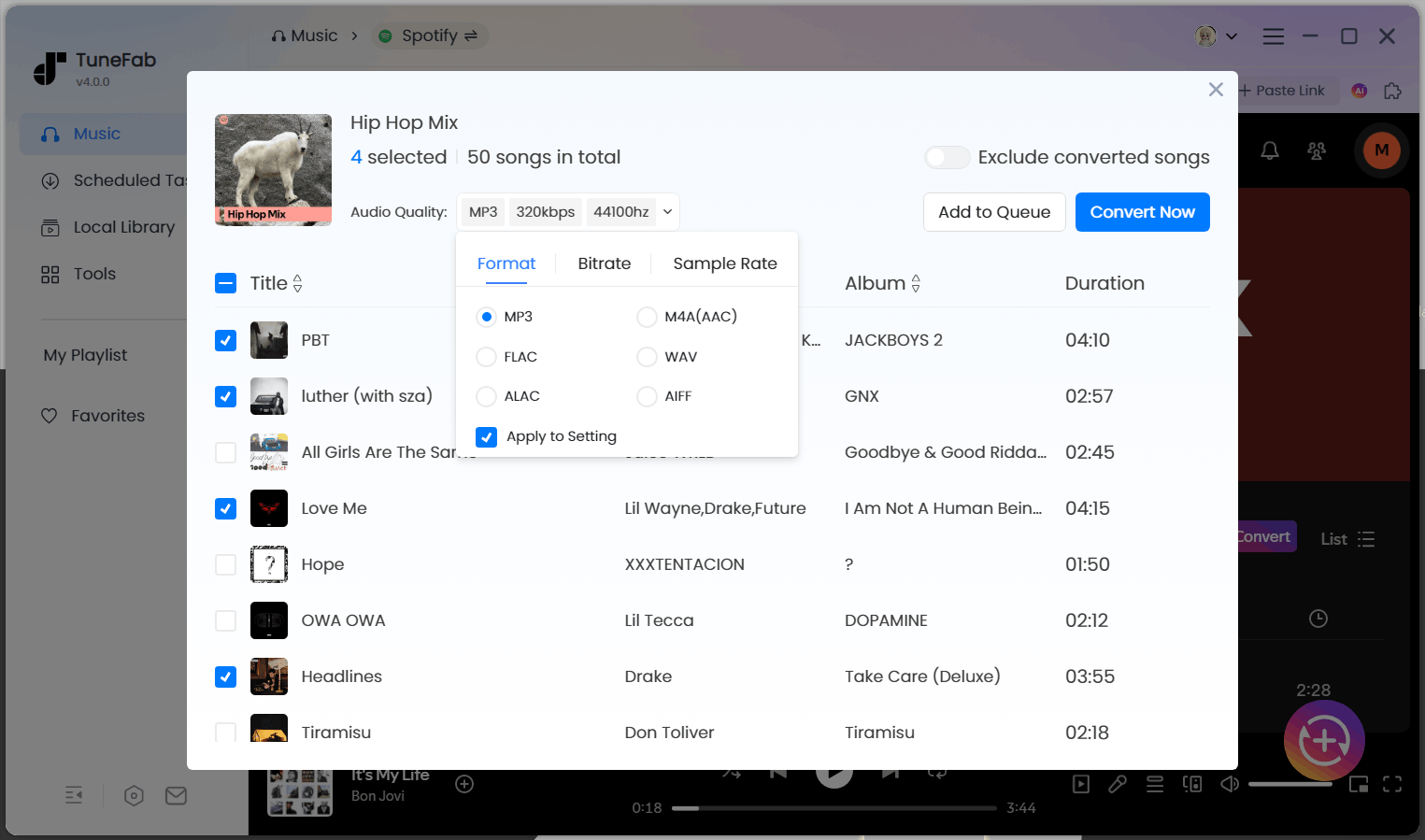
Step 4: Click on "Convert All" to batch-convert all the Apple Music songs you want to download and convert. Once complete, you can get these local files on Mac for playing and using freely without any restriction.
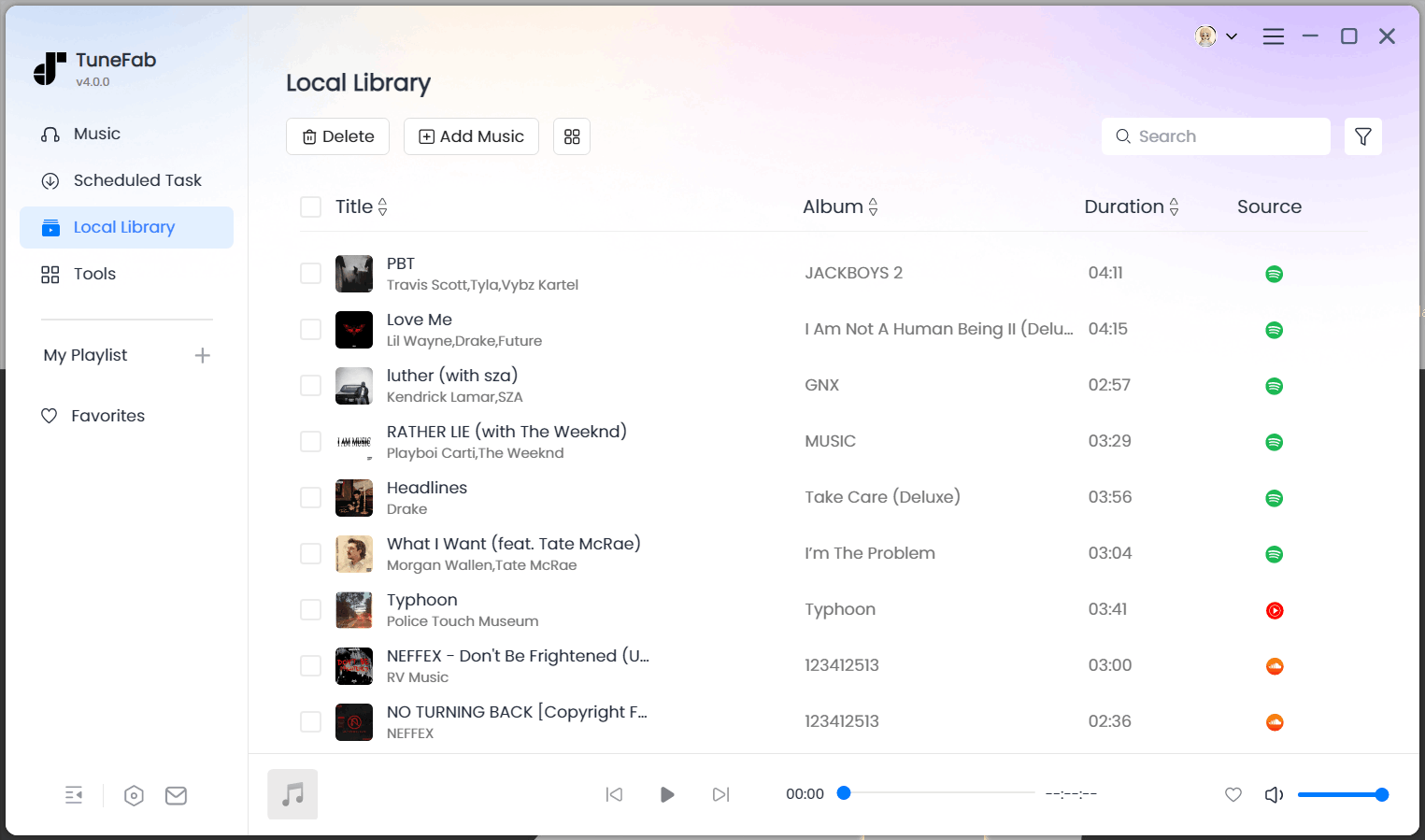
Once exported, the saved files behave like standard audio files on your Mac. You can organize them in Finder, back them up, or play them using compatible media players.
Tips: After downloading songs from Apple Music, if you want to move them to other devices or platforms, please check out the posts below.
Comparison: Official Download Method vs. Local Files
When deciding how to download Apple Music on a Mac, the key difference isn't the tool itself, but how you plan to use your music afterward. Here's how official downloads compare with locally saved audio files in practical use.
| Official Apple Music Download | Saved as Local Audio Files | |
| Offline playback on Mac | ✅ Yes (inside Music app) | ✅ Yes |
| Works outside the Music app | ❌ No | ✅ Yes |
| Requires active subscription to play | ✅ Yes | ❌ No (after export) |
| Saved in standard audio formats | ❌ No | ✅ Yes |
| Can transfer to external drives or USB | ❌ No | ✅ Yes |
| Usable in third-party media players | ❌ No | ✅ Yes |
If you simply want to listen offline on your Mac and stay within the Apple ecosystem, the built-in download feature is usually enough.
If you prefer greater flexibility, such as backing up your music, organizing it in Finder, or using it in other compatible software, saving tracks as standard local audio files using tools like TuneFab Apple Music Converter provides more control over how the files behave on your Mac.
Neither approach is universally better. The right choice depends on whether you need app-based offline playback or independent audio files.
FAQs About Downloading Apple Music to Mac
Can I download music from Apple Music to my Mac?
Yes. If you have an active Apple Music subscription, you can download songs, albums, or playlists within the Music app for offline playback on your Mac. These downloads are accessible only inside the app and remain playable as long as your subscription is active. If you want to move Apple Music downloads to other devices, you'll need a reliable Apple Music converter.
How do I get Apple Music on my Mac?
Apple Music is built into macOS Catalina and later. Simply open the "Music" app from Launchpad or Spotlight and sign in with your Apple ID. On older macOS versions, Apple Music was accessed through iTunes.
How many GB is 1000 songs on Apple Music?
Storage size depends on audio quality. At 256 kbps AAC (Apple Music's standard quality), 1,000 songs typically take around 6–8 GB of storage. Higher quality settings or Dolby Atmos downloads may require more space.
How do I save music from Apple Music to my computer?
The built-in download feature saves songs for offline playback inside the Music app. If you need standard audio files that can be stored, backed up, or used outside the app, you would need a method that exports tracks as local audio files in common formats.
Conclusion
Downloading Apple Music to your Mac through the official Music app is the most direct way to enable offline listening. If your goal is simply to access your library without an internet connection, the built-in download feature works smoothly within macOS.
However, these downloads are designed for playback inside the Music app and remain tied to your subscription status. If you need audio files stored on your Mac in standard formats for broader compatibility or personal backup purposes, an alternative program like TuneFab Apple Music Converter may better suit your needs.
Choose the method that aligns with how you plan to use your music, whether for in-app offline listening or for managing local audio files on your computer.
TuneFab Apple Music Converter
One click to download Apple Music to your Mac without quality loss.

