


Converting M4P to MP3 is a common need if you want to play iTunes or Apple-originated audio files on more devices. However, not all M4P files can be converted in the same way. Some M4P files may be protected, which means standard tools like iTunes or online converters won't work directly. In contrast, unprotected M4P files can usually be converted to MP3 using built-in features or free tools.
In this guide, we'll show you how to convert M4P to MP3 on Windows and Mac using 6 practical methods. Depending on your situation, you can use a desktop application, official solutions like iTunes Match, CD burning, recording tools, VLC, or online converters. The table below helps you quickly identify which method fits your needs before following the detailed tutorials.
| Method | Best for |
| Desktop App | Users who want to convert protected M4P files in batch or need a fast and stable way to convert M4P to MP3. |
| iTunes Match | Users with eligible iTunes purchases who accept a yearly subscription and prefer an official solution. |
| CD Burning | Users with a CD drive who want to convert eligible purchased songs without installing extra tools. |
| Recorder | Users who want a free method to convert M4P to MP3, including protected files, with flexible control. |
| VLC | Users who only need to convert unprotected M4P files using a free desktop tool. |
| Online Tool | Users who prefer a quick, browser-based solution for a small number of DRM-free M4P files. |
- Method 1. Convert Protected M4P to MP3 with a Desktop ToolHOT!
- Method 2. Re-download Eligible Purchases to MP3 via iTunes Match
- Method 3. Burn Eligible iTunes Purchases to CD, Then Rip as MP3
- Method 4. Record M4P Audio as MP3 via Audials Music
- Method 5. Convert Unprotected M4P to MP3 with VLC Player
- Method 6. Convert Unprotected M4P to MP3 via Online Converter
- Comparison of All Six M4P to MP3 Methods
- FAQs About How to Convert M4P to MP3
Method 1. Convert Protected M4P to MP3 with a Desktop Tool
When you need to convert M4P to MP3 for files that can't be processed by standard tools, a dedicated desktop application is usually the most practical option. This is especially relevant for users dealing with protected M4P files or large music libraries, where built-in solutions like iTunes or online converters may not work as expected or may be too limited for batch processing.
Among available options, tools like TuneFab Apple Music Converter are designed to handle these scenarios on Windows and Mac. Instead of relying on manual conversion workflows, this type of software focuses on converting Apple-originated audio into MP3 and other common formats in a more direct and efficient way, especially when working with playlists, albums, or multiple tracks at once.
100% Secure
100% Secure
Main Features of TuneFab Apple Music Converter:
● Support for Protected M4P Conversion – Designed for situations where M4P files cannot be converted using standard methods, enabling broader playback compatibility across devices.
● Built-in Web Player Integration – Allows you to access and process music directly within the app interface, reducing the need for manual file handling.
● Batch Conversion Capability – Convert multiple M4P files to MP3 in one process, which is useful for users managing large music libraries.
● High-Quality Output Settings – Provides options to adjust bitrate and sample rate, helping maintain audio quality during conversion.
● ID3 Tag Preservation – Keeps metadata such as title, artist, and album information for easier music organization after conversion.
Detailed Review: TuneFab Apple Music Converter Review: An Honest Look at Features, Limits, and Use Cases
Now, let’s convert the protected M4P files into MP3s on Windows/Mac in 4 easy and quick steps.
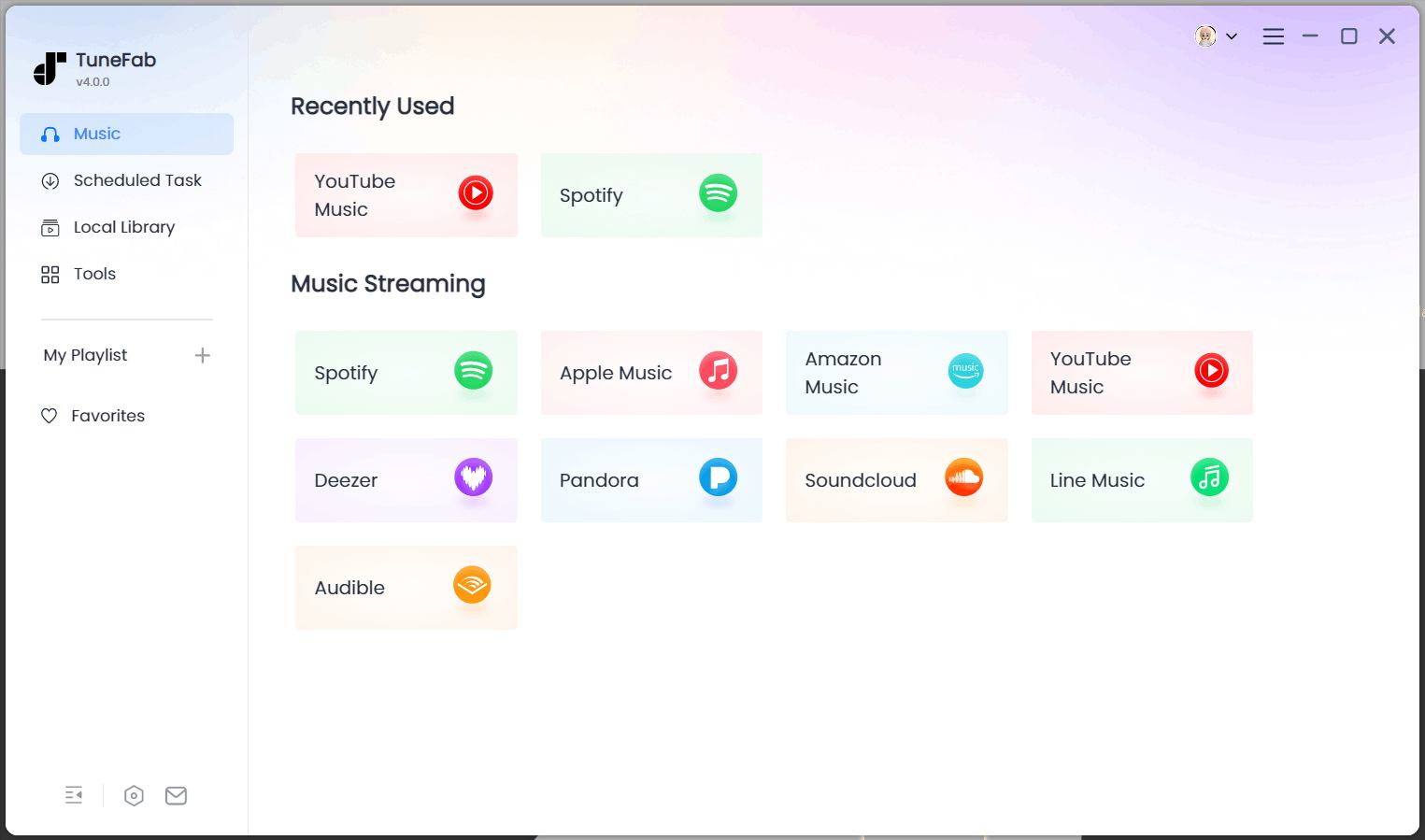
Step 1. Download and install TuneFab Apple Music Converter on your PC. After installation, launch it and enter the Apple Music service. You don't need to log in to your Apple Music account, but logging in ensures more consistent results.
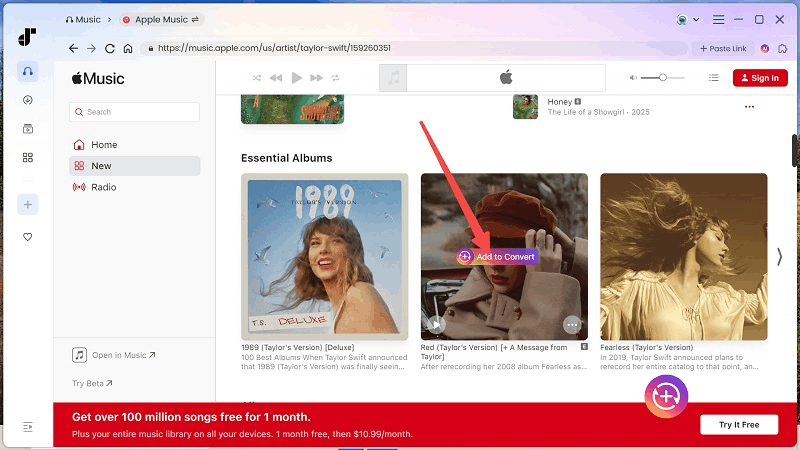
Step 2. The Apple Music web player is integrated into the app, so you can search for the Apple music files that you want to convert from M4P to MP3. Move the mouse over the cover image and click the "Add to Convert" button that appears.
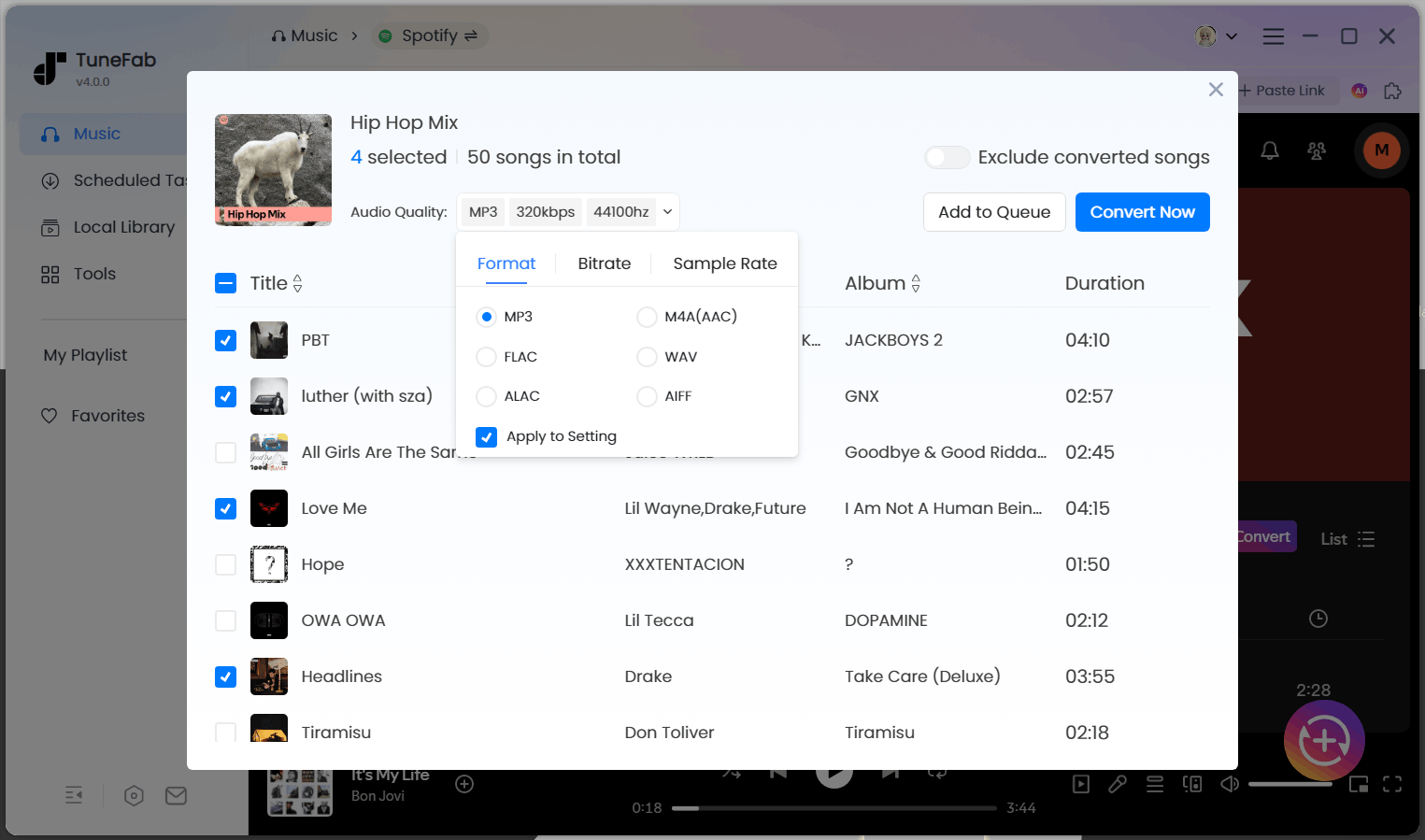
Step 3. The default output format is MP3, with a bitrate of 256 kbps and a sample rate of 44100 Hz. You can change these settings and apply them to all for a different audio quality.
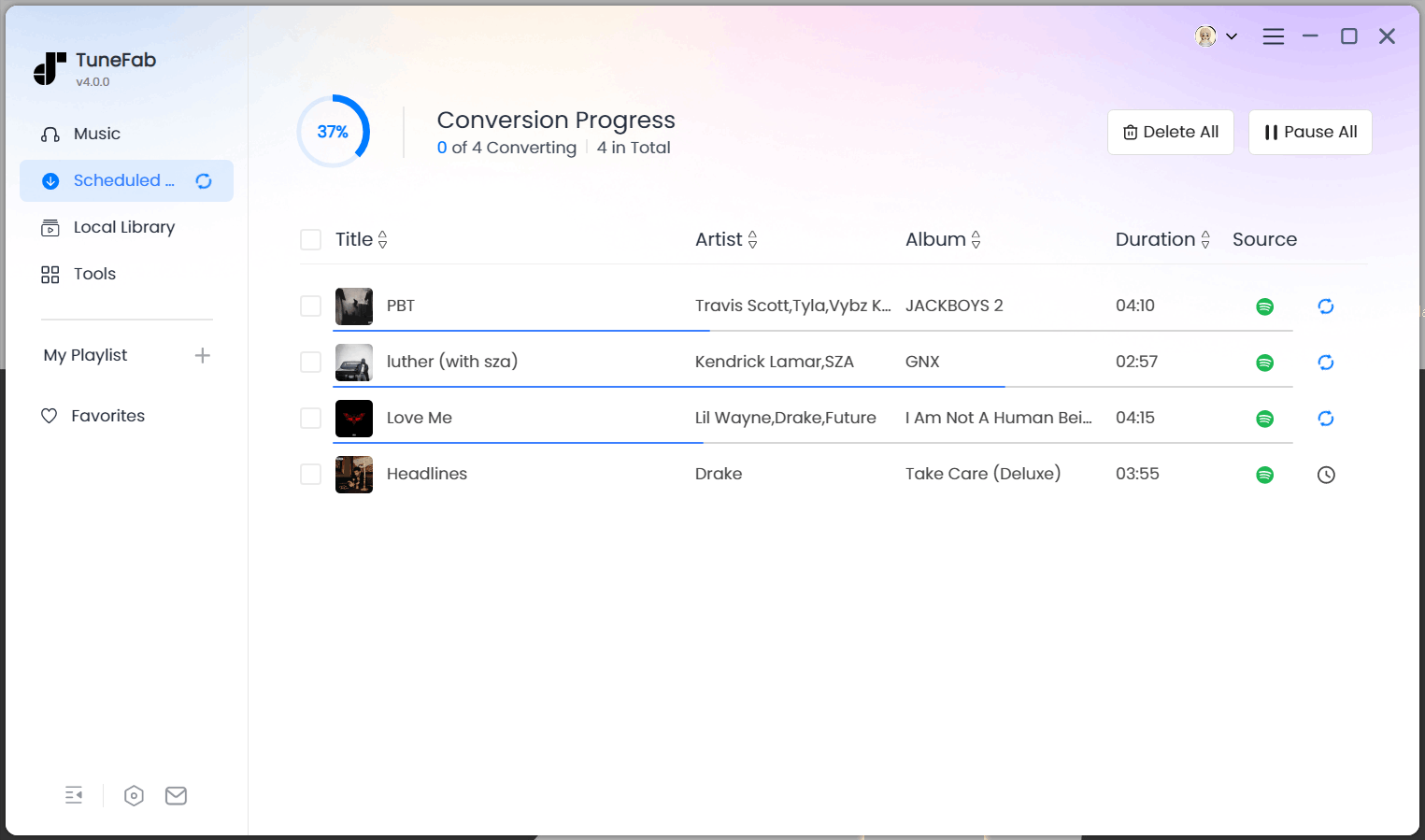
Step 4. Click the "Convert Now" button to start the conversion. The converter will convert the Apple M4P files to MP3 in a few minutes thanks to its at least 20X conversion speed. Once done, you can transfer the MP3 Apple music to any device or player you like.
Note: If you have other files that come from Apple Music, check the solution below.
Method 2. Re-download Eligible Purchases to MP3 via iTunes Match
For users who prefer an official Apple solution, iTunes Match offers an alternative way to handle certain M4P files. However, it's important to understand that iTunes Match does not directly convert M4P to MP3. Instead, it allows eligible iTunes purchases to be re-downloaded as DRM-free AAC files, which can then be converted to MP3 using iTunes or the Apple Music app.
After subscribing to iTunes Match ($24.99/year), your music library will be scanned and matched with tracks available in the iTunes Store. If a match is found, you can download a higher-quality, DRM-free version (256 kbps AAC). Once you have this unprotected copy on your computer, you can convert it to MP3 using the built-in "Create MP3 Version" feature.
In addition, iTunes Match stores your music library in iCloud, allowing access across Apple devices such as iPhone, iPad, and Mac. This makes it a practical option for users already within the Apple ecosystem who want to upgrade older purchases and improve compatibility.
Note: This method only works for eligible iTunes purchases. Songs from Apple Music streaming or files that cannot be matched will not be processed in this way. If your M4P files cannot be re-downloaded as unprotected versions, you may need to consider other methods, such as recording, CD burning, or a dedicated desktop tool.
Tip: Confused by Apple Music and iTunes Match? Check this article for differences between Apple Music and iTunes Match.
Now follow the steps below on how to convert M4P to MP3 with iTunes Match.
Step 1. Subscribe to iTunes Match:
- Open iTunes on your PC. Go to the Store menu and scroll to the bottom of the screen, click "iTunes Match".
- On the iTunes Match intro page, click the "Subscribe" button, then enter your Apple ID and password.
- Confirm the billing info and click "Subscribe" once again to confirm your subscription.
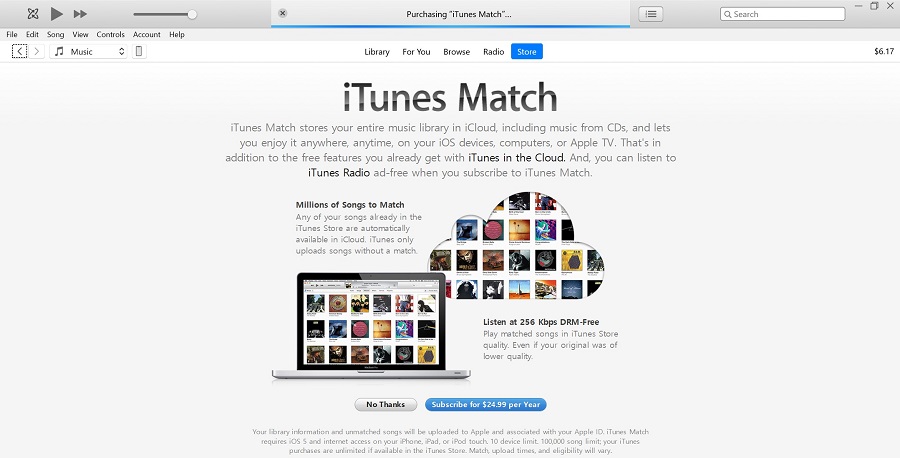
Step 2. After you subscribe to it successfully, iTunes Match will scan your iTunes music library to see which songs in your library are currently available in the iTunes Store and which ones are not.
Songs in the iTunes Store will be added to iCloud automatically, while the other songs will be uploaded from your computer to iCloud. Once the uploading is done, you should see all the songs described as "Matched".

Step 3. Click the "Download" icon to download the unprotected version of the old protected purchases. The songs will be saved as Matched AAC audio file (.m4a). Then you can convert them to MP3 audio files in iTunes with the following steps:
- Open iTunes and click "Edit" on the top menu.
- Click "Preferences" > "Import Settings" and select "MP3 Encoder" in the "Import Using" tab, and click "OK" to save the settings.
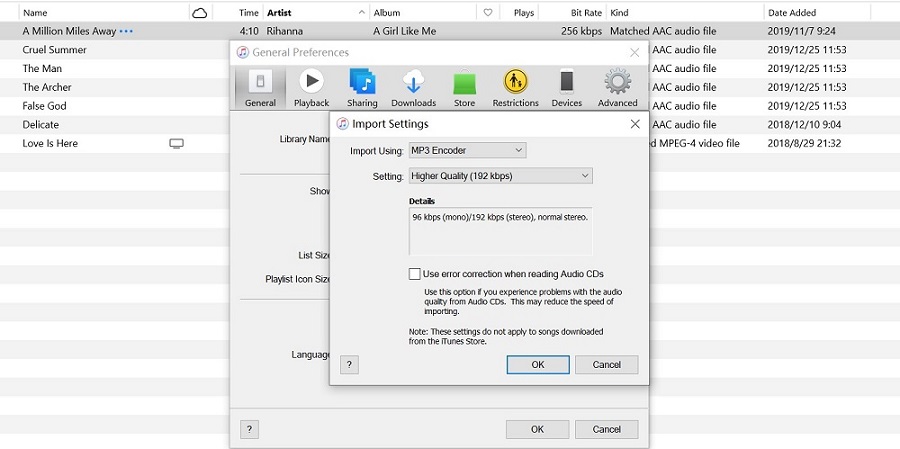
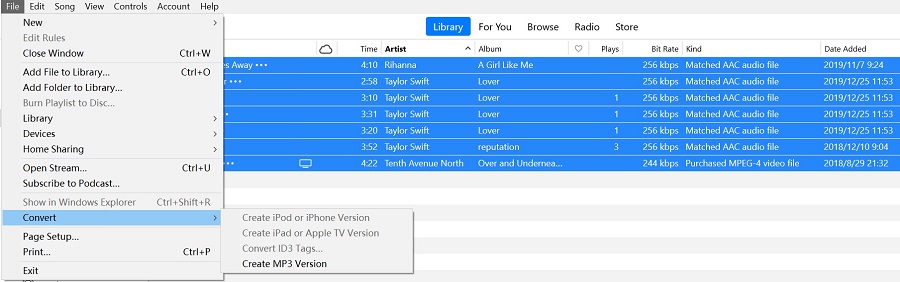
- Select the songs you want to convert to the MP3 format. You can simply hit "Ctrl" and click your mouse to select multiple songs. Or you can press the "Ctrl + A" key to select all songs at once.
- Go to "File" > "Convert" > "Create MP3 Version", the songs will be converted to MP3 immediately.
- When it's done, right-click on the converted songs and select "Show in Windows Explorer" or "Show in Finder" to get access to your downloaded music.
Method 3. Burn Eligible iTunes Purchases to CD, Then Rip as MP3
If you're dealing with older iTunes purchases and have access to a CD drive, burning the audio to a CD and then importing it back as MP3 is another possible workaround. This method relies on the built-in disc burning and ripping features in iTunes or the Apple Music app, and does not require additional software.
To use this method, you will need:
1. iTunes (Windows) or the Apple Music app (Mac) 2. A PC or Mac with a CD/DVD drive (or an external drive) 3. A blank audio CD (CD-R or CD-RW)
Before converting M4P to MP3 in this way, there are several important limitations to keep in mind:
● This method only applies to eligible purchased songs from iTunes. Files from Apple Music streaming cannot be processed this way.
● Some older purchases may have restrictions on how many times they can be burned to a disc.
● The process involves burning and re-importing audio, which may result in minor quality loss compared to the original file.
● The workflow is manual and time-consuming, especially when converting multiple tracks.
Because of these limitations, this method is generally more suitable for small collections or occasional use, rather than large-scale M4P to MP3 conversion.
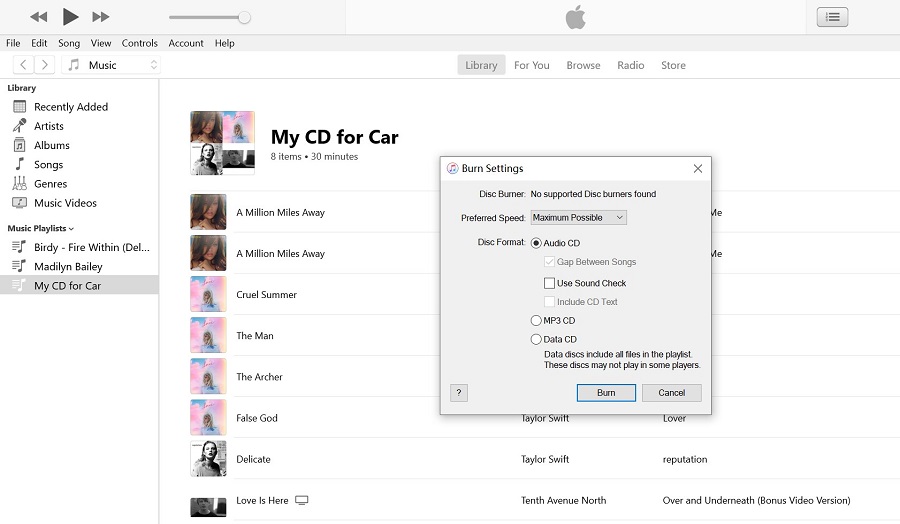
Step 1. Insert your CD into a CD reader or put it into your computer’s DVD drive. First, you need to create a new playlist. Open iTunes. Click File in the upper left corner. Choose New>Playlist. And add the iTunes songs you want to convert to MP3 from the library to the newly created playlist.
Step 2. To adjust CD burning settings, click File again and choose "Burn Playlist to Disc". Then, a Burning Settings window will pop up where you can configure the Burn Settings: select Audio CD as Disc Format and click "Burn". It will take a bit of time for iTunes to finish the process.
Step 3. When the burning is completed, open the CD in iTunes and select the song on the CD. Go to "File" > "Convert" > "Create MP3 Version" in the pop-up menu.
Step 4. When you're done, you will find all the tracks are in your iTunes library.
Method 4. Record M4P Audio as MP3 via Audials Music
If other methods don't work for your files, recording is another way to convert M4P to MP3. Instead of converting the file directly, this approach captures the audio during playback and saves it as a new MP3 file. It can be used for both protected and unprotected M4P files, making it a flexible option when standard conversion methods are not available.
Tools like Audials Music are designed for this type of workflow. They can automatically detect music playback from apps or web players and save each track as a separate MP3 file. Compared to manual recording, this approach is more efficient and can handle full albums or playlists with less effort.
However, since this method relies on real-time playback, the conversion speed depends on the length of the audio. In addition, the output quality may vary depending on your recording settings and system environment. For these reasons, recording is generally more suitable for occasional conversions rather than large music libraries.
Step 1. Begin by downloading and installing Audials Music on your Windows computer. You can get the free demo version without needing to register. Once the installation is complete, open Audials Music and switch to the “Music Streaming” mode.
Step 2. In Audials Music, click on "Apple Music" to activate the Apple Music recorder. You'll be asked to choose recording M4P from the Apple Music app or the website.
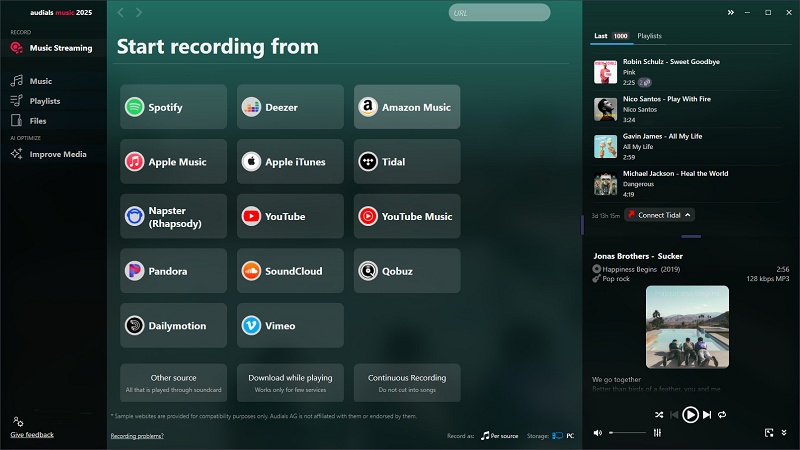
Step 3. Open iTunes and play the Apple Music songs or albums you want to capture. Audials Music will detect the playback automatically.
Step 4. As the music plays, Audials Music will automatically record it and save the tracks as individual MP3 files. Once the song ends, the file is ready to be accessed and enjoyed.
It defaults to recording M4P as 256kbps MP3. To change the format and quality, click the settings icon in the bottom left corner, select Options > Music Streaming Recording, and then click "Customize..." under Recording Format.
Tips: Audials Music is a smart, professional music recording software, but there are also many free recording options available, like Audacity. If you're okay with a more hands-on approach to recording, you might want to try Audacity, which is a completely free tool for recording and editing.
Method 5. Convert Unprotected M4P to MP3 with VLC Player
If you have unprotected M4P files stored on your computer, VLC Media Player can be used to convert M4P to MP3 for free. In addition to being a widely used media player, VLC includes a built-in conversion feature that supports basic audio format changes without installing extra tools.
However, this method only works for unprotected M4P files. If your files cannot be opened or processed in VLC, it usually means they are restricted and cannot be converted using standard format conversion tools. In such cases, you may need to consider other methods introduced above. Here's how to use it.
Step 1. Get VLC on your computer.
Step 2. Select "Convert/Save" from the "Media" menu.
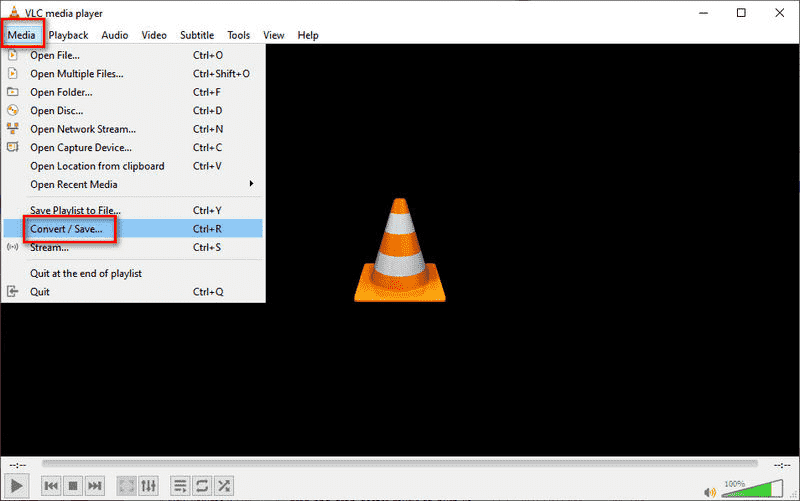
Step 3. Click "Add..." and select the M4P file you want to convert, and open it. Hit the "Convert/Save" button at the bottom right.
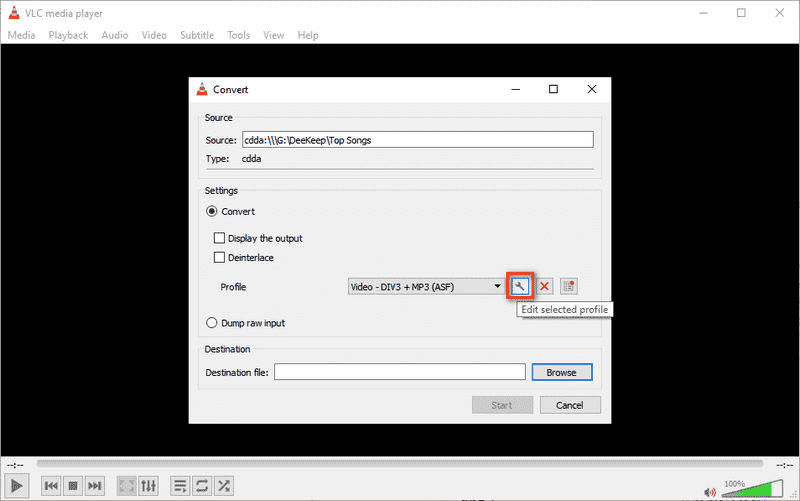
Step 4. Select the format as MP3 under the "Settings> Profile" section.
Step 5. Choose an output folder under Destination, change the output file extension to .mp3, then hit "Start". Wait for a while and the file will be converted
Method 6. Convert Unprotected M4P to MP3 via Online Converter
If you prefer not to install any software, online tools offer a quick way to convert M4P to MP3 directly in your browser. These tools are convenient for occasional use, especially when you only need to convert one or a few files on Windows, Mac, or even mobile devices.
However, similar to VLC, online converters only work for unprotected M4P files. If your files come from Apple-originated sources and cannot be uploaded or processed, they are likely restricted and won't be supported by these tools. In addition, most online services have limitations such as file size caps, daily conversion limits, and slower processing speeds compared to desktop software.
Tools like FileZigZag can handle basic M4P to MP3 conversion without installation. You can upload your audio file, choose MP3 as the output format, and download the converted file after processing. Some platforms also offer basic settings like bitrate adjustment, but advanced features and batch conversion are usually limited.
Here's how to convert M4P to MP3 online for free:
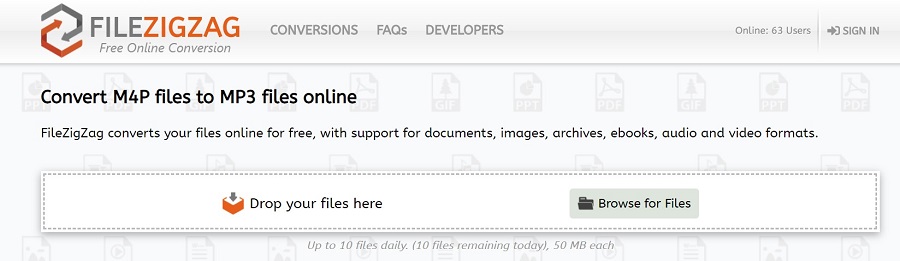
Step 1. Head to the FileZigZag and hit the "Browse for Files" button.
Step 2. After downloading your M4P songs, drag and drop them to “Drop your files here”. Alternatively, you can click “Browse for Files” to add them. You can upload more than one file at a time.
Step 3. Hit the "Start Converting" button and the files will be converted in a few seconds. After the conversion is complete, you can download the converted MP3 iTunes songs back to your computer.
Comparison of All Six M4P to MP3 Methods
Not sure which method to choose? The table below compares different ways to convert M4P to MP3 based on compatibility, ease of use, speed, output quality, and batch support. You can quickly identify which method works best depending on whether your M4P files can be processed directly or require alternative workflows.
| Method | Works with Protected Files | Ease of Use | Speed | Output Quality | Batch Conversion | Best For |
| Desktop Tool (e.g., TuneFab) | ✅ Yes | ⭐⭐⭐⭐⭐ | ⭐⭐⭐⭐⭐ | ⭐⭐⭐⭐⭐ | ✅ Yes | Large music libraries or files that standard tools can't process |
| iTunes Match | ⚠️ Limited (eligible purchases only) | ⭐⭐⭐ | ⭐⭐ | ⭐⭐⭐⭐⭐ | ❌ No | Users with older iTunes purchases who prefer an official solution |
| Burn to CD | ⚠️ Limited (purchased songs only) | ⭐⭐ | ⭐ | ⭐⭐⭐⭐ | ❌ No | Small collections and users with a CD drive |
| Recording | ✅ Yes | ⭐⭐ | ⭐⭐ | ⭐⭐⭐ | ❌ No | Occasional conversions or specific tracks |
| VLC | ❌ No | ⭐⭐⭐ | ⭐⭐⭐ | ⭐⭐⭐ | ❌ No | Unprotected M4P files stored locally |
| Online Tool | ❌ No | ⭐⭐⭐⭐ | ⭐⭐⭐⭐ | ⭐⭐⭐ | ⚠️ Limited | Quick conversions for a few DRM-free files |
The best method depends on your specific situation. If your M4P files can be processed directly, free tools like VLC or online converters may be sufficient. For files that cannot be handled by standard converters, you may need to choose alternative approaches such as recording, CD burning, or a desktop-based solution. If you are working with a large number of files or need a more efficient workflow, a desktop-based method like TuneFab Apple Music Converter can help save time while maintaining consistent output quality.
100% Secure
100% Secure
FAQs About How to Convert M4P to MP3
What Is an M4P File?
M4P is an audio file format associated with older iTunes purchases that use AAC encoding and access restrictions. These files can usually only be played through authorized Apple devices or apps such as iTunes or the Apple Music app. While Apple later introduced DRM-free formats like M4A (iTunes Plus), some older files or Apple-originated audio may still have limited compatibility, which is why users often look for ways to convert M4P to MP3.
To learn more, please check: What Is An M4P File and How to Play It?
Why Can't I Convert M4P to MP3 Directly?
Not all M4P files can be converted using standard tools. If the file cannot be processed by iTunes, VLC, or an online converter, it is usually because it cannot be handled like a regular audio file. In these cases, you may need to use alternative methods such as re-downloading eligible versions, recording playback, or using a desktop-based solution instead of direct conversion.
Can iTunes or Apple Music Convert M4P to MP3?
iTunes or the Apple Music app can convert audio files to MP3 using the “Create MP3 Version” feature, but this only works for files that can be processed directly. If the option is unavailable or the conversion fails, it means the file cannot be converted through built-in tools. In such cases, you'll need to try other methods depending on your file type.
Does Converting M4P to MP3 Reduce Audio Quality?
Converting M4P to MP3 may involve some quality change depending on the method used. Converting from AAC to MP3 is a lossy process, so minor differences can occur. Methods like re-downloading higher-quality versions or using controlled conversion settings can help maintain better quality, while recording-based methods may result in more noticeable loss.
M4P vs M4A: What's the Difference?
M4P and M4A are both based on the MPEG-4 audio format, but they differ in usage and compatibility. M4A typically refers to standard AAC audio files that can be played on most devices, while M4P is associated with certain Apple-originated audio that may have playback limitations. As a result, M4A files are generally easier to use and convert, while M4P files often require additional steps.
Conclusion
Overall, how to convert M4P to MP3 depends largely on the type of file you are dealing with. If your M4P files can be processed directly, built-in tools like iTunes, VLC, or online converters may be enough for quick and simple conversion. However, for files that cannot be handled in a standard way, you may need to rely on alternative approaches such as re-downloading eligible versions, burning to a CD, or recording playback.
For users with a larger music library or more complex conversion needs, a desktop-based solution like TuneFab Apple Music Converter can provide a more efficient and stable workflow, especially when batch processing and consistent output quality are important. By understanding your file type and choosing the right method, you can convert M4P to MP3 more effectively and ensure better compatibility across devices.
TuneFab Apple Music Converter
One click to convert streaming M4P files from Apple Music to MP3.

