


Apple Music tracks are protected, which means downloaded songs can only be played inside the Apple Music app. Because of this restriction, many users search for an Apple Music ripper, but the term itself can mean different things. Some people are looking for a way to record audio, while others want to convert tracks into local files for offline backup or use on other devices.
In this guide, we'll clarify what an Apple Music ripper actually is and compare the most practical methods available today, including screen recording and desktop conversion tools. Instead of listing dozens of apps, we'll focus on what works, what doesn't, and which option makes the most sense depending on your needs.
Tips
If you are finding a way to rip Apple Music to local files directly, please check:
If you want to learn more about Apple Music ripping/download tools, please check:
What Is an Apple Music Ripper?
An Apple Music ripper is a tool or method used to capture audio from Apple Music and save it as a local file. Unlike a traditional downloader, which simply saves a file directly from a server, a ripper usually works by recording or converting streamed audio into a playable format such as MP3.
In practice, Apple Music ripping typically falls into two categories:
- Recording, where the audio is captured in real time using screen or system audio recording software.
- Conversion, where a desktop tool processes tracks and exports them as local files for offline playback.
Because Apple Music uses protection, there is no official way to freely export songs outside the app. As a result, users searching for an Apple Music ripper are often looking for alternative ways to create personal offline copies.
Is It Legal to Rip Apple Music?
The legality of ripping Apple Music depends on how the content is used and the copyright laws in your region. Apple Music's terms of service prohibit the redistribution or commercial use of downloaded or recorded tracks.
This guide does not provide legal advice. Generally, users should only create copies for personal use and should never share, distribute, or sell copyrighted material. If you are unsure about the laws in your country, it is best to review local regulations before proceeding.
Solution 1. Desktop Screen Recorder - OBS Studio
A desktop screen recorder such as OBS Studio is one of the most commonly used free tools for capturing system audio. OBS is open-source and available on Windows, macOS, and Linux. It's primarily designed for video recording and live streaming, but it can also record Apple Music playback by capturing system audio in real time.
The main advantage of OBS is that it's completely free and highly customizable. However, it records in real time, exports as video files, and may not preserve full audio quality. This method is generally more suitable for users who need background music for streaming or temporary use, rather than those building a long-term music collection.
Step 1. After launching OBS, we entered the main interface and clicked the "+" icon under the "Sources" panel.
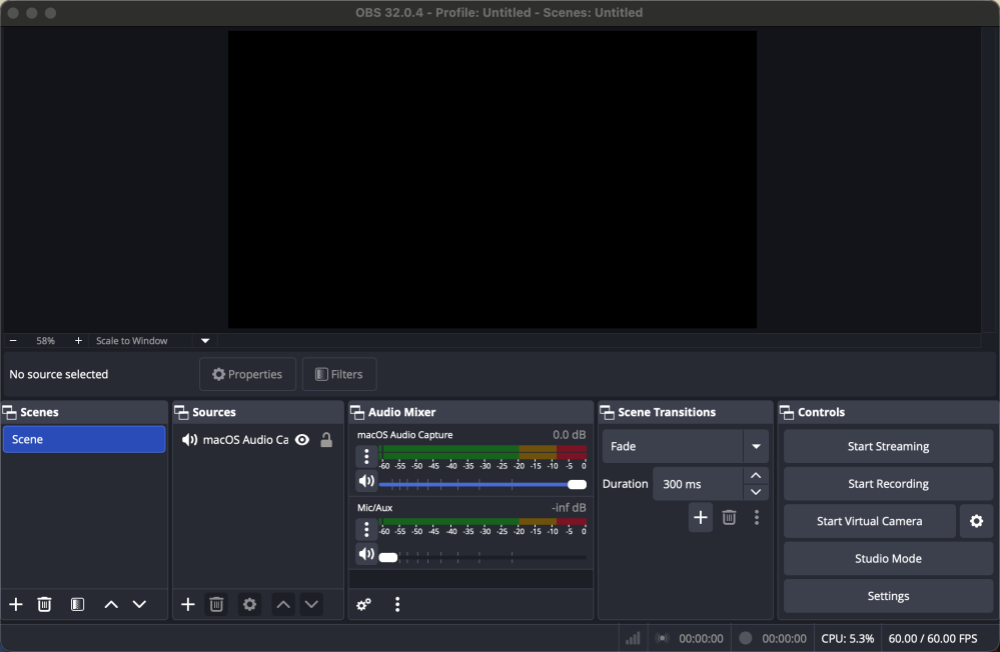
Step 2. We selected "macOS Audio Capture" as the source and muted the microphone to avoid background noise.
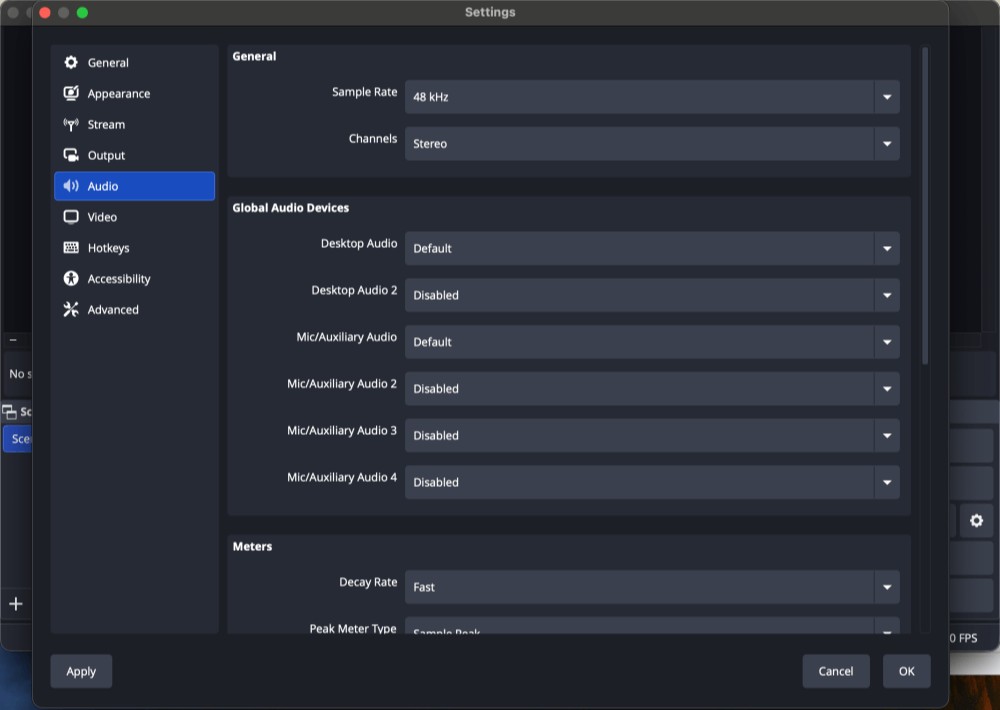
Step 3. In the bottom-right "Settings" panel, we adjusted audio output configurations.
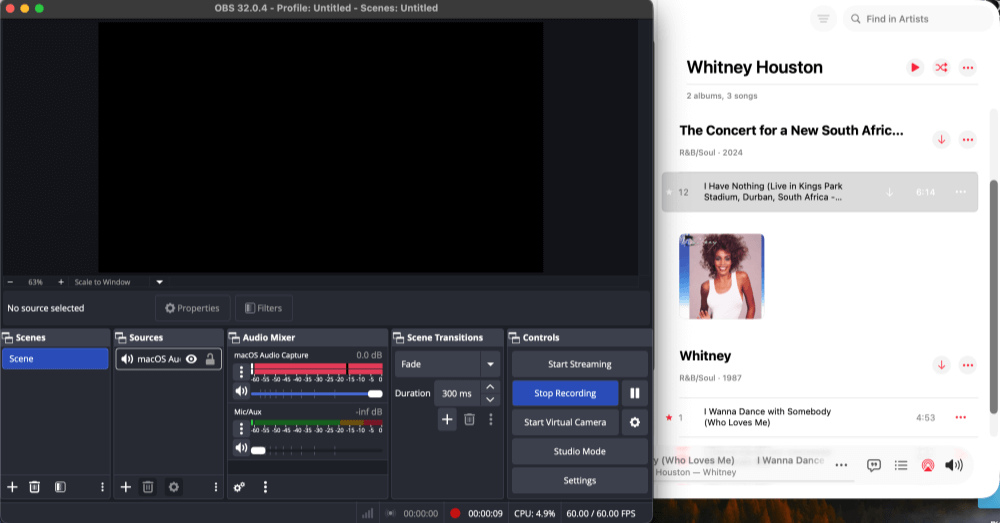
Step 4. We played a track on Apple Music and started recording. The recording worked, but since OBS captures audio in real time and outputs a video file, the process is time-consuming. During testing, the exported audio quality was acceptable through speakers but slightly compressed when listening through headphones.
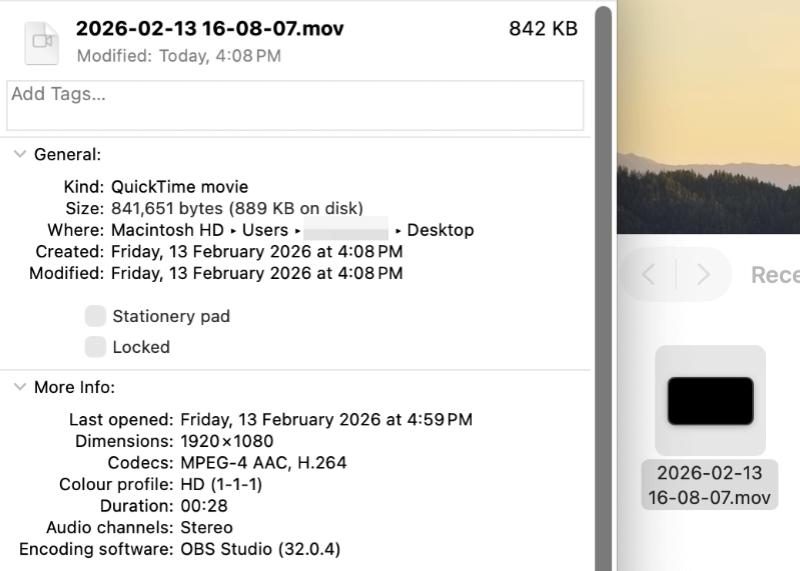
Step 5. After stopping the recording, we checked the exported files and found that OBS saves recordings in video format by default, typically MP4 on Windows and MOV on macOS. The exported audio quality was acceptable through speakers, but slightly compressed when listening through headphones.
After Testing: How OBS Studio Actually Performs?
✅ Key Advantages:
- Free and open-source
- Works on Windows, Mac, and Linux
- Flexible audio and scene configuration
- Suitable for streaming setups
🤔 Limitations:
- Records in real time (no batch export)
- Outputs as video files by default
- Audio quality may not be identical to the original stream
- Requires manual setup
👉 Best For: Users who occasionally need to capture Apple Music audio for streaming or background playback — not ideal for archiving large playlists or maintaining full-quality music libraries.
Solution 2. Desktop Apple Music Converter - TuneFab
Another way to rip Apple Music is by using a desktop music converter. Unlike screen recording, a converter processes tracks directly and exports them as local files. This method supports batch conversion, customizable output formats, and more stable results — making it more suitable for users who want to build a personal offline music library.
We tested TuneFab Apple Music Converter, a desktop tool available for Windows and macOS. According to its official description, the software is designed to batch convert Apple Music tracks into common formats such as MP3, FLAC, and WAV, while preserving audio quality and ID3 metadata. It also features a built-in Apple Music web player, allowing users to browse and add songs directly inside the program without opening the Apple Music app separately.
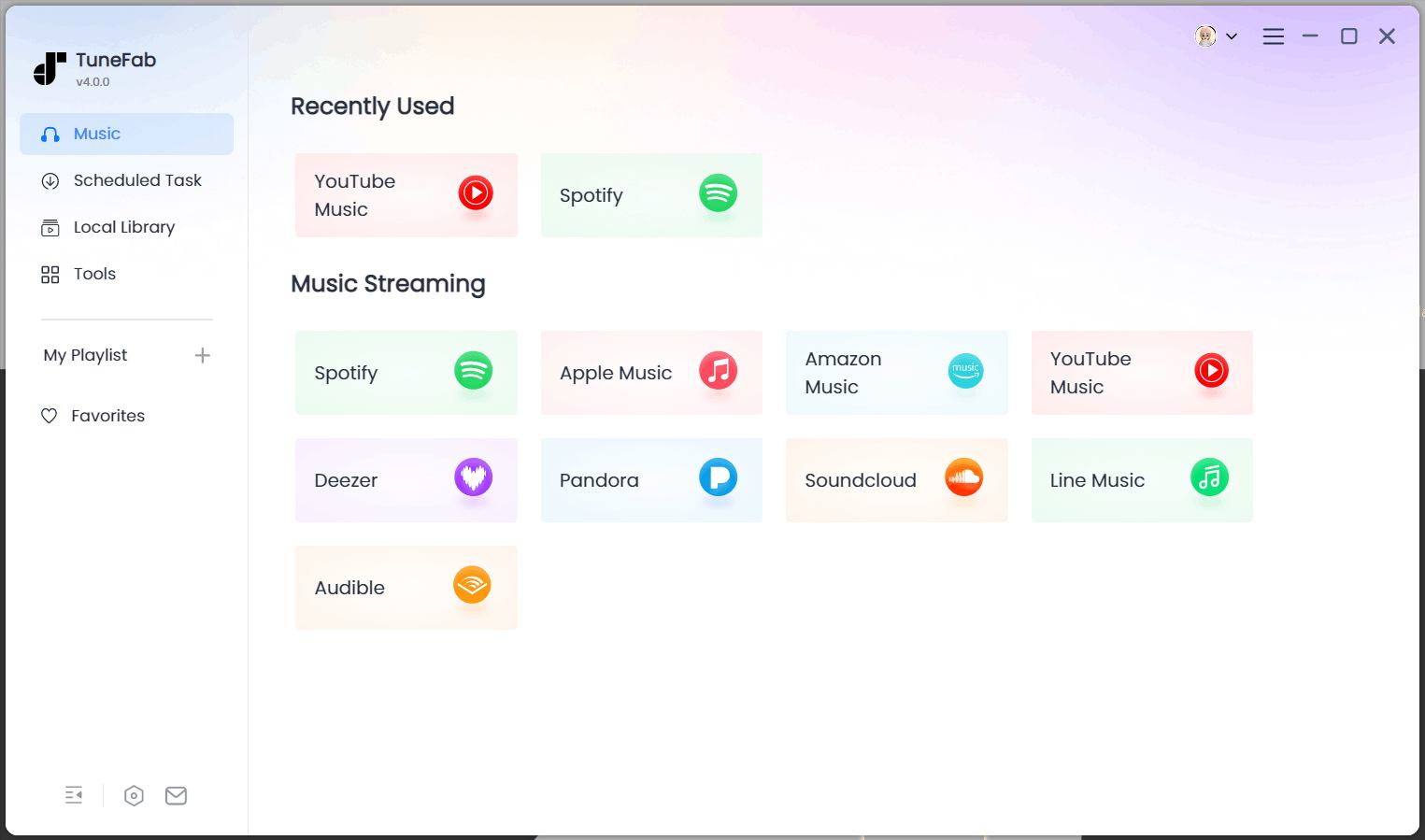
Step 1. After installation, the program opened to a platform selection menu listing multiple streaming services. We selected "Apple Music".
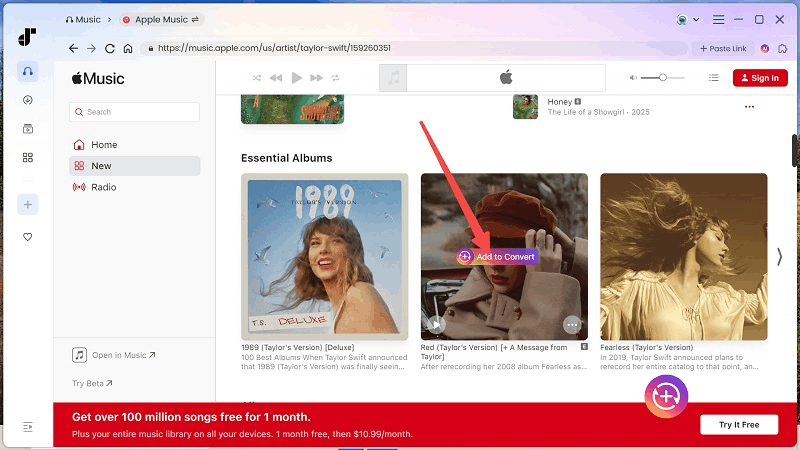
Step 2. The built-in Apple Music web player loaded automatically. After logging in with an Apple ID, we searched for songs as usual. Hovering over a track displayed an "Add to Convert" option.
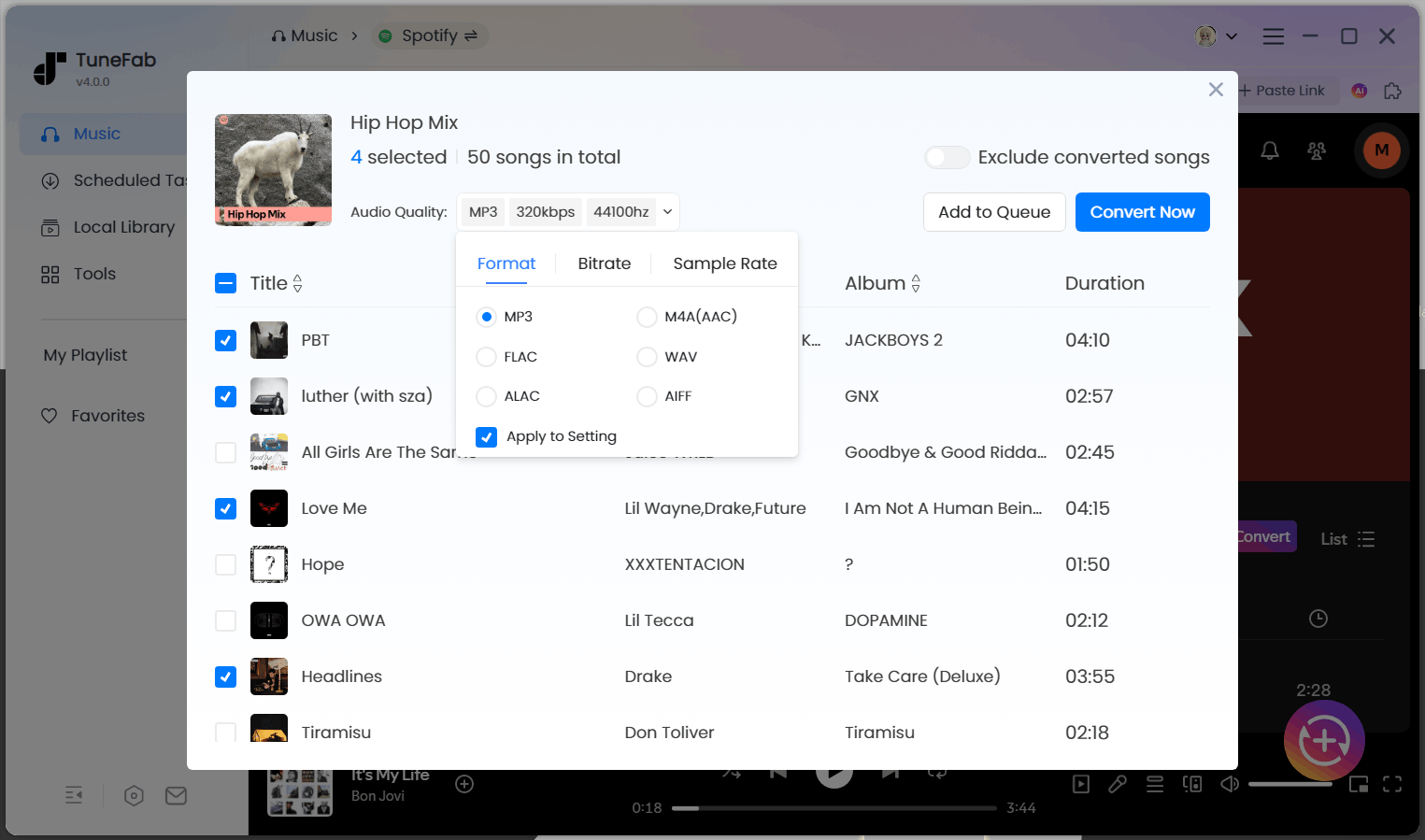
Step 3. After adding songs to the conversion list, we adjusted output settings at the top. For testing, we selected "MP3 (320kbps)", which is comparable to Apple's standard AAC streaming quality.
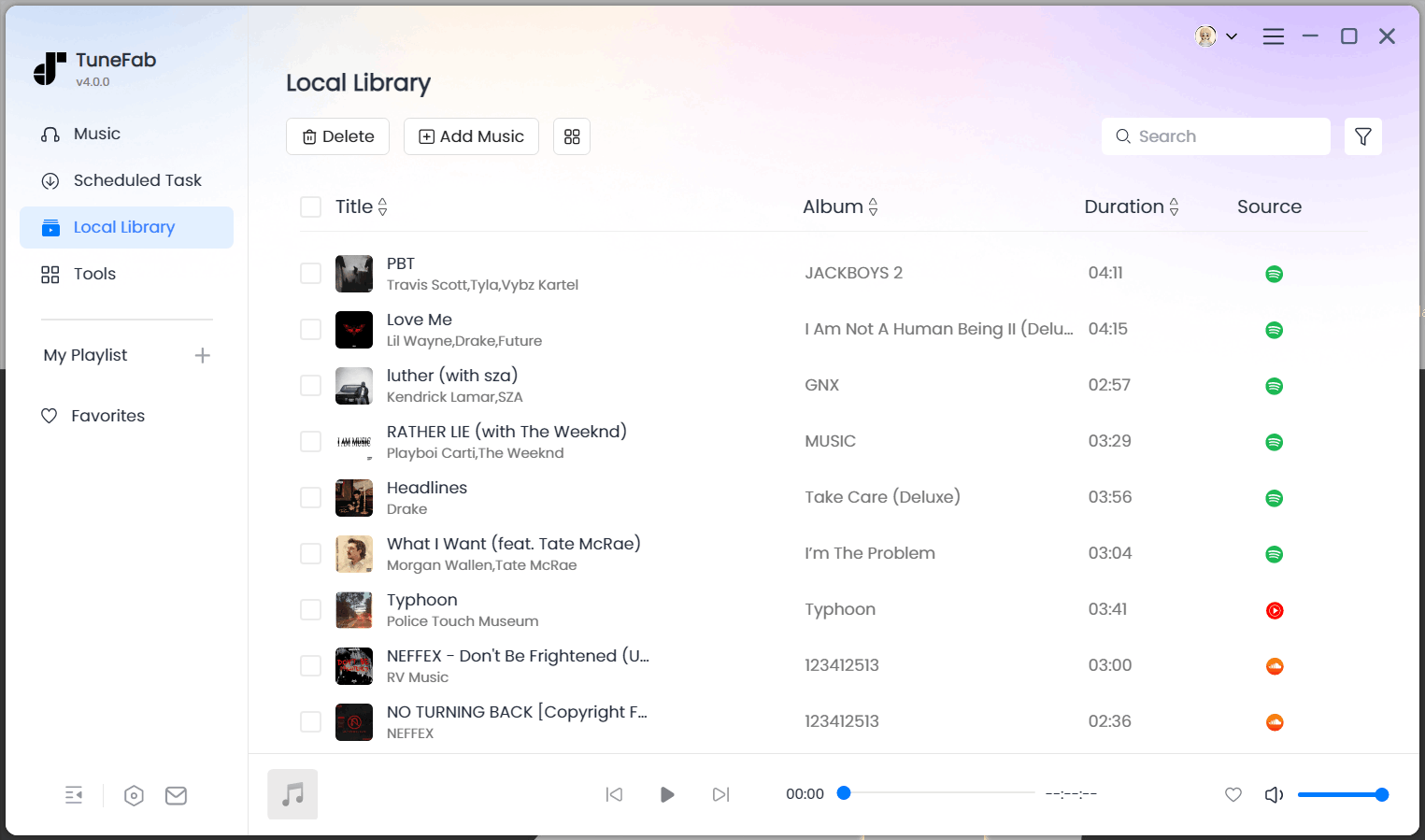
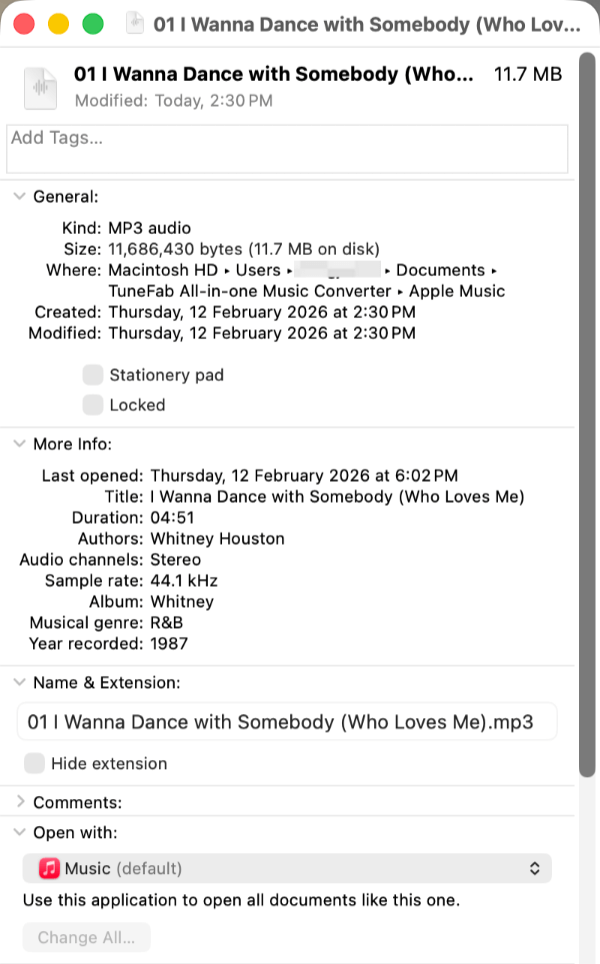
Step 4. The free version allowed downloading 3 full tracks. Converting three songs took about 25 seconds in total. The files appeared in the "Local Library", where they could be played directly.
Step 5. We checked the exported files on macOS. The audio quality was consistent with the selected settings, and there were no noticeable limitations during the free trial beyond the track count restriction.
After Testing: How TuneFab Actually Performs?
✅ Key Advantages:
- Supports batch conversion
- Exports to MP3, M4A, WAV, FLAC, ALAC, and AIFF
- Preserves ID3 metadata (artist, album, year, cover art)
- Built-in Apple Music web player
- Stable results compared to real-time recording
🤔 Limitations:
- Free version limits the number of full-track downloads
- Requires software installation
👉 Best For: Users who want to download multiple songs or playlists efficiently, maintain audio quality, and organize a long-term offline collection.
🎉 Promotion News: TuneFab now provides a 10% off with the code - TFWELCOME
Why Most Online Free Apple Music Rippers Don't Work?
Many users search for a free online Apple Music ripper because it seems convenient — no installation, no setup. However, in practice, most web-based audio recorders struggle to capture Apple Music due to content protection and browser limitations.
We tested a famous online audio recorder called Apowersoft to see how it performs in real scenarios. Here's what we found:
- The web version could only capture speaker output, not direct system audio.
- The desktop app repeatedly failed to respond after installation.
- When attempting to record Apple Music (both in the app and in the web player), the audio was muted during playback. Changing output settings (headphones, microphone, or default speakers) did not bypass the restriction.
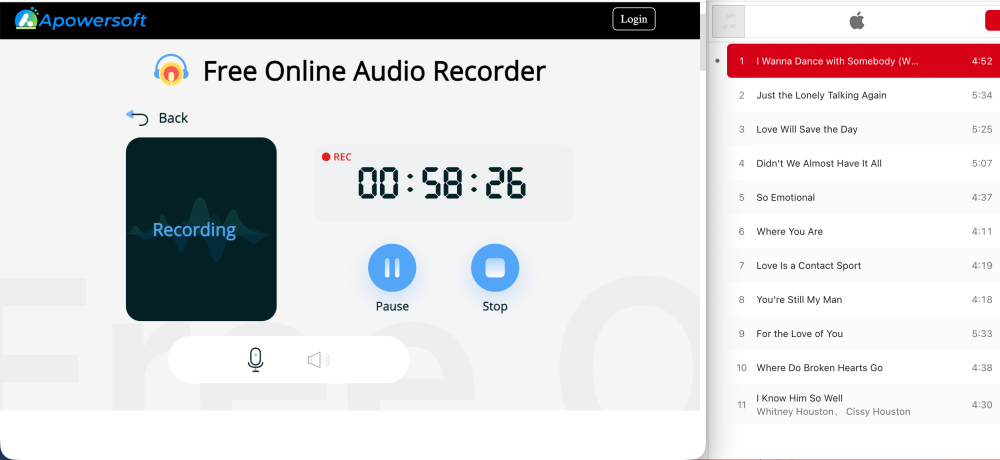
In short, while online tools may work for general audio capture, Apple Music's DRM protection typically blocks internal sound recording. As a result, many online Apple Music rippers either fail or record silent output. If you need a working solution, it's more practical to choose either a desktop screen recorder (for occasional use) or a dedicated music converter (for batch downloads and stable results).
Comparison: Which is the Best Apple Music Ripper for You?
There isn't a single best Apple Music ripper for everyone. The right choice depends on what you actually need — whether it's occasional background recording, quick testing, or building a long-term offline music library. Below is a practical comparison based on common user scenarios.
| User Need / Scenario | Screen Recording (OBS) | Desktop Converter (TuneFab) |
| Free to use | ✅ Completely free | ⚠️ Free version supports limited full-track downloads |
| Occasional recording for streaming or background music | ✅ Suitable | ⚠️ May be more than needed |
| Batch download playlists | ❌ Not supported | ✅ Supported |
| Export as pure audio files (MP3, FLAC, etc.) | ❌ Exports as video (MP4/MOV) | ✅ Multiple audio formats available |
| Maintain consistent audio quality | ⚠️ May vary | ✅ Output settings customizable |
| Long-term music collection or backup | ❌ Not ideal | ✅ More practical |
| Ease of use | ⚠️ Requires setup | ✅ Built-in web player, direct add-to-convert |
Final Verdict
If you only need to capture Apple Music occasionally, for example, as background audio during streaming, a free screen recorder like OBS Studio may be sufficient, though it requires real-time recording and exports video files.
However, if your goal is to download multiple songs or playlists, preserve audio quality, and organize them as a long-term offline collection, a desktop converter is generally more efficient and stable. Tools like TuneFab Apple Music Converter also provide a free trial version, allowing you to test the workflow before deciding whether it fits your needs.
Ultimately, the best Apple Music ripper is the one that aligns with how you plan to use the music — temporary capture or structured offline access.
FAQs About Apple Music Rippers
Can Apple detect ripping?
Apple Music is designed as a streaming service, and its playback environment includes various content protection mechanisms. If you're simply recording audio in real time or converting tracks for personal offline use, there is generally no visible notification or alert within the app.
However, users should always respect platform terms and local copyright regulations. Sharing, redistributing, or monetizing copied content may violate usage agreements.
Why can't I rip Apple Music?
If you're trying to use an online recorder or browser-based tool, you may find that no sound is captured at all. This is because Apple Music playback is restricted to its official environment, and many web tools cannot access the internal system audio.
In other cases, recordings may result in silent files or reduced audio quality. Choosing the right method, such as real-time screen recording or a dedicated desktop tool, may determine whether the process works successfully.
Can I rip Apple Music on my iPhone?
On iPhone, Apple blocks all internal audio capture during screen recording due to content restrictions. This means neither the built-in screen recorder nor third-party apps can directly record Apple Music sound.
However, some users choose to route their iPhone audio to a Mac and capture it externally. This method works but requires extra setup and records in real time.
If you only need occasional recordings, this approach may be sufficient. For stable batch exports, a desktop converter is typically more efficient.
Is there a free Apple Music ripper?
There are free options available, such as open-source screen recorders. These tools allow you to capture the playback audio, though they require manual setup and real-time recording.
Some desktop converters also offer free trial versions with limited downloads, which can help you evaluate the workflow before committing to a paid license. The best free option depends on whether you prioritize cost, convenience, or long-term usability.
TuneFab Apple Music Converter
Try TuneFab as an ultimate Apple Music ripper for better user experiences!

