


"I have a large iTunes library, and some of my songs are saved as .m4p instead of .m4a. They won't play on certain devices or apps. Can I convert M4P to M4A?"
Yes, but it depends on whether your M4P files are protected. If the files are protected by Apple's FairPlay DRM, such as Apple Music downloads or older iTunes purchases, they cannot be converted directly using standard tools like iTunes or online converters. In this case, you'll need an Apple Music M4P to M4A converter. However, if your M4P files are already DRM-free, simpler methods like iTunes conversion or online tools may work.
In this guide, we'll walk you through the best ways to convert M4P to M4A based on different file types, including a reliable method for protected files, as well as alternative solutions like iTunes, online tools, and recording. You can quickly find the most suitable approach depending on your situation.
- Before You Convert M4P to M4A: Key Things to Know
- Method 1. Convert Protected M4P to M4A on Mac/PC 🔥
- Method 2. Re-Download Old iTunes Purchases as M4A
- Method 3. Convert DRM-Free M4P Files to M4A Online
- Method 4. Record M4P as M4A If Other Methods Fail
- Comparison: Which is the Best Way to Get M4A from M4P?
- Why Do Some Tools Fail to Convert M4P Files Directly?
- FAQs About Converting M4P to M4A
- Conclusion
Before You Convert M4P to M4A: Key Things to Know
Before converting M4P to M4A, it's important to understand what these file types actually mean. In most cases, the difficulty of conversion is not about the format itself, but whether the file is protected. Knowing this will help you choose the right method and avoid wasting time on solutions that don't work.
What is An M4P File?
An M4P file is an audio format used by Apple that is typically protected by FairPlay DRM. It is commonly associated with older iTunes purchases (before 2009) and Apple Music downloads. Because of this protection, M4P files can usually only be played on authorized devices or accounts and cannot be freely converted or transferred like standard audio files.
M4P vs. M4A: What's the Real Difference?
When comparing M4P vs M4A, the key difference lies in DRM protection rather than audio quality or encoding. Here's a quick overview:
| Feature | M4P File | M4A File |
| Full Name | MPEG-4 Protected Audio | MPEG-4 Audio |
| DRM Protection | Yes (FairPlay DRM) | No |
| Source | Apple Music, older iTunes purchases | iTunes (DRM-free), CD rips, encoders |
| Playback Compatibility | Limited to authorized devices | Works on most devices and players |
| Editing & Sharing | Restricted | Fully supported |
| Conversion | Requires DRM removal tools | Usually no conversion needed |
Unlike M4A files, most M4P files cannot be converted directly using standard tools like iTunes or online converters due to DRM restrictions. That's why choosing the right method depends on your file type. In the next section, we'll show you the most reliable way to convert protected M4P to M4A on Windows and Mac.
Method 1. Convert Protected M4P to M4A on Mac and PC
If your M4P files come from Apple Music or older iTunes purchases, they are usually protected by FairPlay DRM. This means standard tools like iTunes, FFmpeg, or online converters won't work reliably. In most cases, you'll need a dedicated tool that can handle both DRM removal and format conversion in one process.
TuneFab Apple Music Converter is designed for this exact scenario. It allows you to access your Apple Music library, process protected M4P tracks, download all your Apple Music songs, and export them as standard M4A files that can be played on any device. Instead of relying on workarounds like recording or CD burning, it provides a more direct and efficient solution.
100% Secure
100% Secure
Why this method works better for protected M4P files?
- Works with Apple Music tracks and older iTunes M4P files, not just DRM-free audio
- Handles DRM removal and format conversion together, avoiding failed conversions
- Supports batch processing, which is useful if you have large music libraries
- Keeps ID3 tags and metadata, so your library stays organized after conversion
- Outputs standard formats like M4A, MP3, FLAC, WAV, etc., compatible with most devices
Step 1. Get TuneFab Apple Music Converter Ready
Download, install the converter and launch it, and enter the Apple Music service. Log in to the player with your Apple ID so that the tool can access your library.
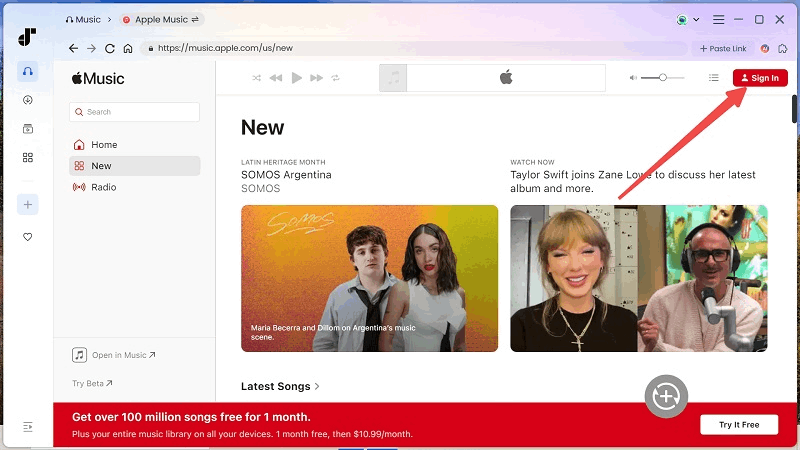
Step 2. Add Your Music to the Convert List
After logging in, you can see the albums, playlists, and other collections on the left panel. Navigate or search for the M4P music you wish to convert and drag it to the conversion list on the right side.
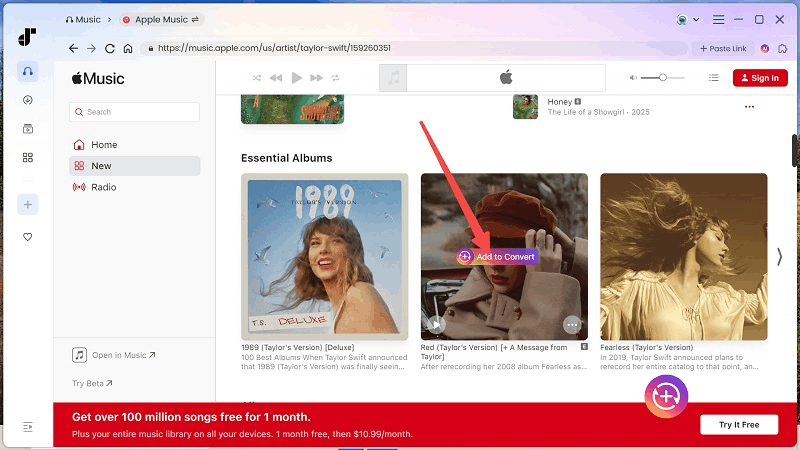
Step 3. Convert M4P to M4A
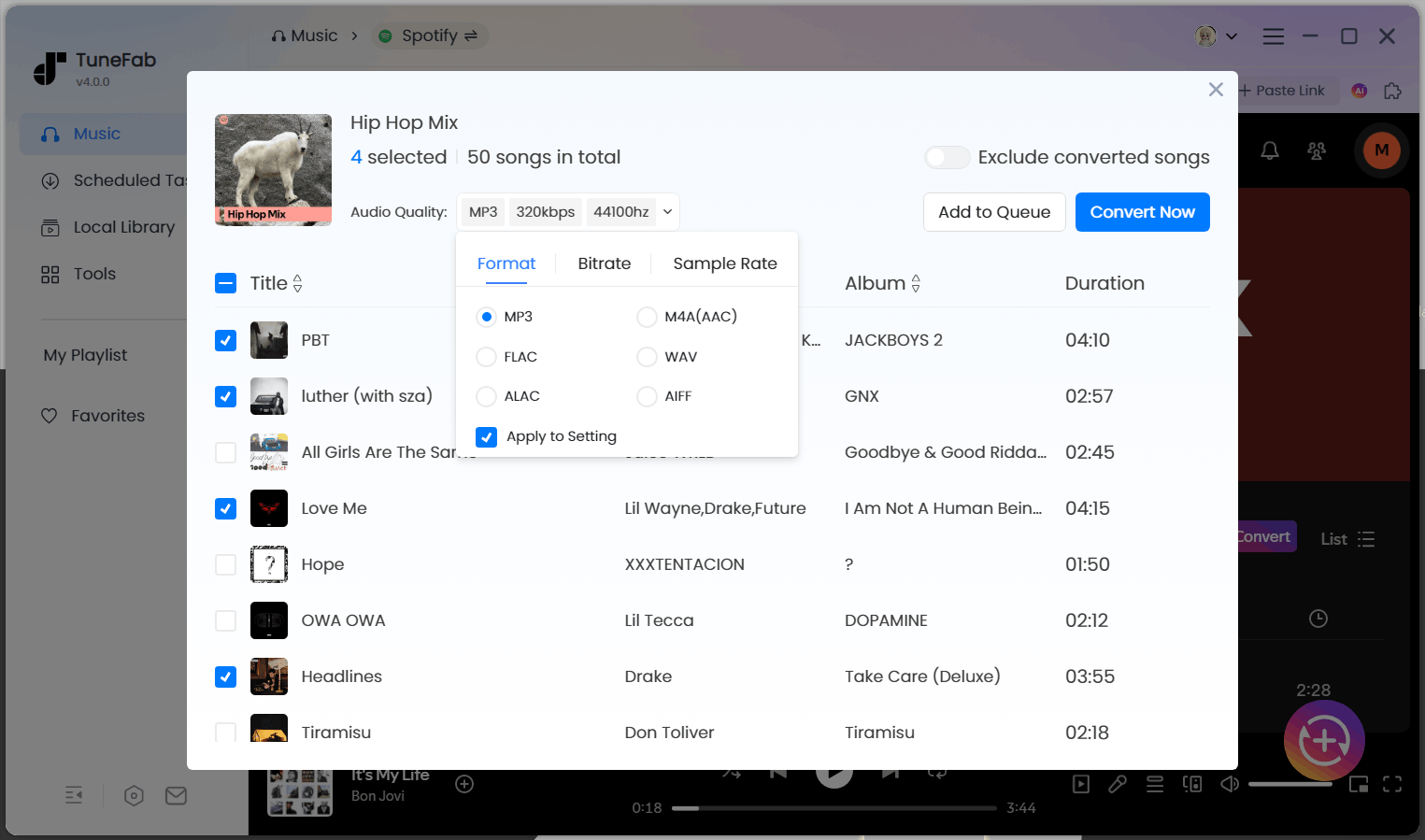
Select the output format as M4A from the format list on the top right. Hit the convert button at the bottom and you can get your songs converted.
Tips:
You can change the output sample rate and bitrate from the "Preferences" by clicking on the hamburger icon on the top right. To preserve the better audio output quality, it is highly recommended that you use the following settings:
- Codec: m4a
- Bit Rate: 256 Kbps (the original bitrate of Apple Music track)
Method 2. Re-Download Old iTunes Purchases as M4A
If your M4P files come from older iTunes Store purchases (before Apple removed DRM in 2009), you may be able to download them again as DRM-free M4A files. Apple now provides most purchased songs in unprotected formats, so replacing the old files with newly downloaded versions can sometimes resolve compatibility issues without using additional tools.
However, this method only works under specific conditions. It applies to eligible iTunes purchases linked to your Apple ID, and does not work for Apple Music tracks or subscription-based downloads, which remain DRM-protected. In some cases, older purchases may also no longer be available for re-download, depending on licensing or account status.
Steps to Redownload iTunes Purchases as M4A:
Step 1: Launch iTunes or Apple Music and find the M4P tracks in your library. Right-click on them and choose "Remove Download" to delete the old versions.
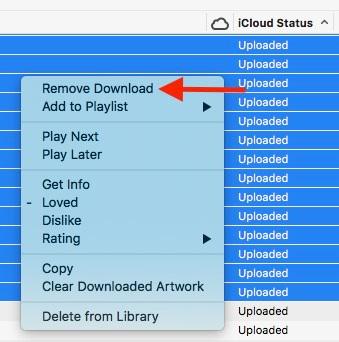
Step 2: Open the iTunes Store on your computer or mobile device. From the menu, select "Purchased", then head to the "Music" section to view your past purchases.
Step 3: Locate the songs you just removed and click the "Download" icon beside each track. The new copies will be saved as DRM-free M4A files.
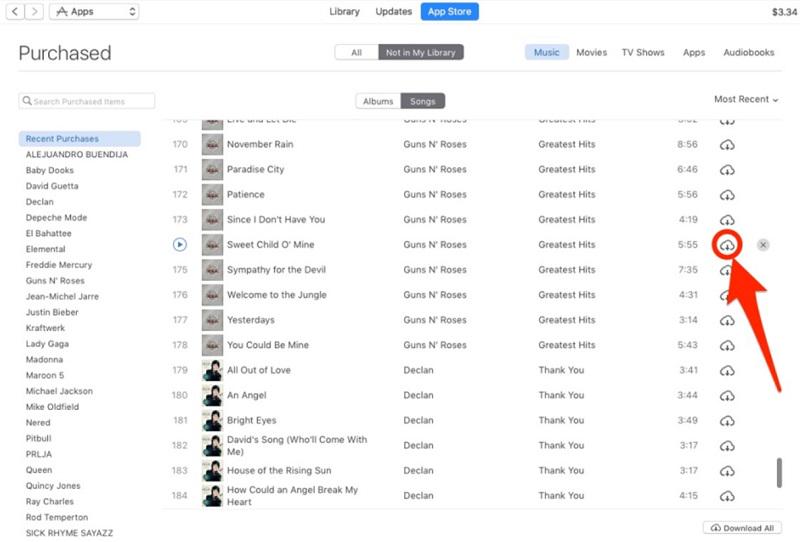
Note: If the re-downloaded files are still protected or unavailable, it means this method does not apply to your case. You can then try a dedicated converter instead.
Method 3. Convert DRM-Free M4P Files to M4A Online
If your M4P files are already DRM-free, you can use online converters to change them to M4A without installing any software. This usually applies to files that were manually encoded or incorrectly labeled as .m4p, rather than protected Apple Music or iTunes downloads.
Online tools are simple to use and work directly in your browser, making them suitable for quick, occasional conversions. However, they are not designed for DRM-protected M4P files and will typically fail if encryption is present.
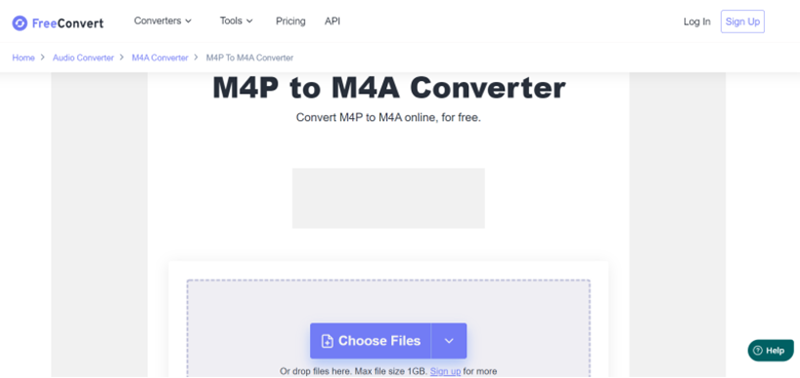
Step 1: Open an online M4P to M4A converter, like FreeConvert, in your browser.
Step 2: Upload your M4P file (from your device or cloud storage).
Step 3: Adjust output settings if needed.
Step 4: Start the conversion and download the M4A file.
Method 4. Record M4P as M4A If Other Methods Fail
If none of the above methods work for your M4P files, you can use an audio recording tool as a workaround. This approach captures the playback in real time and saves it as a new audio file, which can then be exported in formats like M4A.
Recording can be useful in certain situations, such as when a file cannot be processed by other tools or when you only need a short clip (for example, creating a ringtone). Most screen or audio recorders allow you to capture system sound directly without recording external noise.
However, this method has several limitations. It works in real time, meaning a 5-minute song takes 5 minutes to record. The output quality may vary depending on your settings, and metadata such as song title, artist, and album information is usually not preserved. You may also need to manually trim and organize the recorded files afterward.
Note: Recording is generally considered a last-resort option due to its time-consuming process and lack of efficiency. If you need faster conversion, consistent audio quality, or batch processing for multiple files, using an M4P to M4A converter like TuneFab Apple Music Converter is usually a more practical choice.
100% Secure
100% Secure
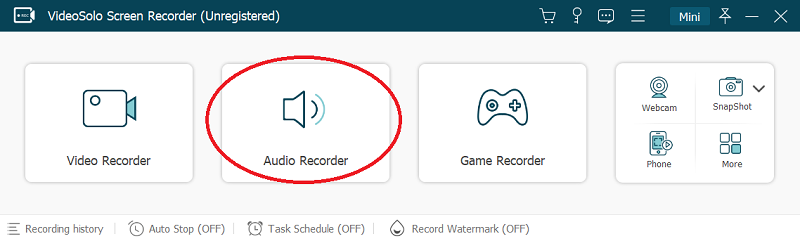
Step 1. Run a audio recorder like VideoSolo, and choose "Audio Recorder" to begin conversion.
Step 2. Turn on "System Sound" and adjust the volume to your preferences. You can turn off the "Microphone" to avoid the noise.
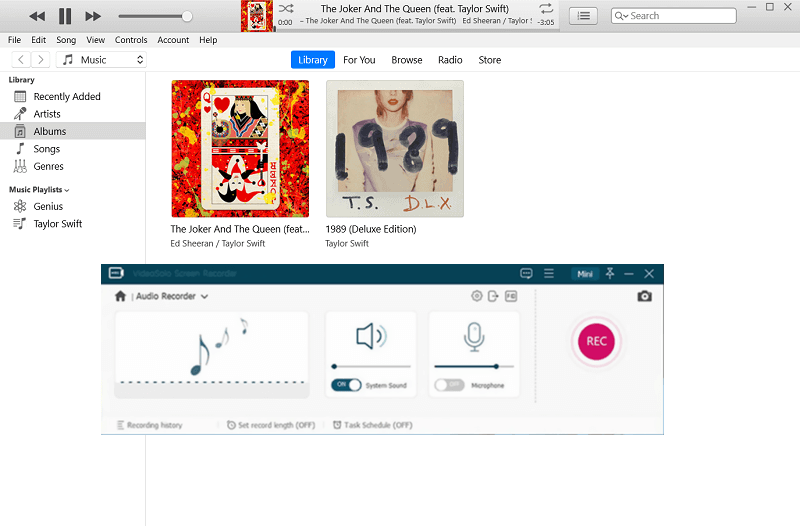
Step 3. Go to "Preferences" to set the output format as M4A, and then click "REC" to begin playing the M4P songs.
Step 4. Simply click "Stop" to stop recording if you finally finish and save the M4A songs to your computer.
Comparison: Which is the Best Way to Get M4A from M4P?
There are several ways to convert M4P to M4A, including professional converters, online tools, iTunes redownloading, or even screen recording. Each method has pros and cons in terms of speed, quality, and DRM removal. Here’s a comparison to help you choose the best option.
| Feature | TuneFab Apple Music Converter | AAPLmusicDownloader | FreeConvert | iTunes Redownloading | VideoSolo Screen Recorder |
| Best For | Users needing high-quality, fast, DRM-free conversion | Quick online DRM removal with basic quality | Convert DRM-free M4P to M4A for free | Users with old iTunes purchases | Record partial protected M4P files |
| Platform | Windows/Mac | Online | Online | Windows/Mac | Windows/Mac |
| Conversion Speed | Up to 35X | Standard (depends on internet) | Standard (depends on internet) | Standard | Real-time recording speed |
| DRM Removal | Yes | Yes | No | Yes | Yes |
| Music Type | Apple Music, iTunes Music | Apple Music | DRM-free M4P files | Only iTunes purchases | Any DRM-ed M4Ps |
| Supported Formats | M4A, MP3, AAC, FLAC, WAV, ALAC, AIFF | M4A, MP3 | M4A, MP3, WAV, etc. | M4A, MP3 | MP3, WAV, M4A, etc. |
| Batch Conversion | Yes | No | No | No | No |
| Output Quality | 320kbps | 256kbps | Depends on source file, usually compressed | 256kbps M4A | Depends on recording quality |
Why Do Some Tools Fail to Convert M4P Files Directly?
If you've tried tools like iTunes, FFmpeg, or online converters and found that your M4P files won't convert, you're not alone. In most cases, the issue isn't the tool itself, but the protection embedded in M4P files.
Unlike standard audio formats, many M4P files are encrypted with Apple's FairPlay DRM, which restricts how the file can be accessed, played, or converted. As a result, only certain methods will work depending on the type of file you have. Here are the most common reasons why conversion fails:
- DRM encryption blocks direct conversion: Most tools (including FFmpeg and online converters) can only process unprotected audio files. They cannot remove Apple's FairPlay DRM, so protected M4P files simply won't convert.
- Renaming the file extension doesn't remove protection: Changing ".m4p" to ".m4a" only modifies the file name, not the underlying encryption. The file will remain restricted and may not play on other devices.
- iTunes conversion options are limited: iTunes can convert audio formats, but only for DRM-free files. Apple Music downloads and many protected purchases won't show conversion options at all.
- Online tools have limited support and stability: Web-based converters often fail to process protected content, especially Apple Music tracks. Even when they work, they may have limits on file size, quality, or availability.
- Different types of M4P files behave differently: Some M4P files (such as older purchases or mislabeled AAC files) may be DRM-free, while others are fully protected. This is why the same method may work for one file but fail for another.
To successfully convert M4P to M4A, the key is to first identify whether your file is DRM-protected. Once you know that, you can choose the right method instead of trying multiple tools that aren't designed for the job.
FAQs About Converting M4P to M4A
Can you convert M4P to M4A directly?
Not always. Whether you can convert M4P to M4A directly depends on whether the file is DRM-protected. If the file comes from Apple Music or older iTunes purchases, it is usually protected and cannot be converted directly. In this case, a dedicated converter like TuneFab Apple Music Converter is required. If the file is DRM-free, tools like iTunes or online converters may work.
Can FFmpeg convert protected M4P to M4A?
No. FFmpeg cannot remove Apple's FairPlay DRM, so it cannot convert protected M4P files. It only works with DRM-free audio. If your files are encrypted, FFmpeg will fail or produce unusable output.
Can I convert M4P to M4A using iTunes?
Only in certain cases. iTunes can convert audio formats for DRM-free files or allow you to re-download some older purchases as M4A. However, it does not support converting Apple Music tracks or most DRM-protected M4P files.
What's the difference between iTunes M4P and Apple Music M4P?
As mentioned, iTunes Store songs and streaming Apple Music are both encoded in M4P format. To be specific, both of them have the same .m4p file extension and the same audio quality of 256kbps AAC. These tracks are protected as well. Despite these similarities, they are different in other aspects. Check out the table below to learn more.
| Available Time | Compatible Devices | Fee | Ownership | |
| iTunes Store M4P Songs | 2003 April - 2009 March | iPhone, iPad, Apple TV, iPod Touch, iPod Nano/Shuffle | Sell by a song/album | ✔️ Can be burned to CD via iTunes |
| Apple Music M4P Tracks | Since 2015 July | iPhone, iPad, Apple TV, iPod Touch, Android devices, Samsung TV, PS5, Roku, etc. | Charge based on subscription plan | ❌ |
Conclusion
Converting M4P to M4A is not just a simple format change. The key factor is whether your files are DRM-protected. If your M4P files come from Apple Music or older iTunes purchases, they are usually restricted and cannot be converted directly using standard tools. In this case, using a dedicated converter like TuneFab Apple Music Converter is the most reliable way to get playable M4A files.
If your files are DRM-free, simpler methods like iTunes or online converters may be enough for occasional use. However, these methods often come with limitations in compatibility, speed, or batch processing.
Overall, choosing the right method depends on your file type and needs. For users dealing with protected M4P files or large music libraries, a more efficient and stable solution will save time and ensure better results across different devices.
TuneFab Apple Music Converter
Remove DRM from Apple Music M4P files to M4A without quality loss.

