


To download an Amazon Music playlist, start with your subscription. Amazon Music Prime lets you save All-Access Playlists for offline listening, but it does not offer offline downloads for every playlist. Amazon Music Standard and eligible Amazon Music Unlimited plans allow a wider range of playlists to be downloaded in the Amazon Music app. Those downloads stay inside the app. If you need a complete playlist as local audio files on a computer, the export workflow below covers selecting the whole track list and checking the results.
This page focuses on playlists: how to download every eligible track, spot missing or repeated songs, keep the intended sequence, and handle changes after the first export. Now, let's dive in.
Which Amazon Music Plans Let You Download Playlists?
The difference between plans matters before you start a large playlist download. Amazon's current playlist download guidance describes the following scope.
| Plan | Playlist offline download in the Amazon Music app | Main limit |
| Amazon Music Free | No music playlist downloads | Streaming access does not include offline music downloads. |
| Amazon Music Prime | All-Access Playlists only | An ordinary playlist is not automatically eligible. Look for the ALL-ACCESS label. |
| Amazon Music Standard | Playlists available through the subscription | Downloads play in the Amazon Music app. |
| Eligible Amazon Music Unlimited plans | Playlists available through the subscription | Downloads play in the Amazon Music app; the Single Device plan is an exception to general offline access. |
For Prime members, All-Access Playlists include a selection tailored to listening history. Amazon also allows a qualifying user-created All-Access Playlist in its app. The important check is the ALL-ACCESS label, not simply whether a playlist appears in your Library. Amazon says Prime offline listening is limited to these playlists. Its All-Access Playlist help page explains how to identify them.
Method 1: Download Playlists on the Amazon Music App
If you subscribe to Amazon Music Unlimited or Amazon Music Prime, you can easily download playlists on your phone or your computer. Use this method when you want to listen offline on a supported device and are happy to keep the playlist inside Amazon Music. Prime members should first confirm that the playlist is marked ALL-ACCESS. Standard and eligible Unlimited subscribers can follow the same download controls for playlists available with their plans.
STEP 1. Select the playlist you want to download.
STEP 2. Tap the More Options menu and tap Download.
STEP 3. Quickly access your recent downloads by opening Recent from the Amazon Music menu. Select the Recently Downloaded Songs list.
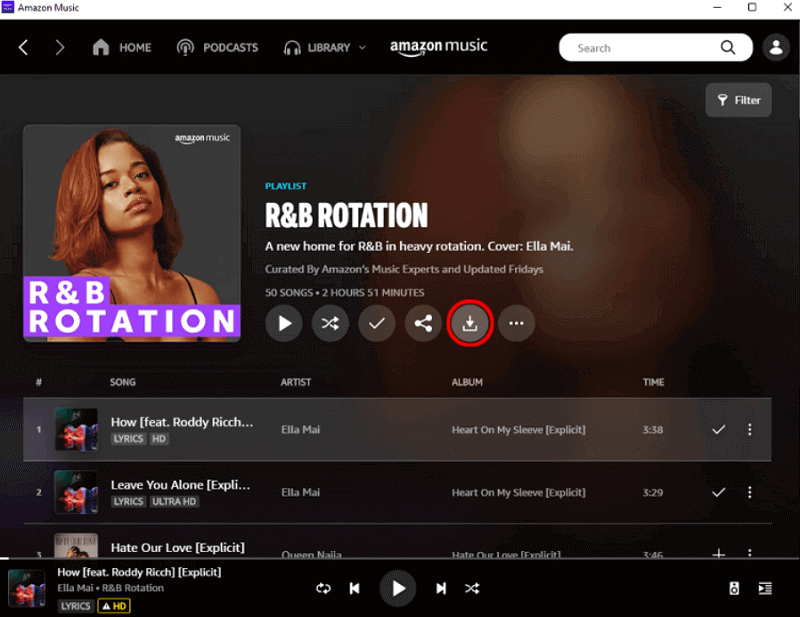
Amazon may automatically download recently played All-Access Playlists on iOS or Android. You can turn off Auto-download All-Access Playlists in settings if storage or mobile data matters. App downloads remain available only in Amazon Music and cannot be copied as ordinary files to another player or external drive, according to Amazon's help page.
Method 2: Download Amazon Playlists as Local MP3
Choose this route when you need the playlist's tracks in a folder on Windows or Mac. TuneFab Amazon Music Converter opens Amazon Music in its built-in web player and can add all songs from a selected playlist to a conversion list.
You can use this converter to download Amazon music, albums, playlists, podcasts, and even all music from an artist's page. All downloaded content can be in MP3, M4A, WAV, or FLAC and you can listen to it on any player easily. Besides, this tool can preserve songs in original quality with ID3 information so that you can manage the downloads easily.
Features of TuneFab Amazon Music Converter
● Download songs, albums, and podcasts from Amazon Music HD, Prime & Unlimited
● Convert Amazon music to MP3, M4A, WAV, and FLAC files
● Get playlists and podcast episodes downloaded in batches at 5X faster speed
● Preserve the original sound quality in the output audio file
● Keep ID3 metadata and customizable audio parameters (including sample rate & bitrate)
Extra, Yet Effortless Features
● Clean and intuitive interface
● Built-in music player for direct streaming
● Excellent compatibility
● Multi-language support
● No amazon music desktop app is needed
Don't worry about not being an Amazon Music member, everyone can download all genres and various podcast episodes and convert them to MP3 format. Enjoy Amazon Music Converter, which supports all amazon music, outputs mainstream formats, increases transformation speed, and retains ID3 tags.
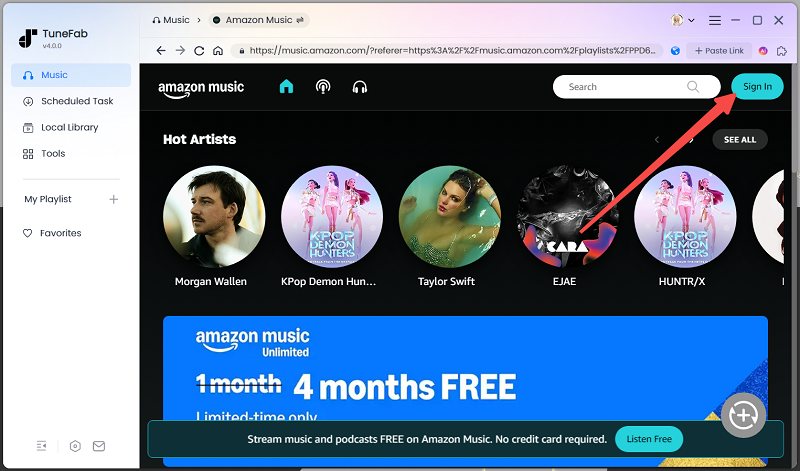
STEP 1. Open TuneFab Amazon Music Converter and Log in
Open Amazon Music Converter and an interface will pop up, allowing you to enter your email or mobile phone number and password. Just input your information to log in to your Amazon Music account.
STEP 2. Open the Playlist and Add the Full Track List
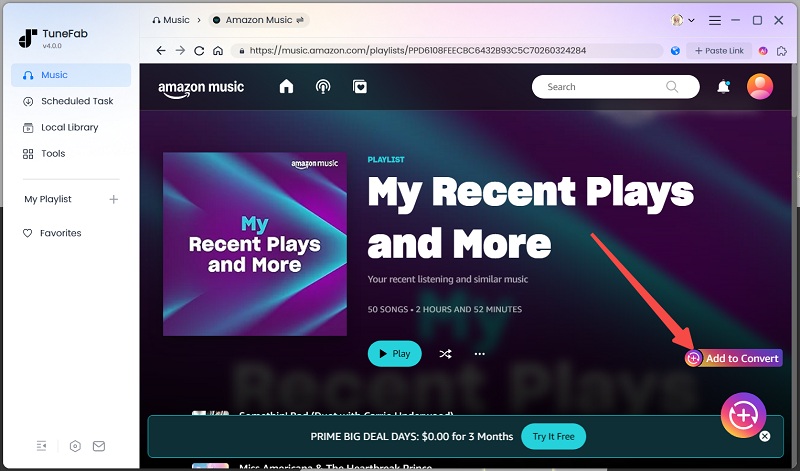
Open the target playlist and choose Add to Convert. Before converting, compare the list with the playlist on Amazon: check the visible track count, scan the first and last tracks, and remove any songs you do not want. This check is useful when a playlist has unavailable tracks or intentional repeats.
STEP 3. Reset the Output Format
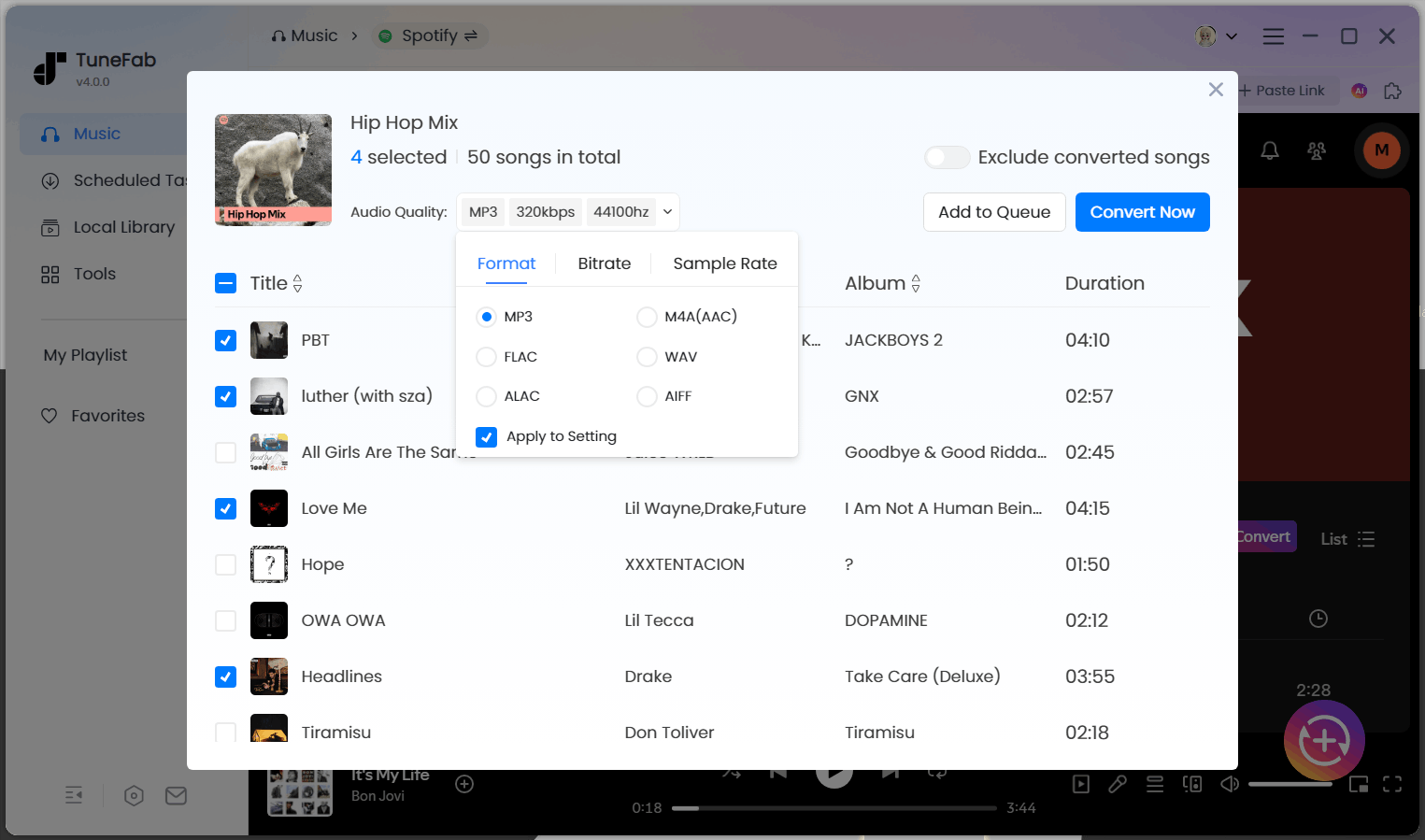
Select the songs you want from the conversion list and apply the output settings. MP3 is a practical choice for broad device support; FLAC suits a compatible local library when the available source quality justifies it. Choose an output folder named after the playlist so files from different exports do not mix.
Related Articles:
STEP 4. Convert and Inspect the Exported Folder
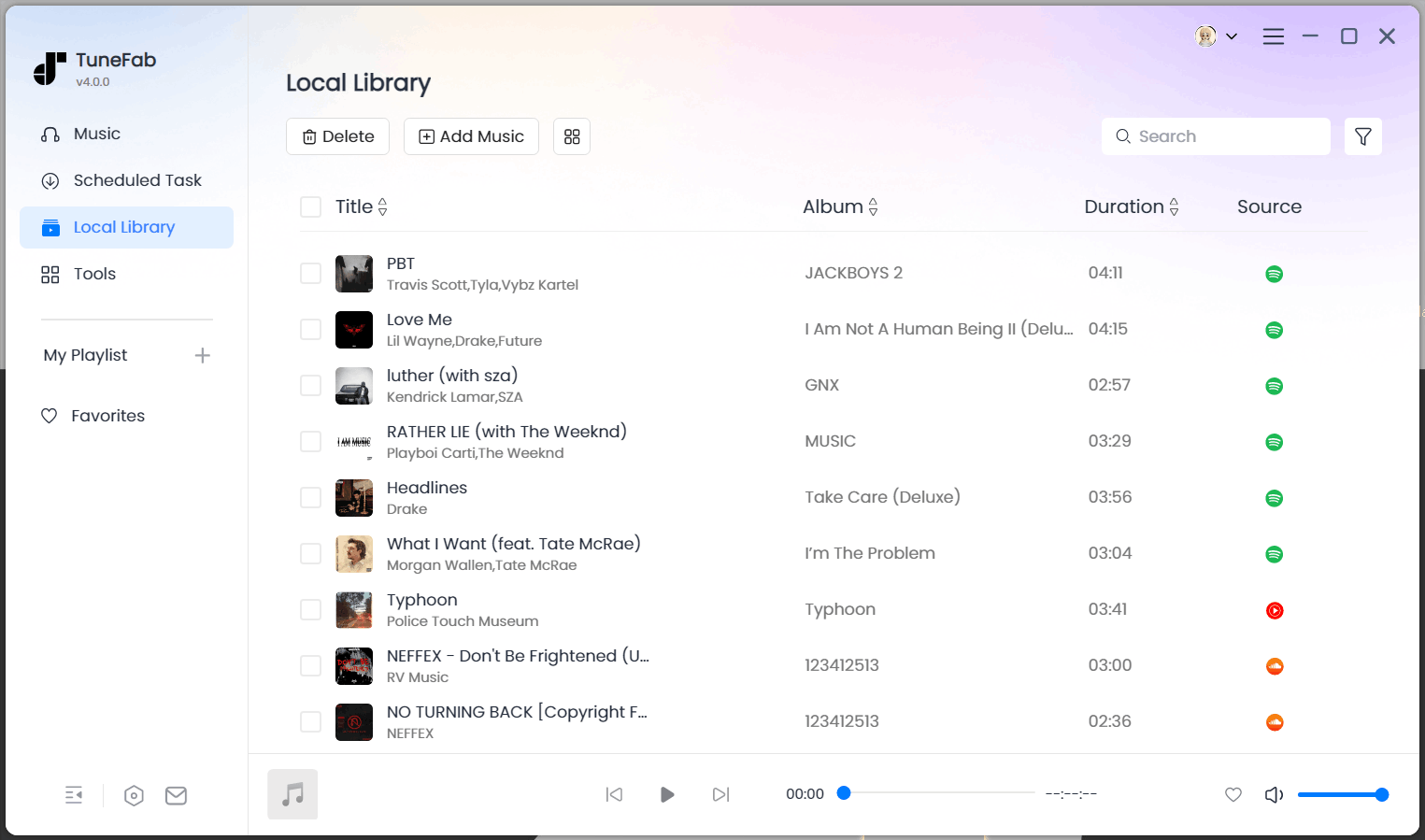
Select Convert Now. Once finished, open your Local Library to locate the saved tracks. Use these quick checks to ensure the export matches your intent before copying to USB:
- Check File Count & Retry Failures: Compare the number of completed files with the conversion list. If the count is short, identify the missing tracks, add only those to the list, and run a smaller batch using the same output folder. Recheck afterward to avoid duplicates.
- Keep the Intended Song Order: File browsers often sort differently than Amazon Music. ID3 tags describe album info, not custom playlist position. If your USB player doesn't support M3U playlists, use numbered filenames (e.g., "001 Song Title") to force the correct sequence.
- Check Metadata and Duplicates: Open a few files in a local player to verify title, artist, album, and artwork. Note that TuneFab recognizes and skips duplicate tracks in the conversion list. If your source playlist intentionally repeats a track, you must manually verify the queue and check similar recordings by artist, album, and duration.
Important: Process Additions After Playlist Changes
An exported folder is a snapshot, not a live copy. Record the export date and keep your source playlist. If you add songs later, compare the current playlist with your saved folder and convert only the new tracks. If you remove songs, delete them manually from the local folder if you want both versions to match. Do not assume the converter will automatically sync future changes.
Frequently Asked Questions
Can Prime members download any Amazon Music playlist?
No. Prime offline music downloads are limited to All-Access Playlists, including a qualifying user-created All-Access Playlist. Look for the ALL-ACCESS label. Other playlists may be available to stream or shuffle, but that does not make them eligible for Prime offline download.
Does the Amazon Music app save a playlist as MP3 files?
No. Amazon says subscription playlist downloads are accessible within the Amazon Music app and cannot be exported for use in another app or on external storage. A local file export requires you to use tools like TuneFab Amazon Music Converter.
Can I select an entire playlist instead of adding songs one by one?
Yes. TuneFab can add a whole playlist to the conversion list, where you can select the batch. Check the queue against the source playlist before starting, particularly if some tracks are unavailable or deliberately repeated.
Will the exported tracks stay in the same order?
Do not assume so. File browsers and players may sort by filename or metadata. Verify the sequence after export and save an M3U playlist or number filenames if your playback device needs a fixed order.
What happens when I add songs to the Amazon Music playlist later?
The files already exported will not automatically reflect that change. Compare the updated playlist with your local folder, add the new tracks to the conversion list, and process that smaller batch. Review removed tracks and reordered songs separately.
Conclusion
For app-based offline listening, check your plan first: Prime is limited to All-Access Playlists, while Standard and eligible Unlimited plans support broader playlist downloads. For local files, import the complete playlist into TuneFab Amazon Music Converter's conversion list, process the selected batch, then check the file count, order, metadata, duplicates, and any failed tracks. Revisit the source playlist when it changes so your saved collection stays useful.

