


Many users want to save Apple Music to an SD card to free up phone storage, play music in the car, or keep downloads on external storage instead of internal memory. But can you move Apple Music to SD Cards? Whether this is possible depends largely on your device:
- Android phones with a built-in SD card slot → Yes. You can change the download location inside the Apple Music app.
- Android devices without expandable storage (e.g., Pixel models) → No. Apple Music downloads can't be saved to external USB-C SD adapters.
- Windows/Mac computers → Only purchased, non-protected music files can be copied to an SD card.
- Apple Music streaming downloads → Not transferable outside the app due to encryption. To use them on an SD card, they must first be converted into standard audio formats.
Below, we'll explain each situation in detail and show you what actually works depending on your setup. Scroll down and get started!
Method 1. Change Apple Music Download Location to SD Card (Android Only)
Apple Music officially supports saving downloads to an SD card, but only on Android devices that have a built-in microSD card slot. If your phone supports expandable storage, you can change the download location inside the app and move both existing and future downloads to the SD card.
However, this option will not appear on devices without expandable storage (such as Google Pixel models). External USB-C SD card adapters are also not supported, because Apple Music downloads are stored as encrypted app data tied to the device.
If your device has a microSD slot, follow these steps:
Step 1. Open the Apple Music app and make sure it is updated to the latest version from Google Play.
Step 2. Tap the "three dots" button on the top-right corner, and then select " Settings".
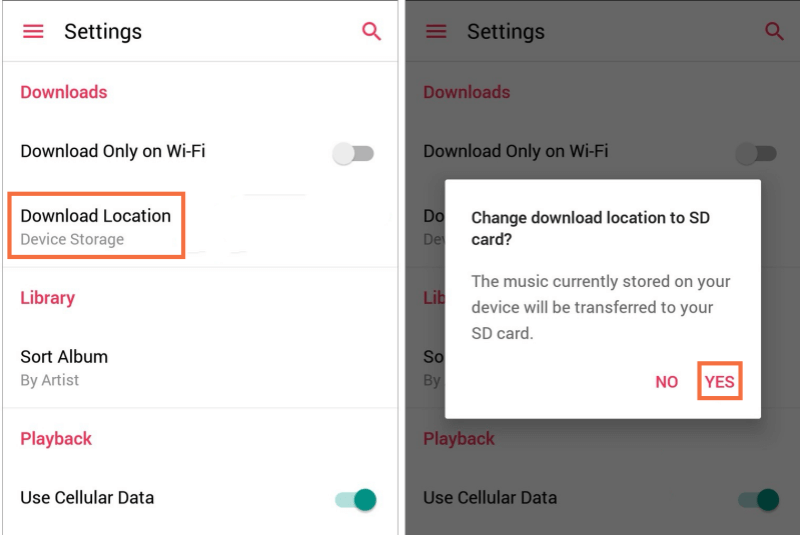
Step 3. Scroll to "Download Location", select "SD Card", then confirm when prompted to move existing downloads. Once selected, Apple Music will store future downloads on the SD card automatically.
Why Apple Music Downloads on SD Card Still Can't Be Used Outside the App
Even after changing the download location to an SD card, Apple Music files are not saved as regular MP3 or FLAC files. They are stored as encrypted app data, which means they can only be recognized and played inside the Apple Music app on that specific device.
On Android, downloaded tracks are saved in protected folders using file systems like EXT4 or F2FS, not standard formats such as FAT32 or exFAT that are commonly used for removable storage. This prevents other devices, such as car stereos, smart TVs, or computers, from reading the files directly, even if they are physically stored on the SD card.
In short, moving Apple Music downloads to an SD card only changes where the encrypted data is stored. It does not remove usage restrictions or make the files transferable across devices.
Method 2. Convert Streaming Apple Music to MP3 and Move It to SD Cards
As explained earlier, changing the download location on Android only moves encrypted app data to the SD card. It does not create transferable audio files that can be played on other devices.
If your goal is to use Apple Music tracks on an external SD card, for example, in a car stereo, camera, media player, or computer, the music must first be saved as a standard audio format such as MP3, M4A, FLAC, or WAV. Once converted, the files behave like regular music files and can be copied to any SD card and used across devices.
A desktop tool like TuneFab Apple Music Converter lets you save Apple Music tracks in common audio formats for broader compatibility. It supports exporting songs, albums, and playlists while preserving audio quality and metadata.
100% Secure
100% Secure
Main Features of TuneFab Apple Music Converter
● Convert Apple Music songs/albums/playlists/podcasts to DRM-free MP3, M4A, FLAC, and WAV.
● Customize the bitrate (up to 320 kbps) and the sample rate (up to 48 kHz) to amplify the listening experience.
● Batch download Apple Music tracks at 20X faster speed.
● Retain metadata information (i.e. Artist, Album Name, Track Number, Cover Art) for efficient management.
Embedded with Apple Music web player, you can easily complete the conversion task within one app. Let's see how to save DRM-free Apple Music to SD Card with TuneFab.
Step 1. Install TuneFab and Sign In
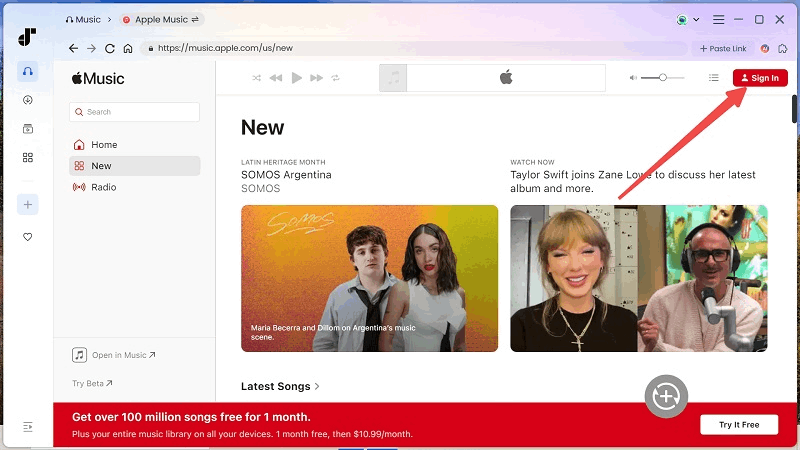
Download and install TuneFab Apple Music Converter on your Windows or Mac computer. Open the program and sign in to access your Apple Music library through the built-in web player.
Step 2. Select Songs or Playlists
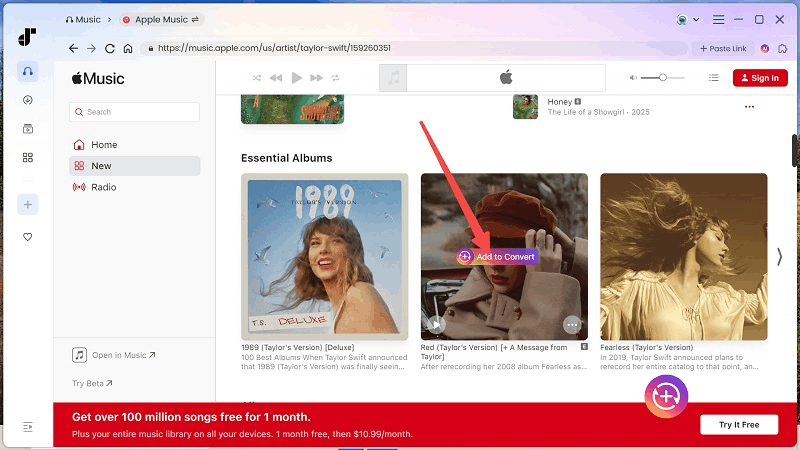
Browse your Apple Music library and add the songs, albums, or playlists you want to save.
Step 3. Choose Output Format
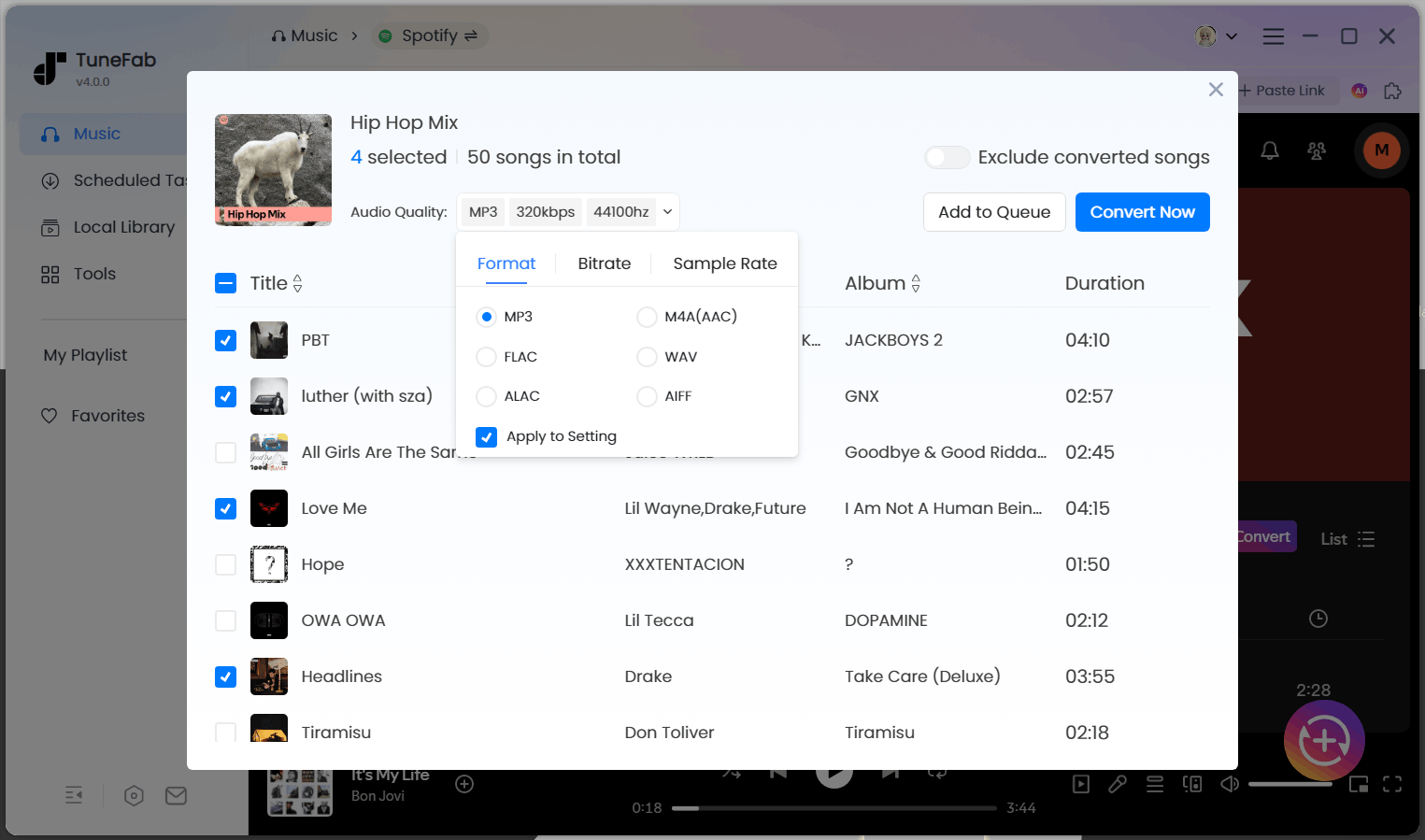
Select your preferred output format (MP3 is recommended for maximum SD card compatibility). You can also adjust the bitrate or sample rate if needed.
Step 4. Start the Conversion
Click "Convert Now" to process the selected Apple Music tracks. Once completed, the files will be saved to your chosen output folder.
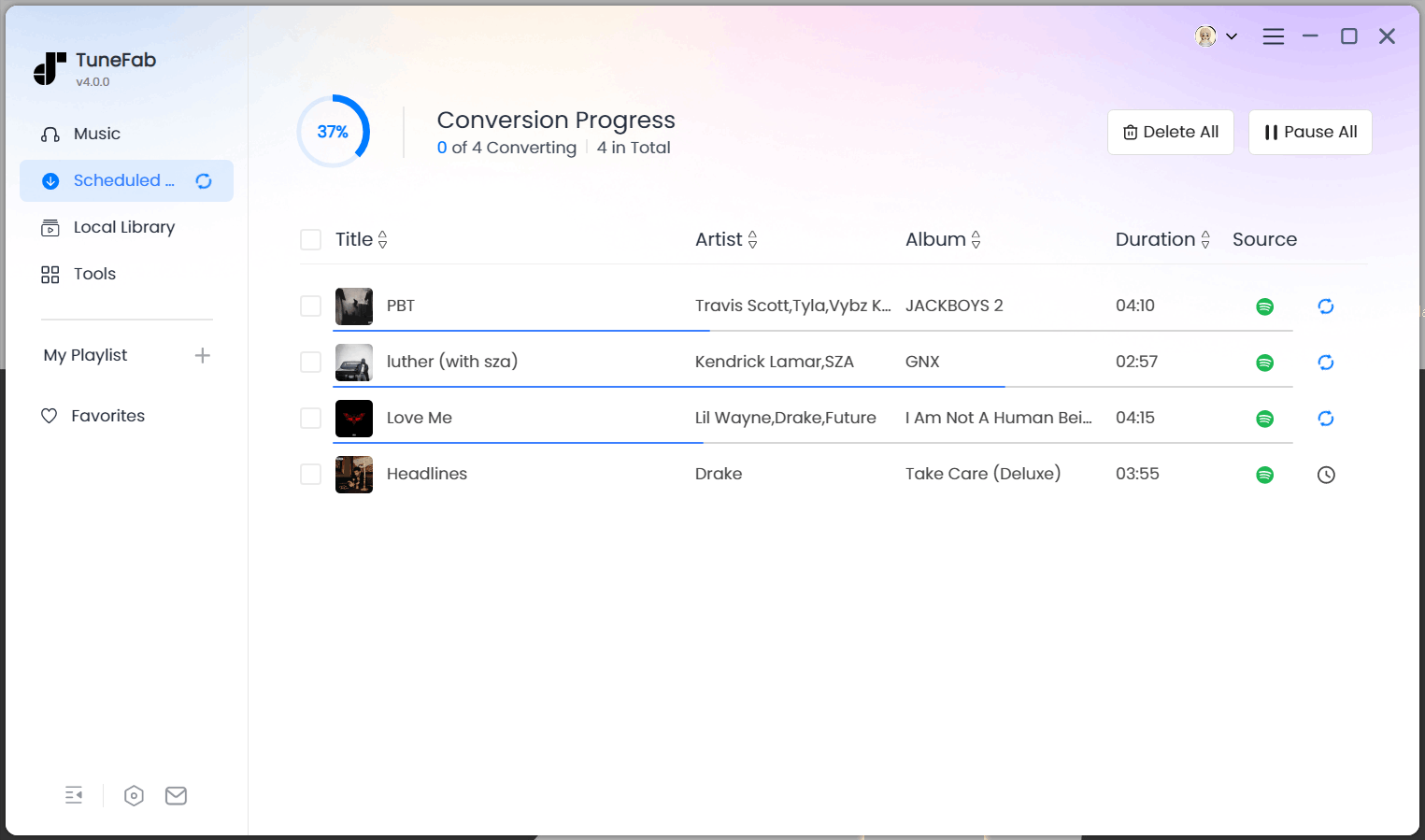
Step 5. Copy Files to the SD Card
Insert the SD card into your computer. If your computer doesn't have a built-in SD card slot, use a USB SD card reader to connect the card. Once the SD card appears as a removable drive, simply drag and drop the converted music files onto it.
After copying is complete, safely eject the SD card before removing it. The files can then be played on compatible devices without relying on the Apple Music app.
Further Information: If you want to learn more details about downloading Apple Music songs to your PC/Mac, check out the following guides.
Bonus: How to Move Purchased iTunes Songs to an SD Card (Computer Users)
If you previously purchased songs from the iTunes Store, you can copy them to an SD card just like regular audio files, as long as they are not protected. Most songs purchased after 2009 are DRM-free AAC files and can be transferred without restrictions. However, some older purchases (before Apple introduced iTunes Plus) may still be protected and cannot be converted or used outside authorized devices.
Step 1. Open iTunes (Windows) or the Music app (Mac). Right-click a song and select "Show in Windows Explorer" on Windows or "Show in Finder" on Mac.
Step 2. In your library, enable the "Kind" column. Make sure the track is listed as AAC audio files or Purchased AAC audio files. If it shows "Protected AAC", the file cannot be freely used outside authorized devices.
Step 3. Insert your SD card into your computer using a card reader. Open the SD card folder and drag the audio files into it. For best compatibility with car stereos or other devices, ensure your SD card is formatted as FAT32 or exFAT.
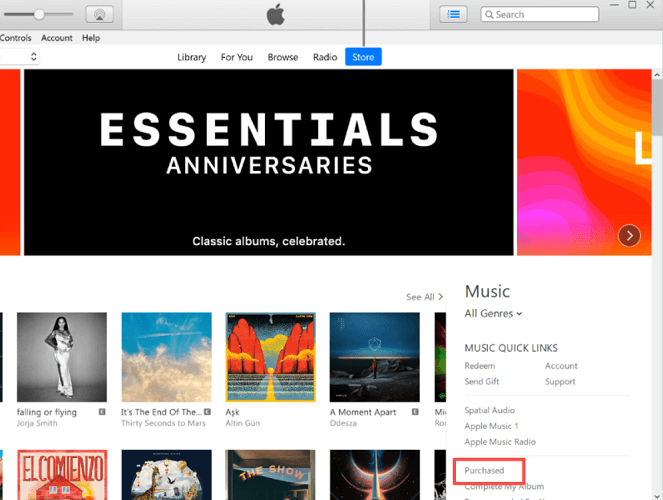
Once copied, these files can be played on compatible SD-supported devices without requiring the Apple Music app.
Tips: If you also need to download Apple Music to more devices or platforms beyond USB drives, we also provide guides as follows.
Conclusion
Saving Apple Music to an SD card ultimately depends on your device and the type of music you have. If you're using an Android phone with a built-in microSD card slot, you can change the download location inside the Apple Music app and store your downloads on the SD card. However, these files remain app-based and can only be played within Apple Music.
If you need music files that can be used across different devices, such as car stereos, cameras, or media players, you'll need a reliable tool, such as TuneFab Apple Music Converter, which helps you save the tracks in a standard audio format first, then copy them to your SD card using a computer.
Choose the method that matches your setup, and make sure your SD card is formatted correctly for the device you plan to use.
TuneFab Apple Music Converter
Download songs from Apple Music in bulk to move to your SD Card easily!

