


Apple Music does not go onto a SanDisk MP3 player the same way as regular MP3 files. While SanDisk players can play supported local audio files, Apple Music downloads from a subscription are not handled like normal drag-and-drop music files.
So if you want to put Apple Music on a SanDisk MP3 player, you usually need to do two things first: make the songs usable as regular music files, then move them to the player. The next parts explain why direct transfer often fails and how to get the songs onto your SanDisk step by step.
Can You Put Apple Music on a SanDisk MP3 Player?
Yes, but not in the same way you would copy regular MP3 files to the player. SanDisk MP3 players are designed for supported local audio files, and SanDisk’s own support pages make it clear that format support depends on the model. Some players can handle DRM-free AAC or M4A files from iTunes, while older models are more reliable with MP3.
So the real problem is usually not the SanDisk player alone. It is the type of music file you are trying to move. If you already have normal local music files on your computer, transferring them is often just a simple drag-and-drop process. But Apple Music subscription downloads are not treated like regular offline music files. Apple also separates ordinary song files that can be converted in the Music app or iTunes from protected content that cannot be converted with the normal built-in method.
That is why the process usually starts with the files, not the player itself. First, you need to save the songs in a format your SanDisk player can handle more easily. Then you can transfer them like other supported music files. Next, let’s go through that first step.
How to Convert Apple Music for a SanDisk MP3 Player
Before you move anything to the player, you need music files that your SanDisk can read more easily. This part focuses on that first step, so once it is done, the transfer itself is much simpler.
This is usually where the problem starts. Apple Music subscription downloads are not like normal local music files that you can just drag to a SanDisk player. So before moving anything to the device, you need to save the songs in a format the player is more likely to read well. In most cases, MP3 is the safest choice.
Here, we will use TuneFab Apple Music Converter to show the process. For now, the goal is simple: save the Apple Music songs to your computer first. Then, in the next part, move them to the SanDisk MP3 player.
Step 1. Open TuneFab Apple Music Converter and sign in to the built-in Apple Music web player.
After signing in, open the playlist, album, or songs you want to put on your SanDisk MP3 player.
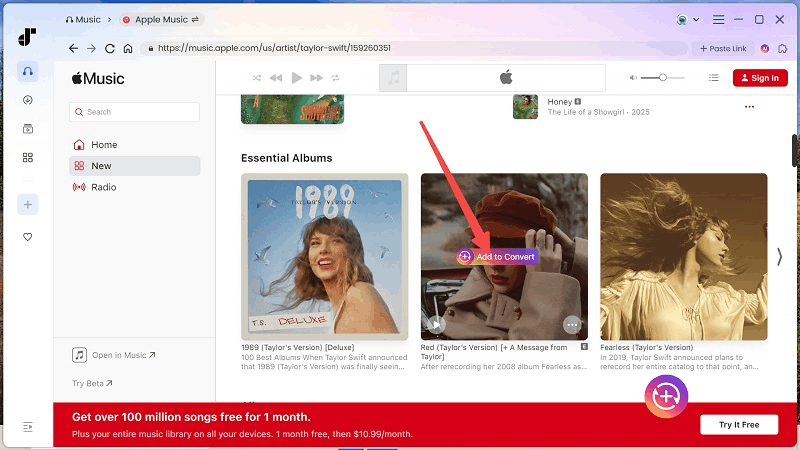
Step 2. Add the Apple Music songs you want to convert.
Select the tracks you need and add them to the conversion list. If you want to move many songs at once, you can add a full playlist or album instead of choosing songs one by one.
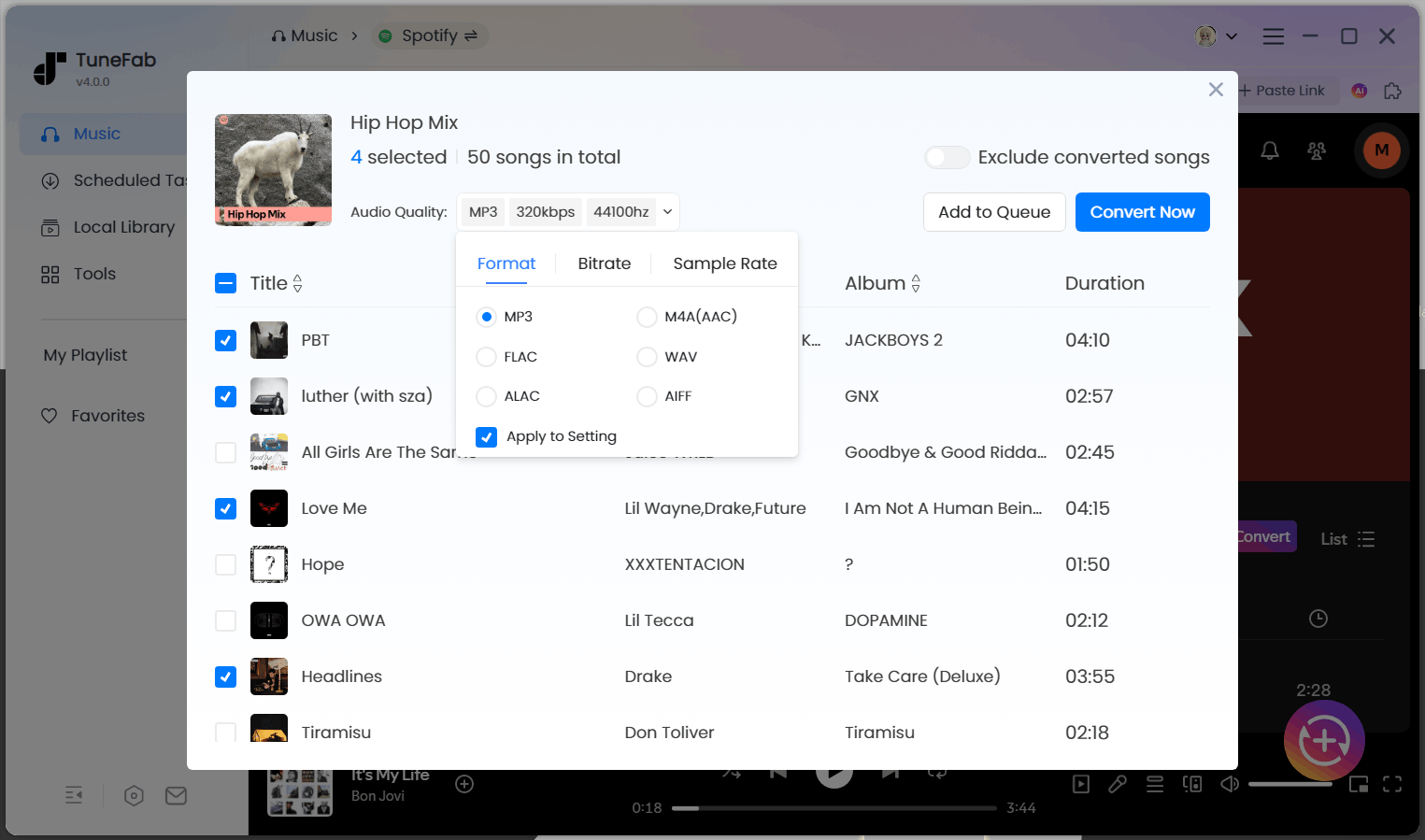
Step 3. Choose MP3 as the output format.
To make playback easier on a SanDisk MP3 player, set the output format to MP3. You can also adjust other output settings if needed before starting the conversion.
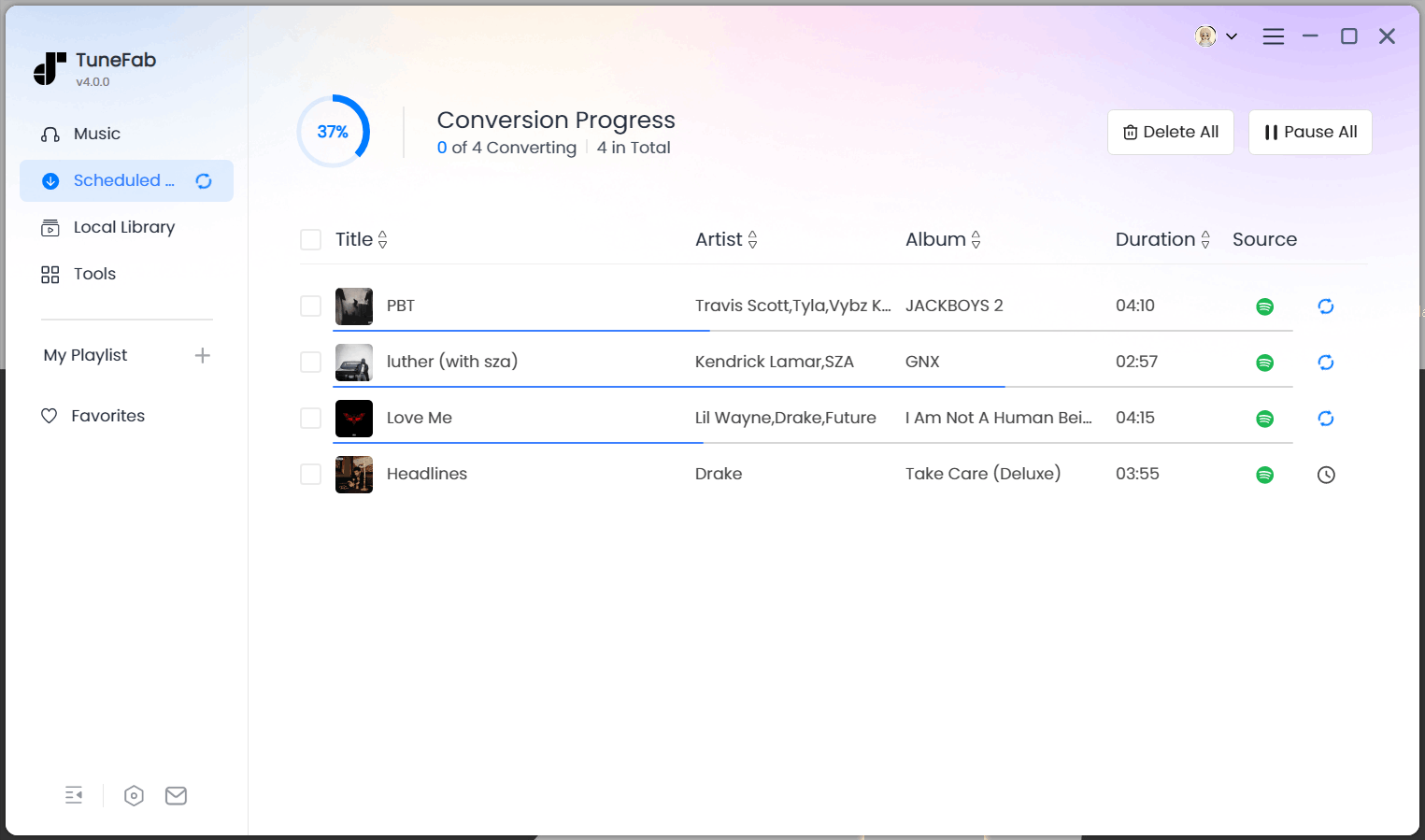
Step 4. Start the conversion and save the songs to your computer.
Once the process is finished, the songs will be saved as regular local audio files on your computer. After that, you are ready to transfer them to your SanDisk MP3 player.
How to Transfer the Converted Music to Your SanDisk MP3 Player
Once the songs are saved to your computer, the rest is much easier. At this point, you are no longer dealing with Apple Music as a subscription download. You are just moving music files to your SanDisk MP3 player like you would with other local tracks.
Step 1. Connect your SanDisk MP3 player to your computer with a USB cable.
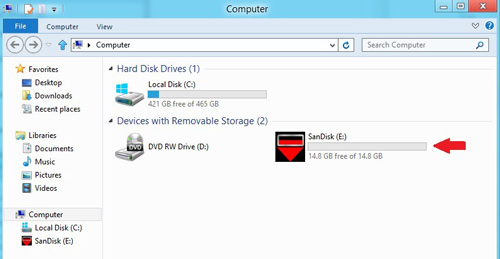
Wait for your computer to recognize the device. On some models, the player will appear as a removable drive.
Step 2. Open the SanDisk player folder on your computer.
On Windows, you can usually find it in File Explorer. On Mac, it may appear in Finder. Then open the Music folder on the player. If there is no Music folder, you can create one to keep the files organized.
Step 3. Drag the converted music files to the player.
Find the converted Apple Music files you saved on your computer, then drag and drop them into the Music folder on the SanDisk MP3 player. If you want, you can also copy albums into separate folders to make them easier to manage.
Step 4. Eject the player and check your music library. After the transfer is finished, safely eject the SanDisk MP3 player from your computer. Then disconnect it and let the player refresh its music library. Once that is done, you should be able to find and play the songs on the device.
If the songs do not show up right away, check the file format and reconnect the player once. In many cases, the transfer worked, but the player does not read the files well. That is one reason MP3 is usually the safer choice.
FAQs About Apple Music on SanDisk MP3 Players
Can you transfer Apple Music directly to a SanDisk MP3 player?
Not like regular MP3 files. Some SanDisk players can handle DRM-free AAC or M4A files from iTunes, while older models work better with MP3. So if you are dealing with Apple Music subscription downloads, you will usually need to prepare the songs first before moving them to the player.
Can you put iTunes purchases on a SanDisk MP3 player?
Yes, in many cases you can. iTunes purchases are usually DRM-free AAC files, and some SanDisk models can play them directly. On older players, converting them to MP3 is often the safer option.
Should you use MP3 or M4A for a SanDisk MP3 player?
MP3 is usually the safer choice if you want wider compatibility across different SanDisk models. SanDisk says models such as Clip Sport, Clip Sport Plus, Clip Sport Go, Clip Jam, Clip Zip, Fuze+, and Connect support DRM-free AAC/M4A from iTunes, but older models like Fuze, Clip, Clip+, e200 series, and c200 series require converting AAC/M4A to MP3.
Why won’t my Apple Music playlist transfer correctly to SanDisk?
A playlist and the song files are not always handled the same way. In some cases, the songs transfer, but the playlist does not, because the playlist file still points to the old file paths on your computer. That is why the tracks may show up while the playlist itself does not work correctly on the player.
Why is my SanDisk MP3 player not showing up on my computer?
If your SanDisk player does not show up on your computer, the problem is usually the connection, not the music files. Try checking the cable, reconnecting the player, or making sure the device is recognized as external storage before troubleshooting the songs themselves.
Conclusion
If you want to listen to Apple Music on a SanDisk MP3 player, the main thing to know is simple: Apple Music subscription downloads do not move over the same way as regular MP3 files. SanDisk players work best with supported local files, and support can vary by model.
So the job usually comes down to two parts. First, save the songs in a format your SanDisk player can read more easily. Then connect the player, transfer the files, and refresh the music library. Once that is done, you can play them like other music on the device.
Useful next reads for local playback:
If you want an easier setup across different SanDisk models, MP3 is usually the safest place to start. And if you need a simple way to prepare Apple Music for transfer, TuneFab Apple Music Converter can help you save the songs to your computer before moving them to the player.

