



"I added songs on my Mac, but they don't show up on my phone. How can I sync Apple Music to iPhone??
"How do I transfer Apple Music playlists from my computer to my iPhone?"
If you are facing a similar issue, you are not alone. This is a common challenge discussed across Apple forums and Reddit. You may have updated your music library or downloaded songs for offline listening, but nothing updates on your iPhone at all.
In this guide, we will guide you through effective ways to transfer Apple Music from Mac/PC to iPhone smoothly using Sync Library, Finder/iTunes, and other proven methods. Scroll down now and explore.
- Sync Apple Music to iPhone from Mac/PC via iCloud Music Library (Automatic)
- Transfer Selected Songs or Playlists from Computer to iPhone via iTunes & Finder (Manual)
- Download and Sync Apple Music to iPhone or Any Device as MP3
- Troubleshooting: Why Is Apple Music Library Not Syncing to My iPhone?
- FAQs about Syncing Apple Music Library
- Conclusion
How to Sync Apple Music to iPhone from Mac/PC via iCloud Music Library (Automatic)
If you value a seamless, real-time experience for syncing Apple Music to iPhone automatically, using the Sync Library feature is your go-to option. Every song you add, every playlist you curate, and every "Like" you click on your Mac or PC will be updated to your iPhone instantly, without any manual transfer.
IMPORTANT:
- Make sure you have already subscribed to Apple Music or iTunes Match. (If you don't, try "Method 2")
- Do not make any changes to your Apple Music library on your iPhone until the first sync is complete. The most recently updated library may overwrite your desired content.
- Make sure Sync Library is enabled on iPhone by going to "Settings" > "Music" > "Sync Library".
- Ensure your devices are updated to the latest version and are using the same Apple account.
When you are ready, follow the steps below to sync your entire Apple Music library to your iPhone from Mac and Windows.
Enable Sync Library on Mac
Step 1: Open the Apple Music App on your Mac device, and click "Account" to enter your profile.
Step 2: Go to "Music" > "Settings" > "General".
Step 3: Select "Sync Library" and click "OK" to confirm your action. Then, you can automatically start syncing Apple Music songs, playlists, and albums from Mac to iPhone.
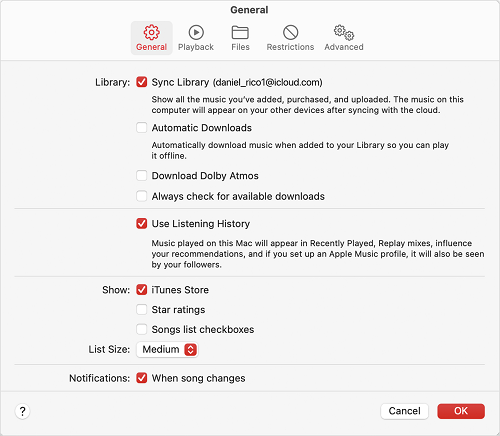
If you want to check the sync status in real time while waiting for your music to sync, please go to the bottom of the sidebar and click "Updating Cloud Library".
Turn on iCloud Music Library on Windows
For Windows devices, things can be a bit different depending on the OS version. Here is how to get Apple Music on iPhone from PC:
Use the Apple Music App on Windows 11 or Later
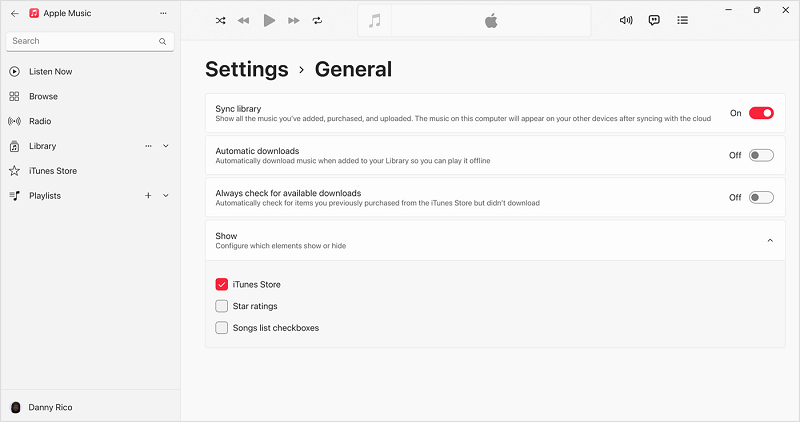
Step 1: Open the Apple Music app on a Windows PC and log in with your subscribed Apple account.
Step 2: Click on the Sidebar Actions button (a three-dot icon) at the top of the sidebar. Then, choose "Settings" > "General".
Step 3: Toggle on the "Sync library" button. Your Apple Music library will now sync to your iPhone automatically over the cloud.
Use iTunes on Windows 10 or Earlier
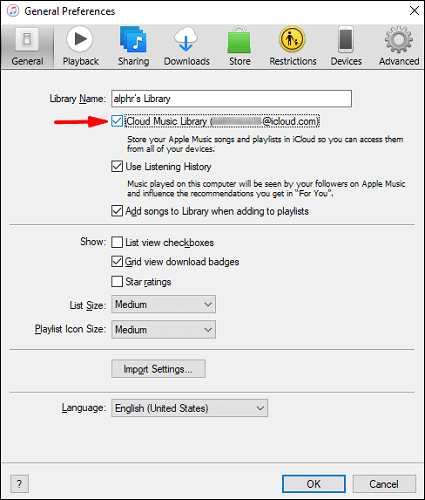
Step 1: Open iTunes on your Windows, then tap "Edit" > "Preferences" from the menu bar at the top of the screen.
Step 2: Go to the "General" tab to select "iCloud Music Library" to turn it on.
Step 3: Tap "OK" after all the settings, then you need to wait for a moment until all the Apple Music songs are synced to your iPhone.
Apple Music Sync Library Not Showing Up? Here is Why:
1. You are not signed in with an active subscription to Apple Music or iTunes Match.
2. The Apple Music Voice Plan is not included.
3. Your devices use a different Apple account.
Your system version is outdated.
How to Transfer Selected Songs or Playlists from Computer to iPhone via iTunes & Finder (Manual)
If you don't have an Apple Music or iTunes Match subscription, or if you just wish to transfer selected Apple Music songs or playlists to iPhone, you can manually do so using Finder on Mac or Apple Devices/iTunes on Windows.
Sync Playlist to iPhone with Finder on Mac
If your Mac runs macOS Catalina or later, you can put Apple Music on iPhone from computer using Finder.
Step 1: Connect your iPhone to your Mac, and then open "Finder" from the Mac Dock.
Step 2: Choose your iPhone under "Locations" and then select "Music" on the right of the screen.
Step 3: Under the tabs, select "Sync music onto (Device name)", and then you can choose what you want to sync to your iPhone.
Step 4: After finishing choosing your music, simply click "Apply", then you can sync your music to iPhone.
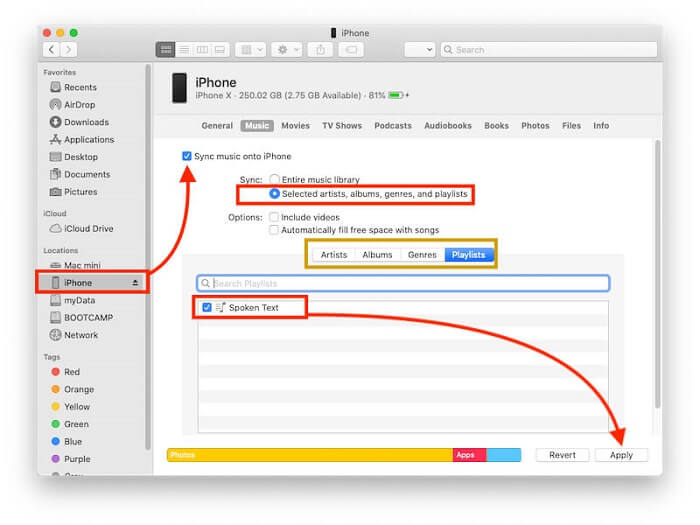
Note: Using Finder to sync playlists to iPhone is similar to the way with Wi-Fi/iTunes, so if Wi-Fi is not available, you can refer to switching to Finder.
Sync iTunes Playlist to iPhone on Windows
For PC users, you can use the traditional iTunes app or the new Apple Devices app (recommended for 2026 to transfer Apple Music to iPhone).
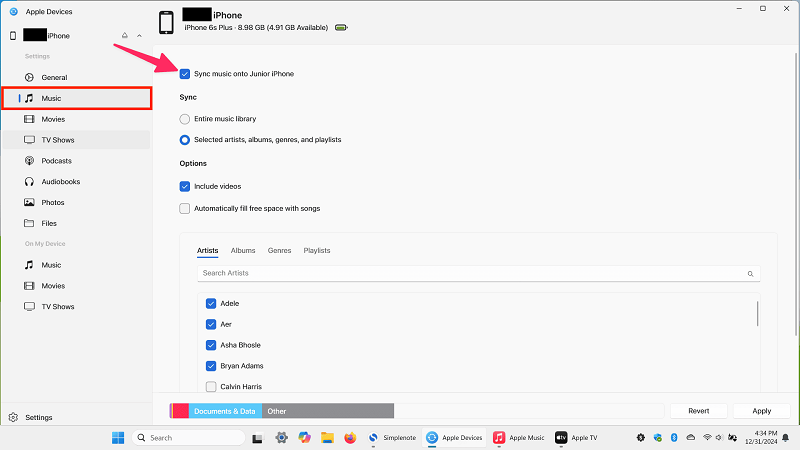
Use the Apple Devices App for Windows 11 or Later:
Step 1: Connect your iPhone to your PC via USB cable.
Step 2: Launch the Apple Devices app on your Windows PC. Select your iPhone in the sidebar.
Step 3: Head to "Music" in the sidebar.
Step 4: Check "Sync music onto (Device name)" and choose "Selected artists, albums, genres, and playlists".
Step 5: Tick the boxes for the playlists or songs you want to transfer.
Step 6: Click "Apply" to start the process. After that, your selected playlists will be added to your iPhone.
Using iTunes for Windows 10 or Earlier:
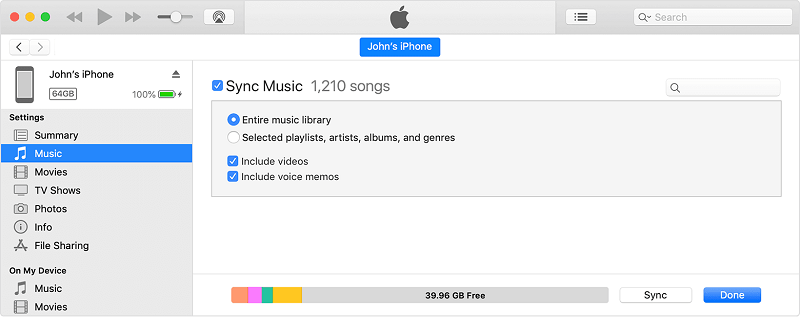
You can also manually sync Apple Music to iPhone after you connect it to iTunes. Here are the steps.
Step 1: Connect your iPhone to your computer using a USB cable. Open iTunes App on your computer and then select your device.

Note: If the computer can't recognize your iPhone, try restarting it, using different ports or cables, or click to learn more solutions.
Step 2: On the left side of the iTunes window, go to the "Music" tab.
Step 3: Enable the option of "Sync Music", choose "Select playlists, artists, albums, and genres", and then decide the items you want to send from Apple Music to iPhone.
How to Download and Sync Apple Music to iPhone or Any Device as MP3
While official methods help you sync Apple Music to iPhone, they come with restrictions: Tracks are locked to Apple-authorized devices/apps, an active subscription is a must-have for offline playback, and you can't transfer Apple Music to iPhone or non-Apple devices freely. For flexible cross-device use and permanent access, converting Apple Music to MP3 is the ideal solution.
This is where TuneFab Apple Music Converter comes in. Based on our tests, it allows you to save Apple Music songs and playlists as local files with the integrated Apple Music web player while keeping the original quality (320kbps/lossless), ID3 tags, and even lyrics. The best part is that there is no iTunes installation required. This way, you can effortlessly get rid of any limitations and move lossless Apple Music MP3 files from computer to iPhone, Android devices, car stereos, or any MP3 player with no hassle.
📙 More Features of TuneFab Apple Music Converter:
- Provide popular output formats like MP3, M4A(AAC), M4A(ALAC), WAV, AIFF, and FLAC.
- Keep high or original Apple Music quality for a better music experience (parameter adjustable).
- Offer up to 35X faster conversion speed to batch download all Apple Music songs offline at once.
- Save the ID3 Tags of all Apple Music songs to help manage the songs more conveniently.
- Offer various output settings, including bitrate, sample rate, file archive, and naming.
Here is the full guide to download and transfer Apple Music to iPhone from PC as MP3:
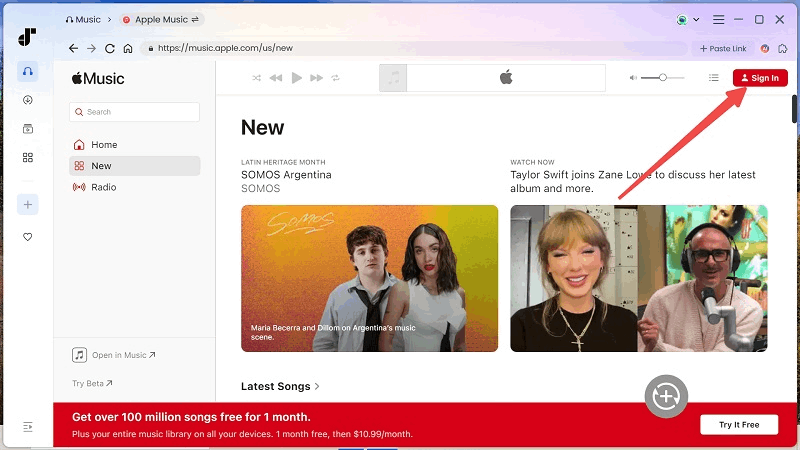
Step 1: Sign in to Apple Music inside TuneFab
Launch TuneFab Apple Music Converter and enter the Apple Music service, then tap "Sign in" to input your Apple ID.
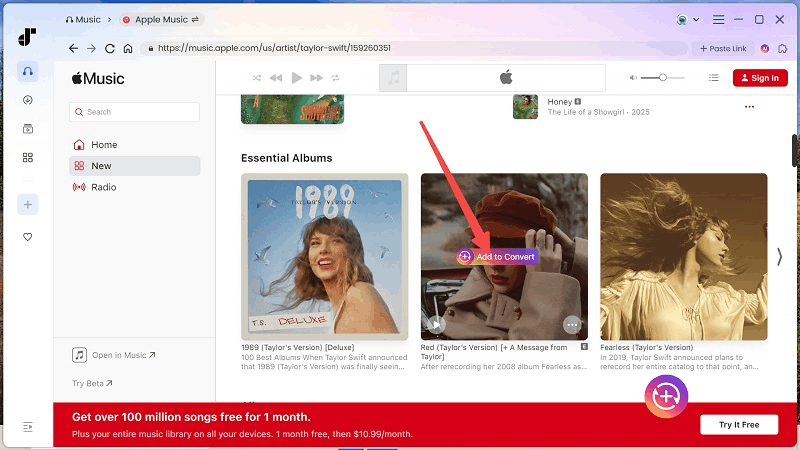
Step 2: Select Apple Music Songs or Playlists
Locate the song, album, or playlist you love and click the "Add" or "Add to Convert" button.
Step 3: Customize Output Settings
When the conversion list pops up, use the dropdown list to choose a preferred output format, bitrate, and sample rate.
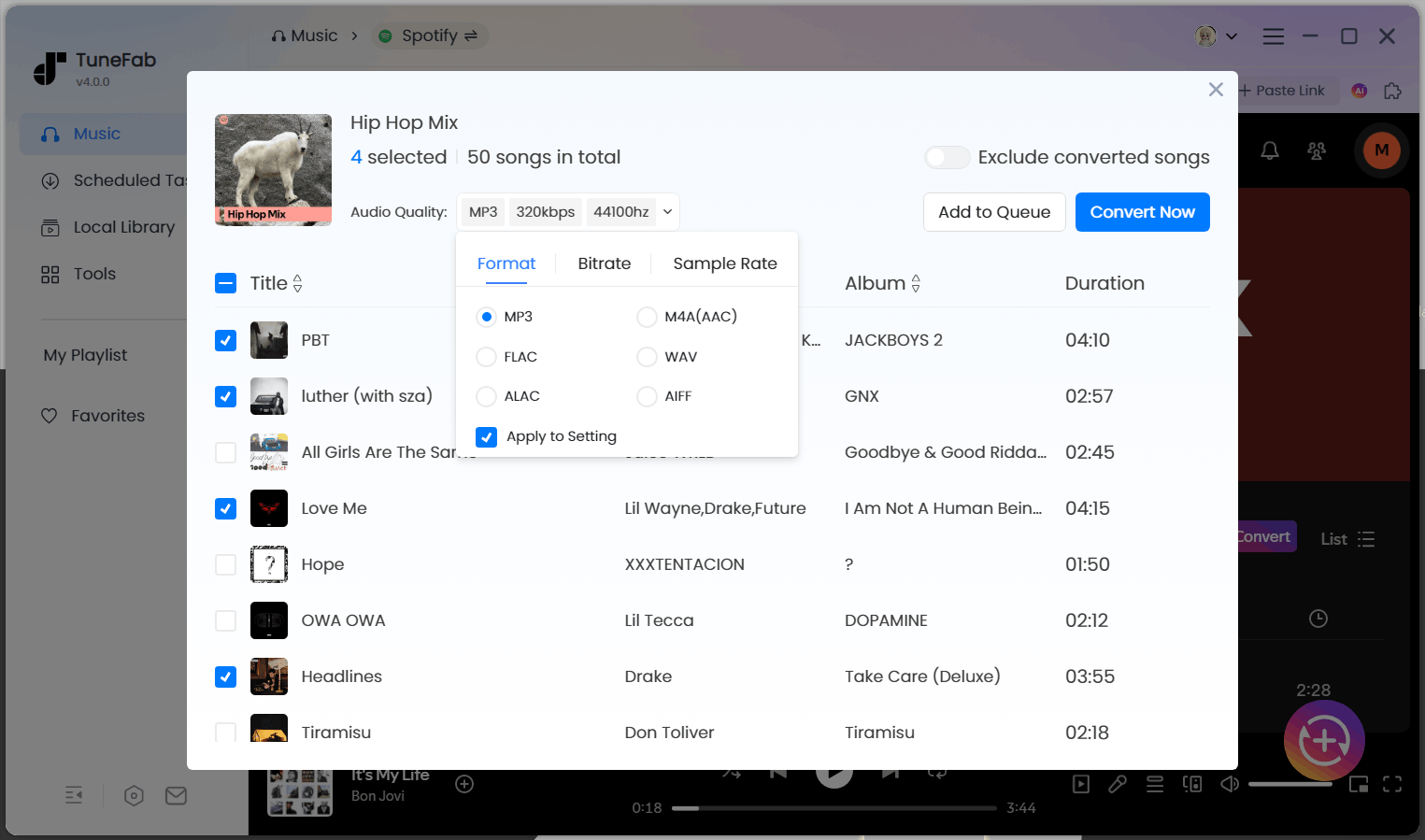
Step 4: Download Apple Music to Your Computer
Start downloading the Apple Music songs you choose by simply clicking "Convert Now".
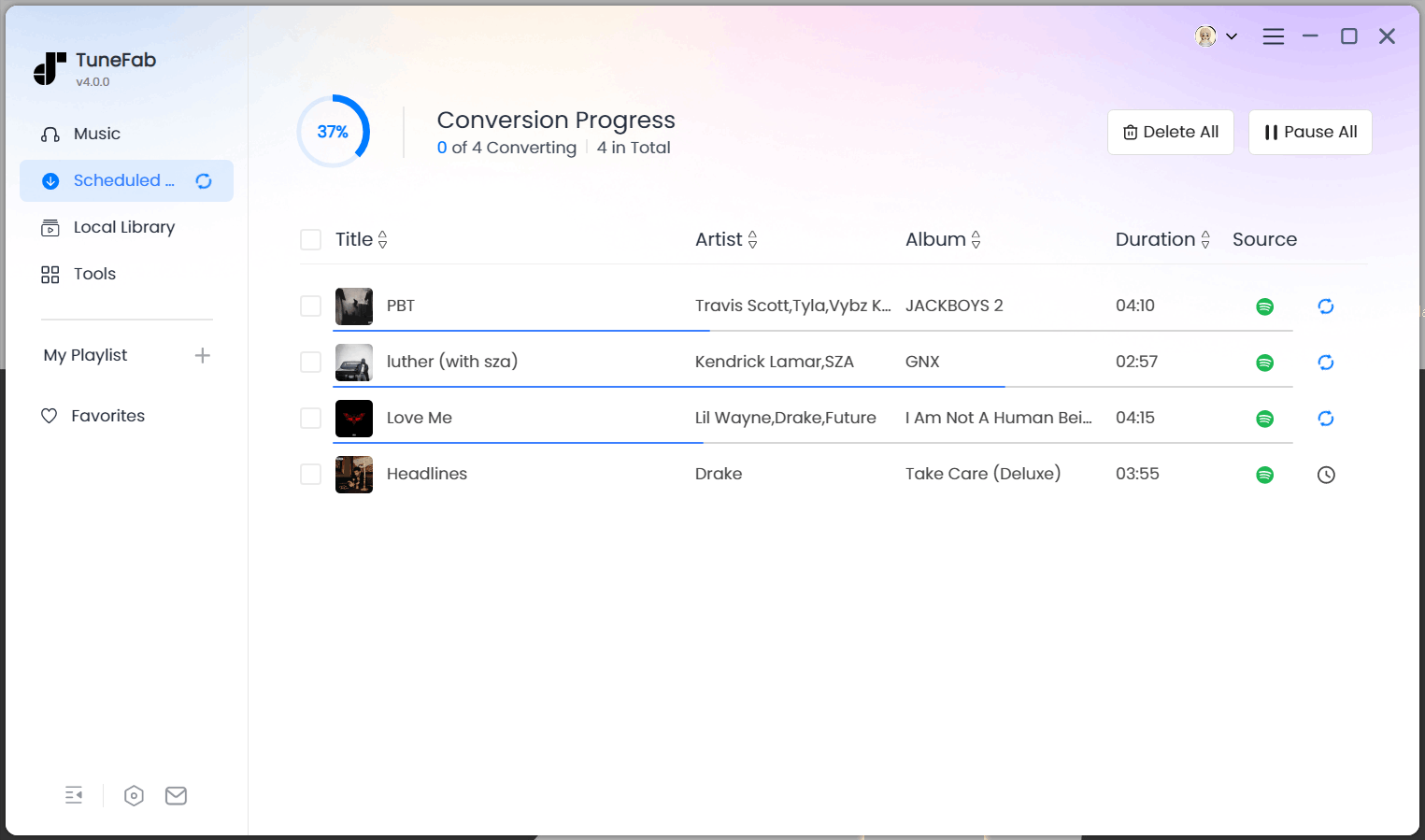
Step 5: Add the songs to iTunes / Apple Music app
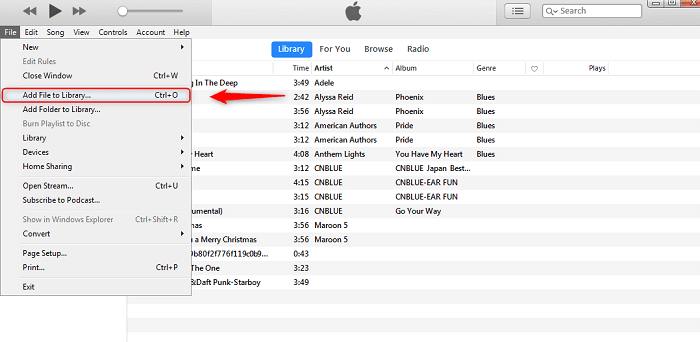
After downloading the songs to your PC, you can add these converted Apple Music files to the iTunes Library/Apple Music Library and transfer them to your iPhone.
Run the iTunes/Music app on your PC, and click "File" > "Add File to Library" or "Add Folder to Library" to add the MP3 files to the library.
Step 6: Sync Apple Music to iPhone from PC via iTunes/Finder
Then, you can use "Method 2" above to sync the songs to your iPhone.
Troubleshooting: Why Is Apple Music Library Not Syncing to My iPhone?
If you find Apple Music songs and playlists not showing up on iPhone, it is usually due to a sync setting mismatch or an account error. Here is how to quickly fix Apple Music not syncing:
- Check if the Sync Library is Enabled: Verify that Sync Library is enabled on both devices before trying other ways to sync Apple Music to iPhone.
- Same Apple ID: Verify both devices use the same account with an active subscription.
- Cloud Status: If Apple Music songs are not transferring to iPhone, check the "Cloud Status" icon on your computer to see if tracks are "Waiting" or "Error."
- Refresh Network Connection: Make sure all devices are connected to a stable Internet connection.
- Subscription Expiration: Ensure your Apple Music subscription hasn't expired.
Expert Tip:
If Apple Music is still not updating on your iPhone after these checks, you can use TuneFab Apple Music Converter to download and sync Apple Music to iPhone. For more details, scroll back to check "Method 3".
FAQs about Syncing Apple Music Library
How to Transfer Music from Computer to iPhone Without iTunes?
If you want to transfer Apple Music to iPhone from Mac or PC without using iTunes, third-party tools like FonePaw iOS Transfer can simplify the process. This software helps you move music, playlists, and media files between iOS devices and computers quickly and reliably.
Can I Sync Apple Music Library Between iPad/iPod Touch/Another iPhone?
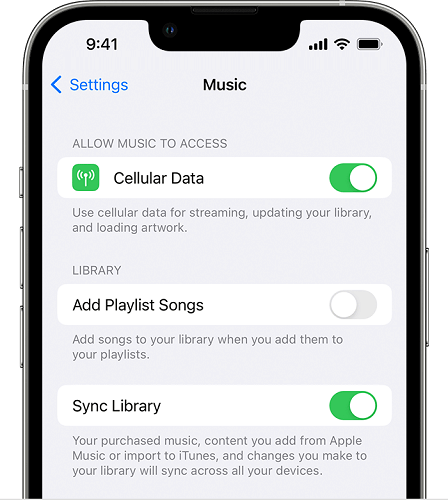
Yes. As long as all devices are signed in with the same Apple account and have an active Apple Music subscription, turning on "Sync Library" will automatically keep your music library consistent across iPhone, iPad, and iPod Touch. Here is a simple tutorial:
1. Open "Settings" on your iPhone, iPad, or iPod Touch, then go to "Music".
2. Toggle on "Sync Library".
3. Your Apple Music Library will now automatically sync across all iOS devices.
How to Remove Apple Music from Sync Library?
In some situations, your Apple device may sync unwanted songs or playlists to the Apple Music Library automatically, which may consume your cellular data and take up much of the storage space. To release storage, you can remove music from the "Library" by following these instructions.
- Remove music from all devices: You can go to "Finder" on your Mac, delete all the music from the "Music" tab, and then sync your devices again.
- Remove music from your mobile devices while still keeping them on your Mac: You can connect your mobile devices to your Mac with a USB cable or Wi-Fi network, open "Finder", select your devices, and enter the "Music" tab, then deselect the checkboxes of the music you want to be removed from your device. After all, sync the devices again to finish.
How Do I Restore My Apple Music Library on My iPhone?
There are a few simple things you can try that might help restore your Apple Music library.
- Make sure Sync Library is enabled
- Check the network connection
- Check if Apple Music is logged in
- Check iCloud Music Library settings
- Sign out and sign back into Apple Music
- Restart your iPhone
- Re-add music
The exact solution depends on what's causing the issue, though. If these steps don't work, you might want to contact Apple Support for further assistance.
Conclusion
We have covered 3 practical ways to sync Apple Music to iPhone from Mac or PC, either manually or automatically. If the official methods do not meet all your needs, TuneFab Apple Music Converter offers a flexible solution: you can download Apple Music to iPhone or other devices in MP3, M4A, FLAC, and more, and keep lossless Apple Music songs offline on iPhone. If you have no idea where to start, why not try Tunefab first?

