


Many Apple Music users eventually run into the same question: what actually happens to your music when you stop subscribing, switch devices, or want to listen outside Apple's ecosystem? While Apple Music offers offline listening, it doesn't provide a straightforward way to keep tracks as standard audio files, which is why Apple Music converters continue to attract attention and controversy.
At the same time, reviews of such tools often feel overly promotional, making it hard to tell what genuinely works, what comes with trade-offs, and who these tools are really meant for. Not every Apple Music user needs a converter, and using one isn't without limitations or considerations.
This TuneFab Apple Music Converter review takes a different approach. Instead of promoting features upfront, we focus on real-world use, testing conditions, practical strengths, known limitations, and common concerns such as safety, legality, and situations where the software may not work as expected. The goal is simple: help you decide whether TuneFab Apple Music Converter makes sense for your specific needs — or whether it's something you can comfortably skip.
- 1. Overview: What TuneFab Apple Music Converter is Intended For?
- 2. How We Tested TuneFab Apple Music Converter (Our Evaluation Criteria)
- 3. What Works Well: Practical Strengths in Real-World Use
- 4. Limitations and Trade-offs You Should Know After We Tested It
- 5. Is TuneFab Apple Music Converter Safe and Legal to Use?
- 6. Cases Where TuneFab Apple Music Converter May Not Work as Expected
- 7. Final Thoughts: A Practical Tool for the Right Apple Music Users
1. Overview: What TuneFab Apple Music Converter is Intended For?
TuneFab Apple Music Converter is a desktop-based Apple Music converter software designed to help users turn Apple Music streams into standard audio files they can store, manage, and play outside the Apple Music app.
Unlike Apple Music's built-in offline feature, which keeps downloaded songs locked inside the subscription and app environment, this tool focuses on local ownership and long-term access. It runs on Windows and macOS computers and is primarily intended for users who want to save Apple Music tracks to their computer in common formats for broader compatibility across devices and players.
That said, TuneFab Apple Music Converter is not a universal solution for every Apple Music listener. It does not replace Apple Music itself, nor is it aimed at users who are satisfied with streaming and offline playback within Apple's ecosystem alone. Instead, it targets a narrower group of users with specific needs related to offline use, file management, and cross-platform playback.
2. How We Tested TuneFab Apple Music Converter (Our Evaluation Criteria)
To keep this TuneFab Apple Music Converter review practical, we tested the software the way most users would actually use it — not in a lab setup, and not just by clicking through features.
Our test setup
Devices:
- Windows 11 laptop, Intel i7, 16 GB RAM
- MacBook Air (M2, 2023), 8GB RAM, macOS Tahoe 26.2
Apple Music account: Standard individual subscription
Library size tested:
- Single tracks (3–5 minutes each)
- A 50-song playlist
- One full album (12 tracks)
We ran all tests on a stable home network and didn't tweak advanced settings unless a normal user would reasonably do so. The goal was simply to understand how the software behaves in real use.
Real-world timing results
Based on our testing:
- Single song: A typical 3–4 minute track finished converting in around 10 seconds once the task started. In the fastest case during testing, one song completed in just 5 seconds.
- 50-song playlist: The full playlist converted in roughly 8-9 minutes as a single batch, without requiring manual intervention once the process starts, but you can pause the conversion whenever you want.
- Album downloads: Albums converted at a similar pace, with no noticeable slowdown as more tracks were added to the queue.
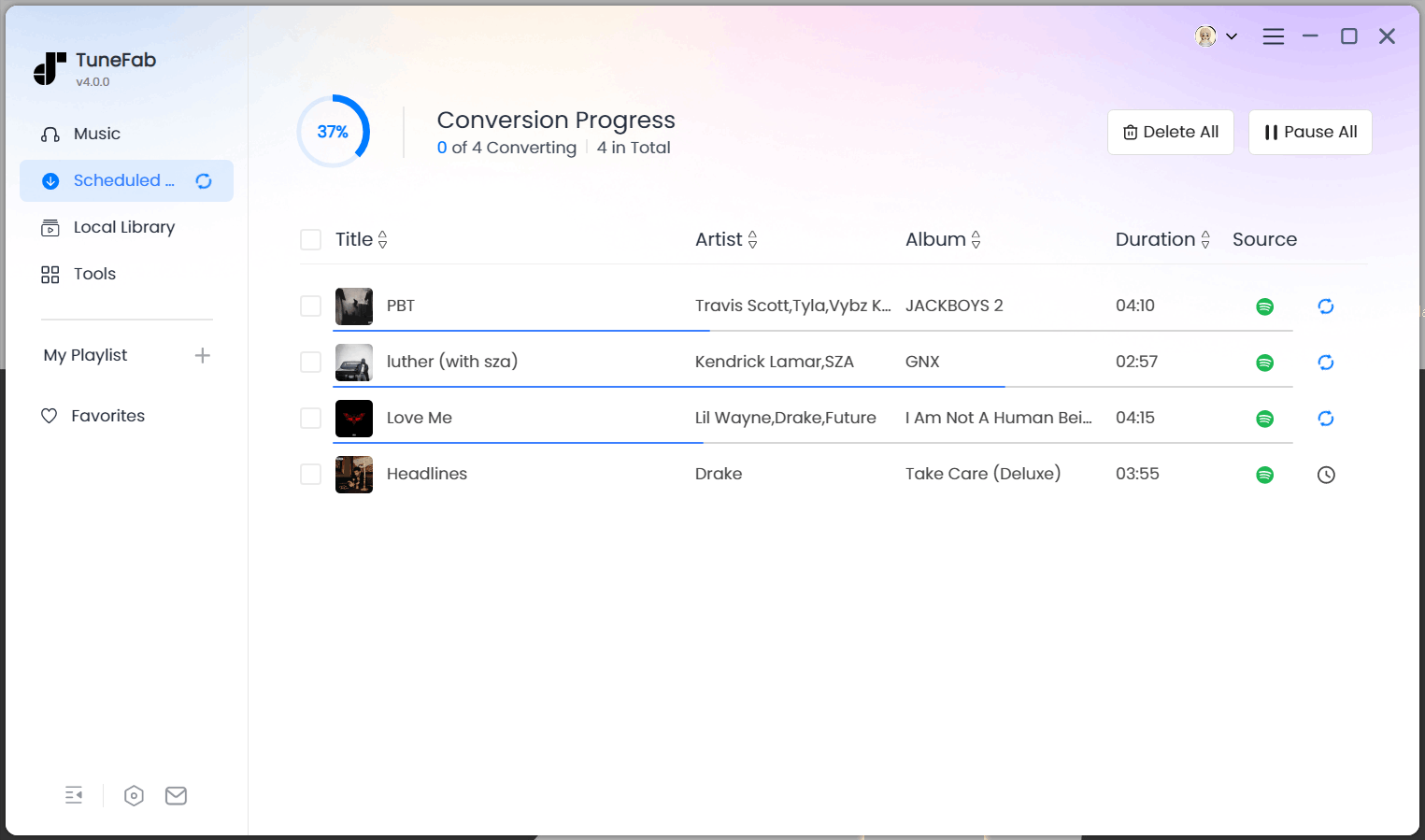
Actual speed can vary depending on your system performance, network stability, and output settings, but these results were consistent across multiple runs in normal conditions.
Overall testing impression
From a day-to-day usability perspective, the experience felt refreshingly uneventful — in a good way. The basic flow is simple: log in, pick the music you want, adjust output settings if needed, and let the conversion run in the background. Once started, downloads kept going without random pauses or errors, which ends up mattering far more than headline speed claims.
During our tests, we didn't run into failed conversions or interrupted downloads. That may partly be because the setup was fairly "normal" — a stable computer, a valid Apple Music account, and no exotic network conditions. In other words, this reflects how the software behaves when used by a regular person, not when pushed to extremes.
This section isn't here to convince you to buy anything. Its purpose is simply to give some real-world context for how TuneFab Apple Music Converter behaves in everyday use, so the strengths and limitations discussed later don't feel abstract or theoretical.
3. What Works Well: Practical Strengths in Real-World Use
Although this article focuses on TuneFab Apple Music Converter, the software you install is actually part of TuneFab's broader desktop suite. Inside the app, Apple Music appears alongside other supported platforms, each with its own built-in web player. From a user's point of view, this setup is convenient simply because everything happens in one place — no browser tabs, no separate recorders, no extra plug-ins to manage.
A download flow that feels familiar
Getting started feels intuitive. After logging into your Apple Music account inside the app, you browse your library much like you would in the official Apple Music interface. Songs, albums, and playlists are all laid out clearly, and then you can add them to the conversion list, and download content from Apple Music as you want.
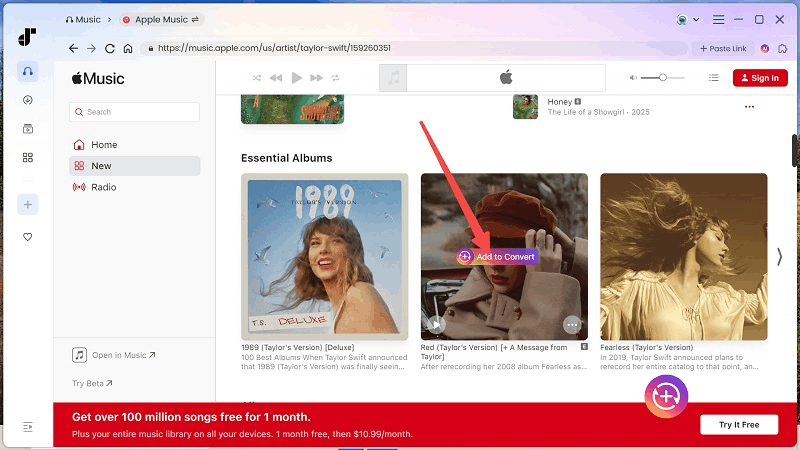
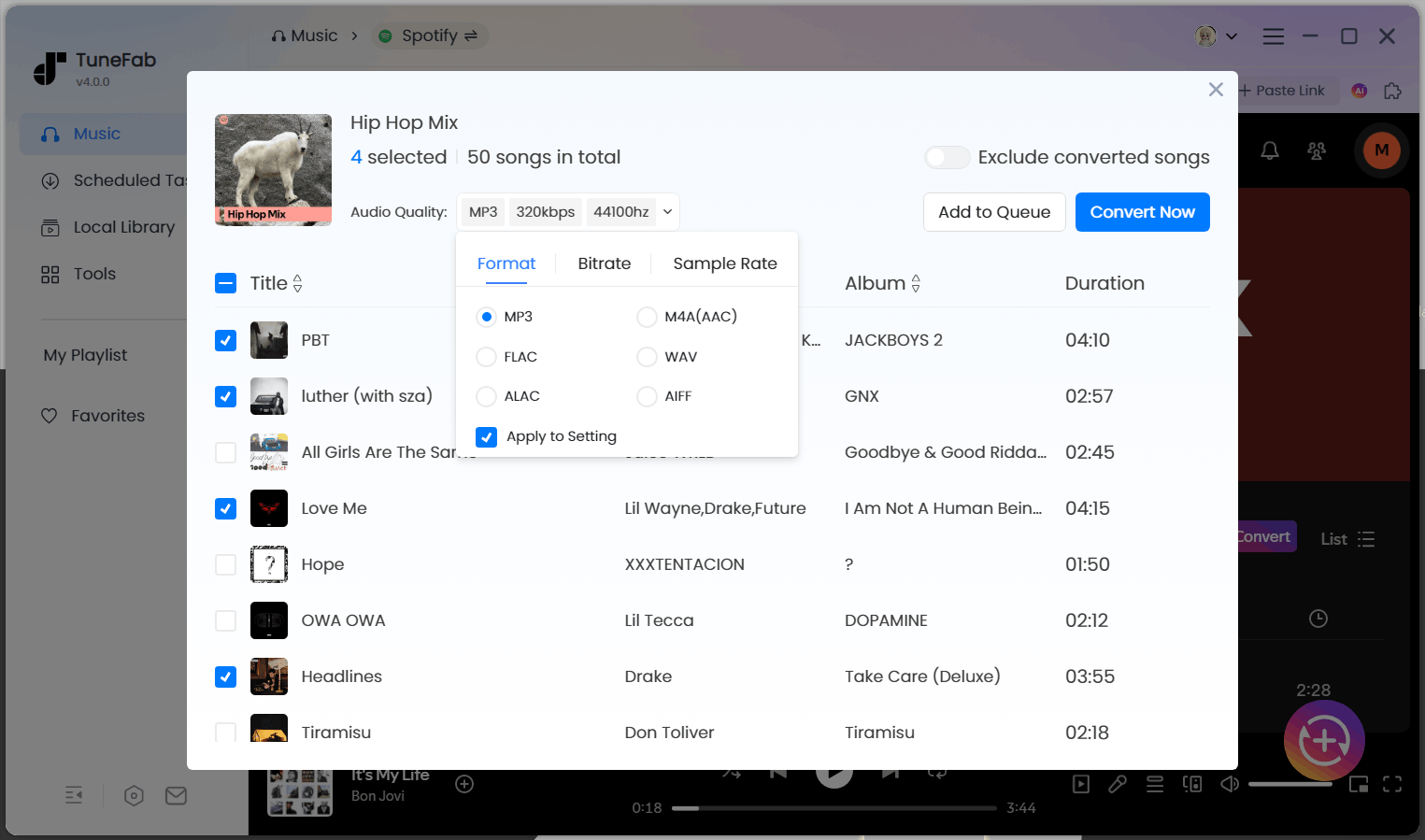
Once tracks are queued, you choose an output format (such as MP3 or FLAC), tweak basic quality settings if needed, and start the conversion. In everyday use, converting Apple Music to MP3 feels less like a technical task and more like managing a regular download list. If your main goal is simple, reliable Apple Music offline playback on other devices, this low-friction workflow makes a noticeable difference.
Where it really helps with offline and cross-device listening
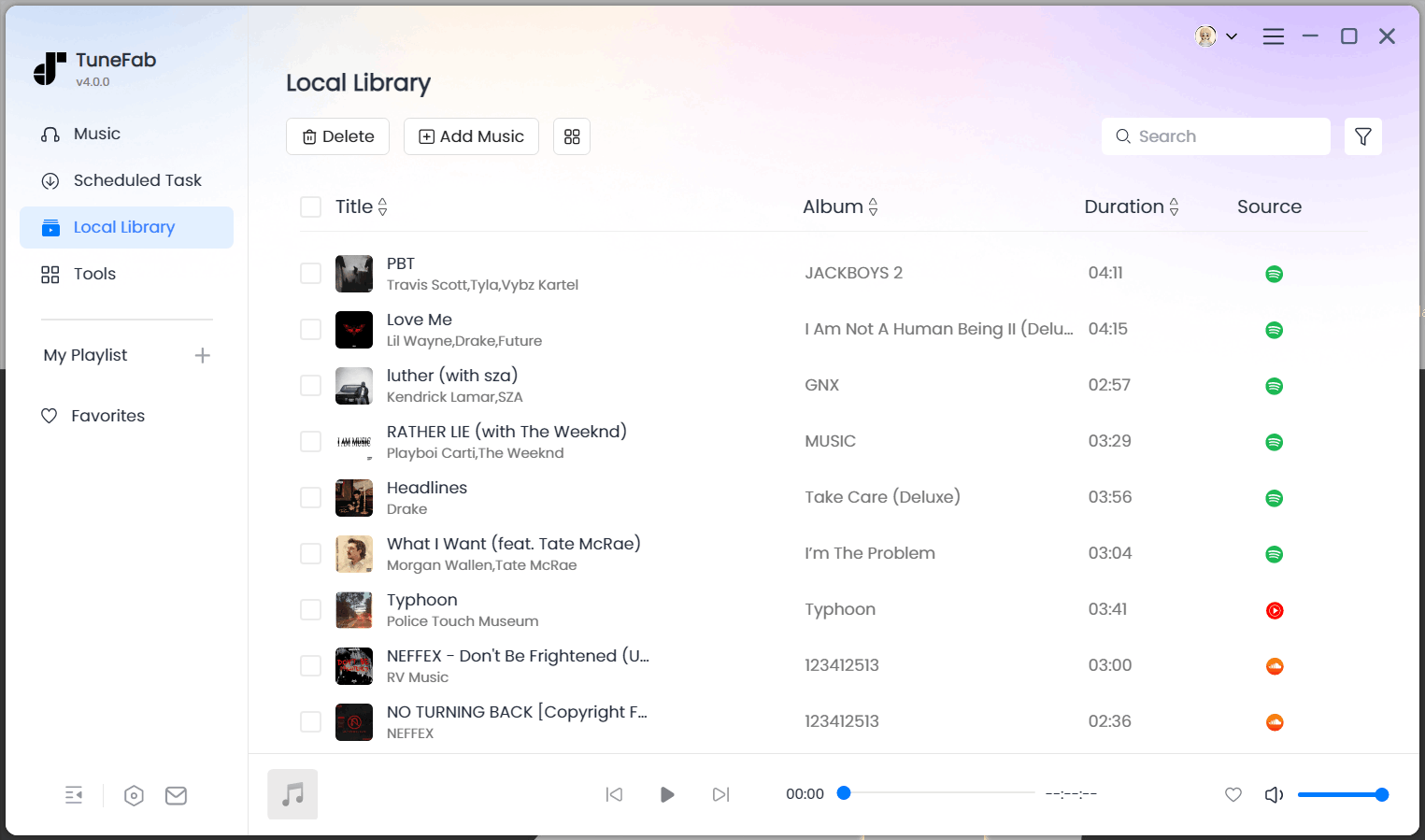
The software becomes most useful in situations where Apple Music itself starts to feel limiting. After conversion, you can find all your converted songs under the "Local Library" tab, which makes them easy to copy to USB drives, external hard disks, or older devices that don't support Apple Music apps at all.
This is especially handy for car audio systems, legacy MP3 players, or shared household devices where installing streaming apps just isn't practical. Having files stored locally also gives you more freedom to organize your music by artist, album, or playlist, which appeals to users who prefer keeping a long-term collection instead of relying entirely on streaming access.
Extra tools that stay out of the way
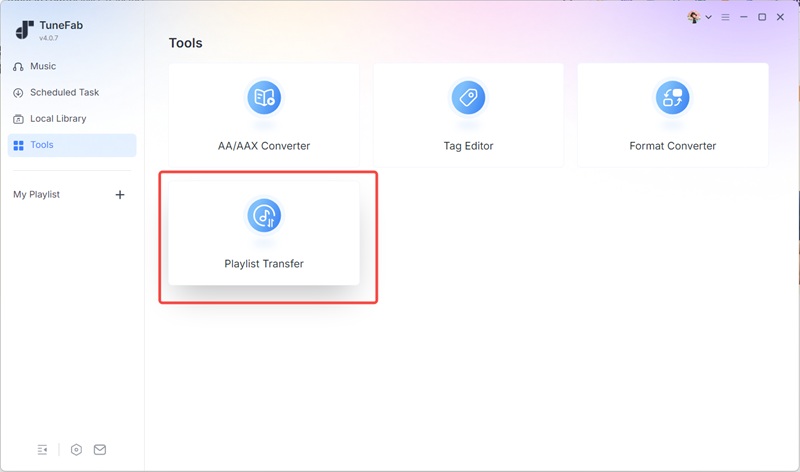
Beyond Apple Music downloads, the left-side tools panel includes a few extras that quietly add flexibility. Tools like Playlist Transfer and Format Converter are built into the same interface, so you're not jumping between different programs just to handle related tasks.
They're not the main focus of the experience, but they do make the software feel more like a general music-management hub than a one-trick downloader. For users who deal with multiple platforms or file formats, that added convenience can save time without making the app feel bloated.
4. Limitations and Trade-offs You Should Know After We Tested It
No software is a perfect fit for every situation, and that also applies here. Before deciding whether TuneFab Apple Music Converter is worth using, it's important to understand a few practical limitations and trade-offs that don't always show up in feature lists.
Conversion speed is good — but not as instant as it sounds
TuneFab often promotes fast conversion speeds, and in everyday use, the software does perform steadily. However, it's worth clarifying what "batch download" actually means in practice.
When you add a playlist or album, tracks are queued and processed one by one, rather than being downloaded simultaneously in parallel. For small batches, this difference is barely noticeable. But when converting large playlists, the total time depends on how many tracks are in the queue, your system performance, and network stability. In other words, the speed is consistent and predictable, but it's not "instant bulk downloading" in the strictest sense.
Desktop-only usage may be inconvenient for some users
Another important limitation is platform support. TuneFab Apple Music Converter is a desktop application available only for Windows and macOS. If you primarily use Apple Music on a phone or tablet and expect a mobile-only solution, this can feel restrictive.
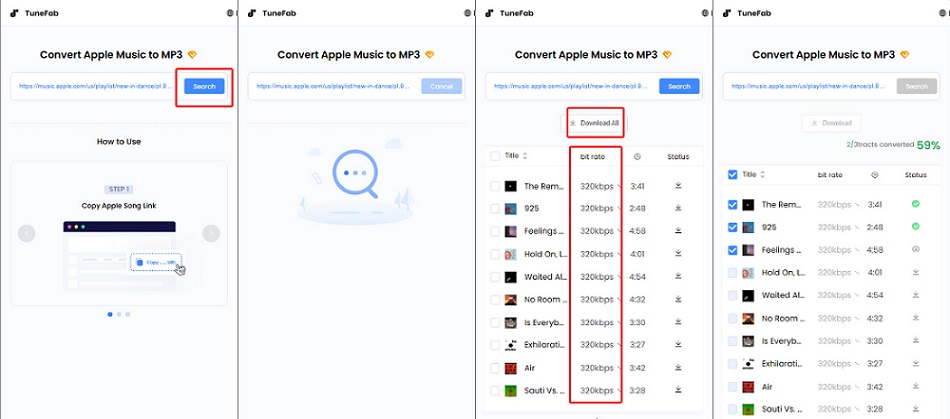
TuneFab does offer an online Apple Music to MP3 downloader, but it comes with its own trade-offs: the free version is limited to a small number of tracks, audio quality options are restricted, and continued use still requires payment. For users looking for a completely free or mobile-first workflow, this may not be ideal.
Audio quality depends on format choices and playback setup
While Apple Music itself uses Apple Lossless Audio Codec (ALAC), the actual sample rates aren't extremely high to begin with. With TuneFab, choosing formats like WAV or FLAC can preserve high bitrate output (often equivalent to 320 kbps), but that doesn't automatically guarantee a fully lossless experience in every scenario.
Playback quality still depends on your hardware, output device, and how files are later transferred or converted. In real-world use, the audio quality is generally very good, but audiophiles expecting absolute, studio-grade losslessness should keep expectations realistic.
Trial restrictions and pricing plans
As with most desktop converters, the free trial is mainly there for evaluation. You can test the workflow and output quality, but full-length downloads and unrestricted use require a paid license.
Currently, TuneFab offers several pricing plans, including monthly, yearly, and one-time licenses. Pricing may vary depending on promotions, but the key point is that this is not a free long-term solution. Whether the cost makes sense depends on how often you plan to convert music and whether you value permanent offline access enough to justify the expense.
| Plan | Billing | Price | License | Access | Updates | Refund | Duration |
| 1-Month | Monthly | $25.95 | 1 PC/Mac | Full features | During subscription | 7 days | 1 month |
| 1-Year | Yearly | $79.95 | 1 PC/Mac | Full features | 1 year free | 7 days | 12 months |
| Perpetual | One-time | $99.95 | 1 PC/Mac | Lifetime access | Lifetime free | 30 days | Lifetime |
💡 Note: Promotional discounts may be available from time to time. At the time of writing, a 10% discount code (TFWELCOME) is offered on the official website.
How these limitations affect the "worth it" question
Taken together, these trade-offs don't make TuneFab Apple Music Converter a bad tool — they simply define who it's really for. If you need occasional conversions, rely heavily on mobile devices, or expect unlimited free use, the limitations may outweigh the benefits. If, on the other hand, you regularly manage music on a computer and want stable offline access beyond Apple Music's app, the compromises are easier to accept.
5. Is TuneFab Apple Music Converter Safe and Legal to Use?
Questions about safety and legality come up frequently with Apple Music converters, and for good reason. To answer them clearly, it helps to separate two different issues: software safety and how the tool is used.
Is TuneFab Apple Music Converter safe to install and run?
From a technical standpoint, TuneFab Apple Music Converter behaves like a standard desktop application. During testing, the software installed cleanly on both Windows and macOS systems and did not trigger system security warnings or unusual background activity.
The app requires users to log in to their Apple Music account through its built-in web player, which mirrors the official Apple Music web experience rather than asking for credentials through external forms. In normal use, there were no signs of bundled adware, forced redirects, or suspicious network behavior.
That said, as with any third-party software, users should always download it from the official website and keep it updated to avoid unnecessary security risks.
📌 Attention: You may find cracked or unofficial versions of TuneFab online. These versions often bypass security updates and may carry hidden risks such as malware, unstable behavior, or unexpected data exposure. For a deeper look at how cracked versions work and the risks involved, please check our separate article: TuneFab Apple Music Converter Crack? Safer Free Ways to Try
Is it legal to convert Apple Music?
This is where things become more nuanced.
Apple Music content is protected under Apple's terms of service, which generally restricts how downloaded or streamed music can be copied, redistributed, or used outside the Apple Music ecosystem. Converting Apple Music tracks into standard audio files typically goes beyond what Apple officially allows under its subscription model.
However, enforcement and legality can vary depending on how converted files are used and local copyright laws. Many users choose to convert music strictly for personal use, such as offline listening on unsupported devices or maintaining a private backup library. This kind of use is often treated differently from redistribution, resale, or commercial use.
TuneFab itself provides the software as a technical tool, not as a license to bypass copyright protections for commercial purposes. The responsibility for how the converted files are used ultimately lies with the user.
Personal use matters
It's worth stating clearly: TuneFab Apple Music Converter is intended for personal use only. It is not designed for sharing converted tracks publicly, selling music, or uploading files to third-party platforms.
If you're unsure whether converting Apple Music is allowed in your situation, it's best to review Apple Music's current terms and consider local copyright regulations. This article does not provide legal advice, but rather explains how the software fits into real-world usage patterns.
Bottom line on safety and legality
If your main concern is whether TuneFab Apple Music Converter is safe to run on your computer, the answer is generally yes when obtained from official sources. When it comes to legality, the key distinction is personal, private use versus redistribution or commercial use. Understanding the boundary is essential before deciding whether the tool is right for you.
6. Cases Where TuneFab Apple Music Converter May Not Work as Expected
Even with generally stable experiences, some users report situations where TuneFab Apple Music Converter doesn't work as expected. Based on testing, user discussions on forums, and feedback from review platforms, these issues usually fall into three broad categories: software-related, Apple Music–related, and system or environment factors.
Software-side issues
On the software side, most complaints tend to appear after updates or during edge cases rather than during basic use. Some users on forums mention occasional glitches, such as the app failing to load the Apple Music library properly or conversion tasks getting stuck at the queue stage.
In many cases, these issues are tied to version mismatches or outdated installs. Users who updated the software or re-logged into their Apple Music account often reported that the problem resolved itself. While this doesn't eliminate frustration, it suggests that these aren't persistent failures for the majority of users.
Apple Music-side limitations
A second category of issues comes from Apple Music itself rather than the converter. Changes on Apple's side, such as updates to the web player, regional content restrictions, or account-related limitations, can temporarily affect how third-party tools interact with the service.
Some users report that specific tracks or playlists fail to load or convert, even though other content works normally. This is often linked to licensing differences, unavailable tracks in certain regions, or account verification problems rather than a universal failure of the converter.
System and environmental factors
Finally, there are system-level factors that can affect performance. Users running older versions of Windows or macOS, using unstable network connections, or relying on restrictive firewall or proxy settings may experience slower downloads or interrupted tasks.
Review-site feedback also shows that users with heavily customized system environments, for example, aggressive antivirus settings or VPN configurations, are more likely to encounter unexpected behavior. When the software is used under standard conditions on a supported system, reports of consistent failures are far less common.
How to interpret these issues
Taken together, these cases show that when TuneFab Apple Music Converter doesn't work as expected, the cause is usually context-specific rather than universal. Most problems are tied to updates, account conditions, or local system setups, not a complete breakdown of the software.
For users encountering issues, identifying which category the problem falls into can help set expectations — whether that means waiting for an update, adjusting system settings, or understanding Apple Music's own limitations.
If you've tried all practical ways but still find your TuneFab Apple Music Converter not working, just contact the TuneFab support team directly, tell them your problem, and get professional helps.
7. Final Thoughts: A Practical Tool for the Right Apple Music Users
After looking at real-world use, limitations, and common concerns, TuneFab Apple Music Converter comes across less as a universal solution and more as a purpose-built utility. It isn't designed to replace Apple Music or change how everyone listens to music, but to solve a specific set of offline and file-management problems that Apple Music itself doesn't fully address.
If your listening habits stay entirely within Apple's ecosystem, or you're satisfied with streaming and built-in offline playback, this kind of tool may feel unnecessary. On the other hand, if you regularly manage music on a computer, rely on older devices, or want long-term access to tracks beyond an active subscription, the trade-offs discussed earlier are easier to justify.
Ultimately, whether TuneFab Apple Music Converter makes sense depends on how closely it matches your own use case. For users who know why they need local files and offline flexibility, it can be a practical addition. For everyone else, it's simply an option worth understanding, not a requirement.
TuneFab Apple Music Converter
One click to download songs/playlists/albums from Apple Music without quality loss.

