


You may try to screen record songs from Apple Music for later use, only to find that the recording contains no sound at all. So, can you screen record Apple Music? The short answer is yes, but only the screen interface can be recorded. Why can't you screen record Apple Music with sound? In most cases, the music will be muted because Apple Music blocks internal audio capture during screen recordings through DRM protection.
However, there are still several practical workarounds depending on your device. In this guide, you'll learn 3 tested methods to screen record Apple Music, including screen recording setups and a more reliable way to save Apple Music with original sound quality.
Method 1. Record Apple Music with OBS Studio (Mac/Windows)
OBS Studio is one of the most widely used free screen recording tools available today. It is open-source and works on Windows, macOS, and Linux. Although OBS is primarily designed for video recording and live streaming, it can also screen record Apple Music with sound by capturing your system audio in real time.
The biggest advantage of OBS is that it's completely free and highly customizable. However, since it records audio in real time and exports recordings as video files, the process can be slower, and the final audio may not perfectly match the original Apple Music stream. This method works best for temporary recording needs, such as capturing background music for streaming or short clips.
Tips: Because OBS records audio in real time, recording a 4-minute song will take the full 4 minutes to capture. The exported file is also a video file, so you may need to extract the audio later if you only want the music.
Step 1. Download OBS Studio from the official website and launch the program. In the main interface, click the "+" icon under the "Sources" panel.
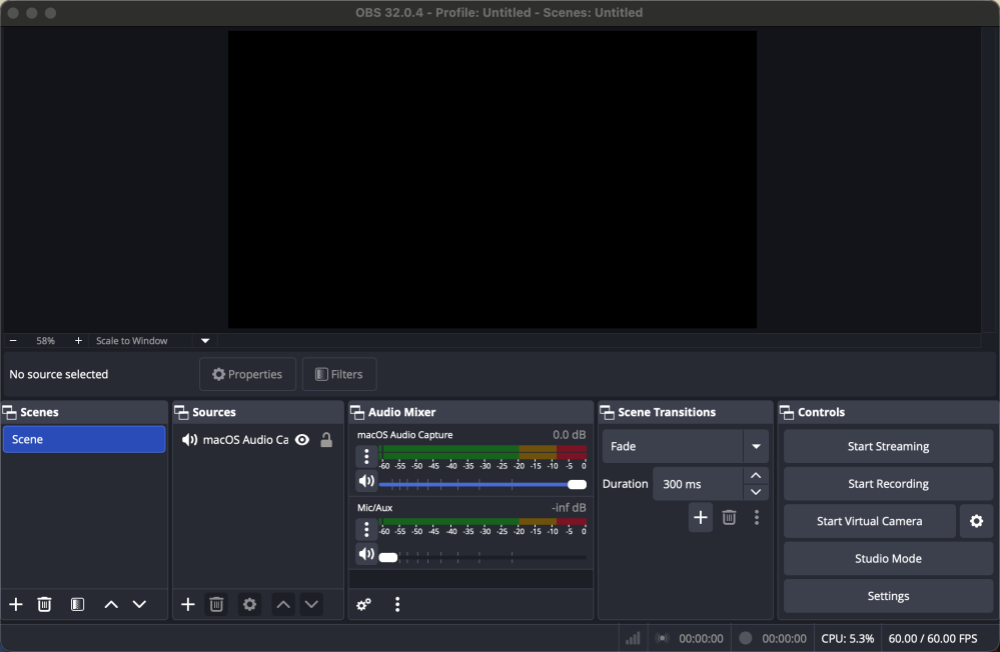
Step 2. Select "Audio Output Capture (Windows)" or "macOS Audio Capture" as the source. Make sure your microphone input is muted if you want to avoid recording background noise.
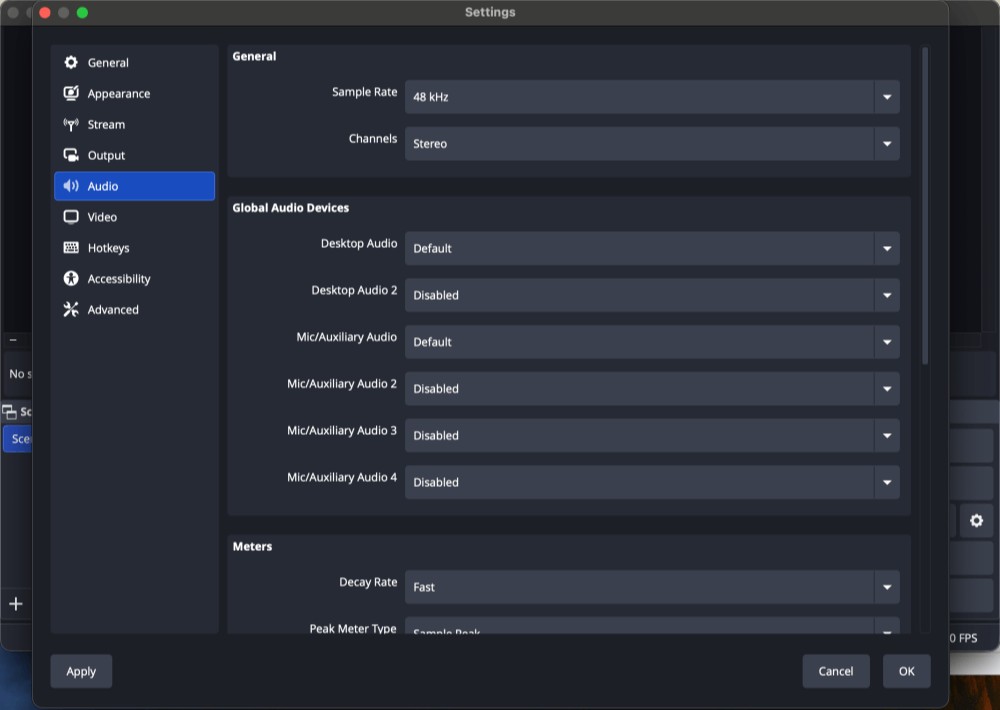
Step 3. Open "Settings → Audio" and confirm that your desktop audio source is correctly selected. You can also adjust the sample rate and monitoring options depending on your system setup.
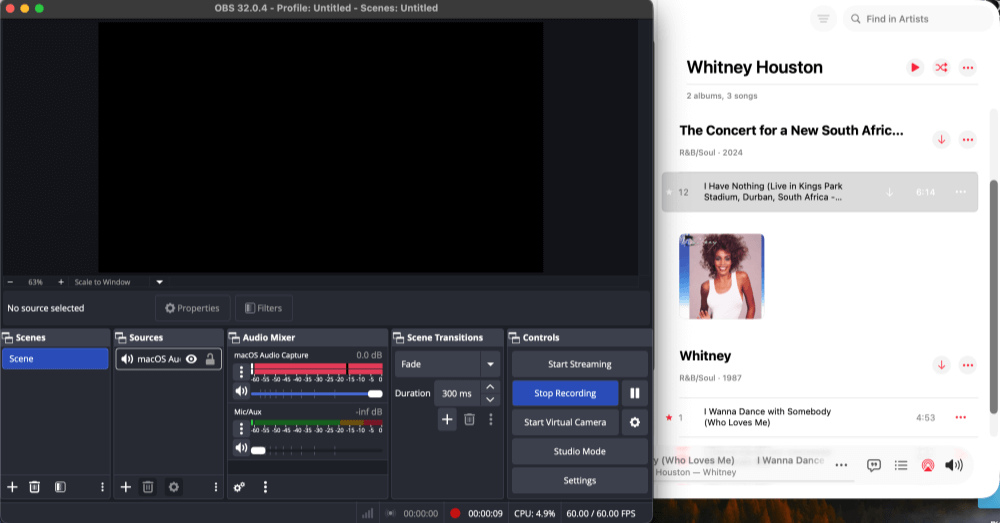
Step 4. Open Apple Music and start playing the song you want to record. Then click "Start Recording" in OBS. The software will capture the screen and system audio while the music plays.
Step 5. When the playback finishes, click "Stop Recording". OBS will save the recording automatically. By default, recordings are exported as MP4 (Windows) or MOV (macOS) video files containing the captured audio.
Method 2. Record Apple Music from iPhone to Mac via AirPlay
If you want to record Apple Music with sound from your iPhone, the built-in iOS screen recorder will not work. Apple Music mutes internal audio during screen recordings because of its content protection, which means that even third-party recording apps on iPhone cannot capture the music audio.
A common workaround is to route the iPhone audio to a Mac via AirPlay and record Apple Music on it. By sending Apple Music playback to your Mac, you can capture the sound through QuickTime Player. This method avoids the mute issue on iPhone, although it still records audio from the Mac's microphone and may not preserve perfect sound quality.
Step 1. Use a Lightning or USB-C cable to connect your iPhone to your Mac. When prompted on your iPhone, tap "Trust This Computer".
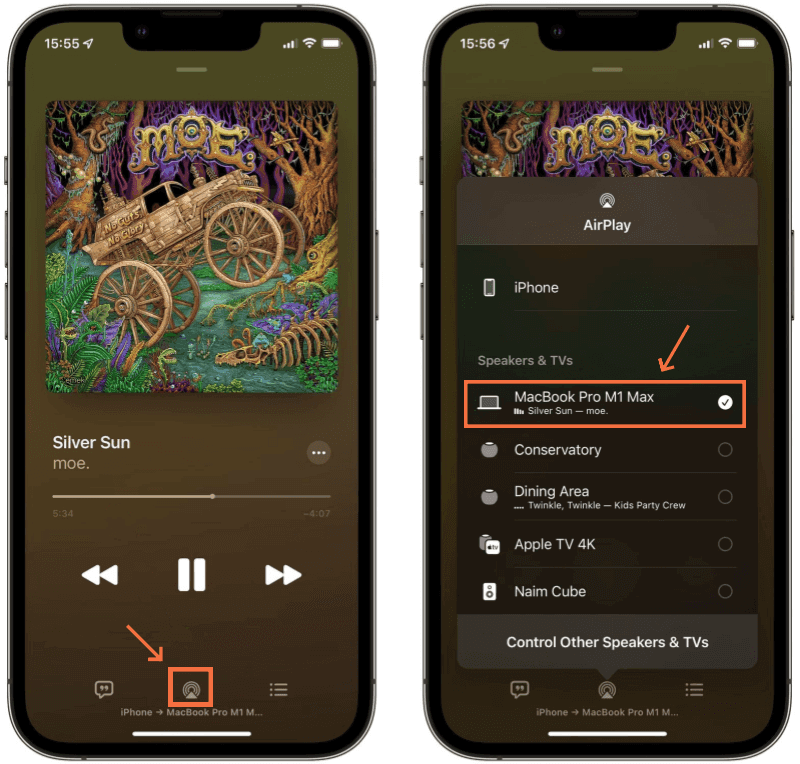
Step 2. On your iPhone, swipe to open Control Center, tap the "AirPlay icon", and select your Mac as the playback device.
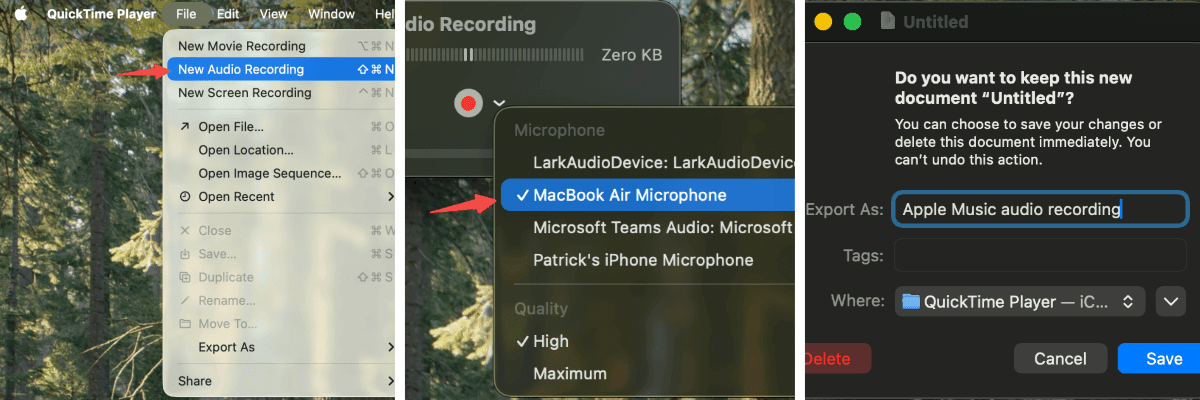
Step 3. Launch QuickTime Player on your Mac, go to "File → New Audio Recording", click the small arrow next to the record button, and choose "MacBook Microphone" as the audio input.
Note: During testing, selecting iPhone as the recording input will immediately trigger a system warning asking you to disconnect or pause recording, and the AirPlay will also stop automatically. So, the only stable input option is usually the MacBook Microphone, which captures the audio indirectly.
Step 4. Press "Record" in QuickTime, then play the song on your iPhone. The Mac will capture the sound while the music plays. When the song finishes, click "Stop Recording" and save the recorded file to your Mac.
Method 3. Save Apple Music with TuneFab Without Quality Loss
While screen recording tools like OBS or QuickTime can capture Apple Music playback, they usually record in real time and may reduce audio quality. In addition, recordings are often saved as video files, which means you still need to extract the audio afterward. If your goal is to keep Apple Music songs permanently with original sound quality, a more efficient solution is to convert them directly into standard audio files.
A tool like TuneFab Apple Music Converter provides a simpler way to do this. Instead of recording the music as it plays, it processes Apple Music tracks directly and saves them as local files such as MP3, M4A, FLAC, or WAV. This allows you to keep your favorite songs with high audio quality and play them on different devices without relying on screen recording.
Key Features of TuneFab Apple Music Converter:
- Built-in Apple Music web player for browsing and adding songs directly
- Convert Apple Music to popular formats such as MP3, M4A, WAV, and FLAC
- Batch conversion support to process multiple songs or playlists at once
- Preserve original audio quality with customizable bitrate and sample rate
- Retain ID3 tags and metadata, including artist, album, and cover artwork
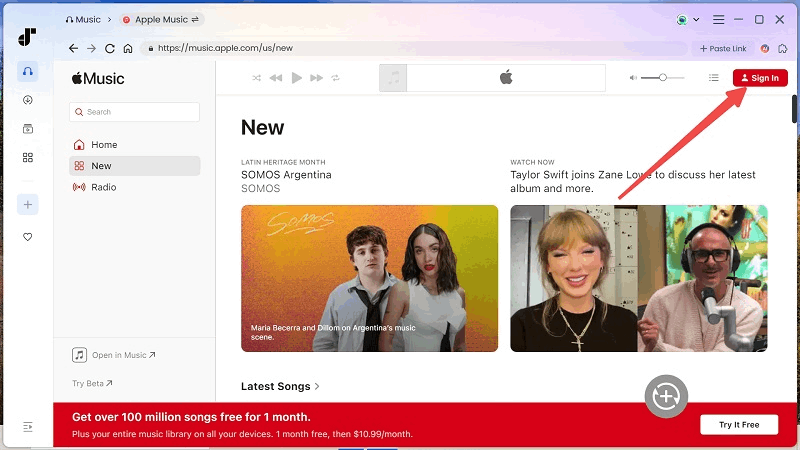
Step 1. Download and open TuneFab Apple Music Converter on your computer. Click the Apple Music logo to enter its built-in web player, then sign in with your Apple Music account.
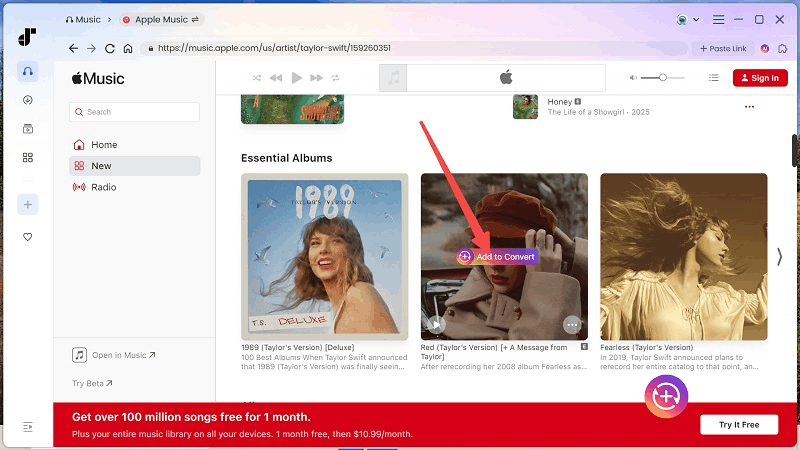
Step 2. Browse your Apple Music library and locate the songs, albums, or playlists you want to save. Drag them to the "+" icon on the right side, or click the "Add to Convert" button floating on each track.
Step 3. In the conversion panel, select your preferred output format, such as MP3, and customize parameters like bitrate or sample rate. You can also choose the folder where the converted files will be saved.
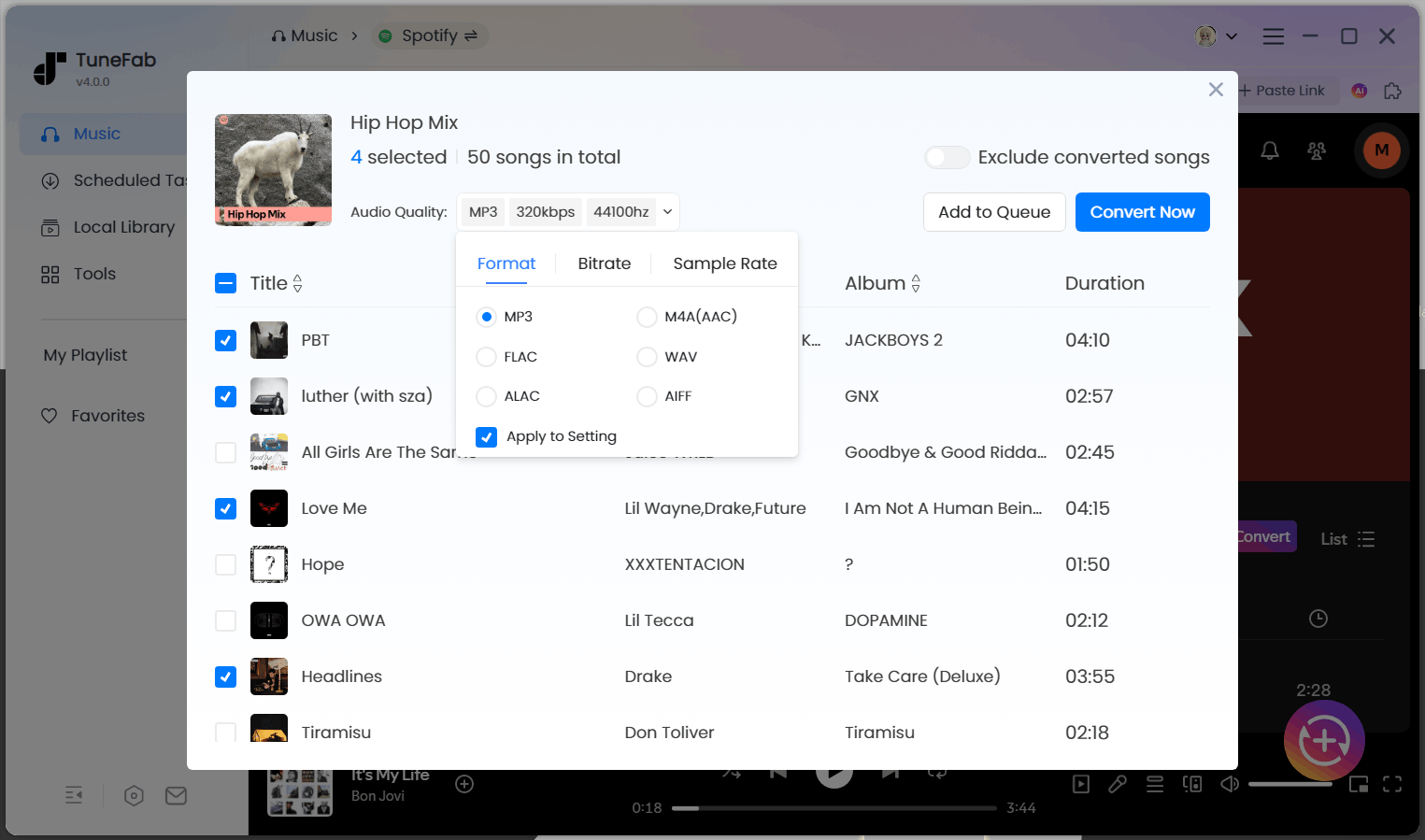
Step 4. Click "Convert Now" to begin the process. Once the conversion is finished, you will find the downloaded audio files in the selected output folder, ready to be played on any device.
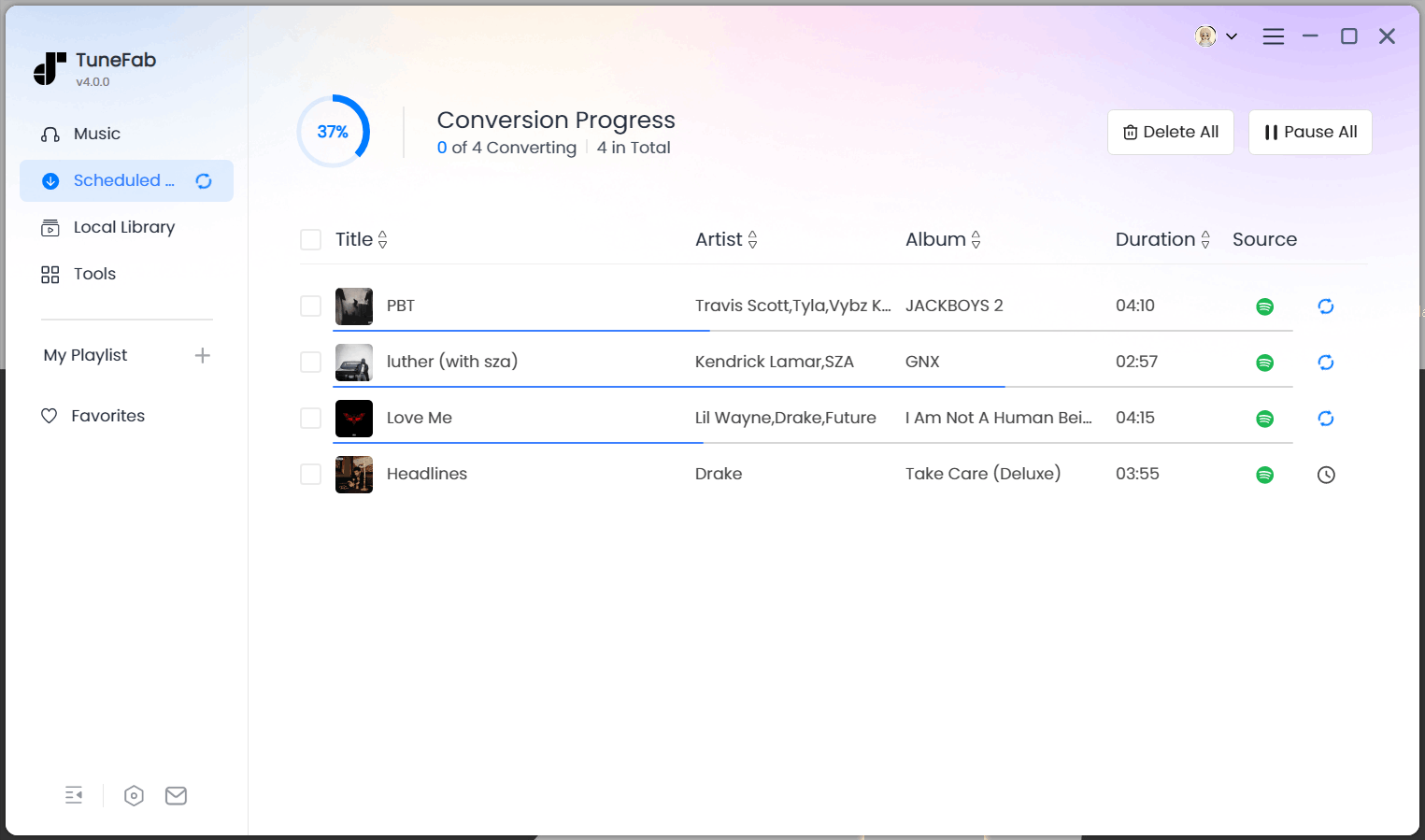
More Info: If you want to learn more about downloading music from Apple Music rather than recording, check out the posts below.
Comparison: Which is the Best Way for Recording Apple Music?
As shown above, there are several ways to record Apple Music with sound, but each method works differently. Screen recording tools like OBS can capture and playback in real time, while routing iPhone audio to a Mac provides another workaround. Alternatively, dedicated tools can save Apple Music tracks directly as audio files.
To help you choose the most suitable option, the table below compares these methods based on key factors such as audio quality, recording efficiency, and long-term usability.
| Method | Best For | Audio Quality | Recording Speed | Output Format | Long-Term Music Storage |
| OBS Studio (Screen Recording) | Recording Apple Music during streaming or screen capture | Medium | Real-time recording | Video (MP4/MOV) | ❌ Not ideal |
| iPhone → Mac AirPlay Recording | Capturing Apple Music playback from an iPhone | Low to Medium | Real-time recording | Audio recording file | ❌ Limited |
| Use TuneFab Apple Music Converter | Saving Apple Music for offline playback | High (original quality) | Batch conversion | MP3, M4A, WAV, FLAC | ✅ Suitable |
If you only need to capture a song occasionally, screen recording tools like OBS can work as a quick solution. The AirPlay recording method may also help when you mainly listen to Apple Music on your iPhone.
However, if your goal is to save Apple Music songs for long-term listening, transfer them to other devices, or build a personal music library, a direct conversion method like using TuneFab Apple Music Converter is generally the more practical option.
100% Secure
100% Secure
FAQs About Screen Recording Apple Music
Can you screen record Apple Music while playing music?
Yes, you can screen record the Apple Music app interface while a song is playing. However, in most cases, the music audio will not be captured in the recording. Apple Music uses Digital Rights Management (DRM) to block internal audio during screen recordings, so the video will usually contain the app interface but no song audio.
Why is there no sound when I screen record Apple Music?
Apple Music mutes audio during screen recordings because of DRM protection. The streaming service is licensed by record labels, so Apple prevents apps and system screen recorders from capturing the music audio directly. As a result, recordings usually contain the screen visuals but no internal Apple Music sound.
How can you screen record Apple Music with sound?
Because Apple blocks internal audio recording, standard screen recording on iPhone usually cannot capture Apple Music sound. Some workarounds include recording playback with desktop tools like OBS, routing iPhone audio to a Mac via AirPlay, or saving the music using dedicated software that exports the tracks as local audio files.
Why does Apple Music stop or mute when I start screen recording?
In some cases, Apple Music may pause playback or mute the audio when screen recording begins. This behavior is part of Apple's DRM system, which detects recording attempts and prevents the music from being captured. The restriction helps protect copyrighted content distributed through the Apple Music streaming service.
Conclusion
Screen recording Apple Music is possible, but it doesn't always work the way you expect. Because of DRM protection, most screen recording tools cannot capture Apple Music audio directly, which is why many recordings end up with no sound.
If you only need to capture Apple Music playback occasionally, tools like OBS Studio or routing audio from an iPhone to a Mac can serve as practical workarounds. However, these methods record in real time and may not preserve the original audio quality.
If you want to save Apple Music songs with original sound quality and keep them for long-term listening, converting the tracks into local audio files is generally the more efficient option. Tools like TuneFab Apple Music Converter make it possible to save Apple Music songs as standard audio formats and play them freely across different devices.
TuneFab Apple Music Converter
Try TuneFab as the best alternative than recording Apple Music one by one.

