




YouTube Music offers a library of over 100 million songs across a wide range of genres, making it a popular choice for music lovers. However, downloading music to an MP3 player isn't as straightforward as saving songs for offline listening in the YouTube Music app. The method you need depends on whether you have an Android-based player that supports YouTube Music or a traditional MP3 player that requires local audio files.
This guide covers three ways to download YouTube Music to an MP3 player, whether you're using a compatible Android-based device, a computer, or an Android phone. You'll also learn how to choose a suitable audio format and transfer files so they're ready to play on your device.
Quick Answer: Which Method Should You Use?
- Android-based digital audio player (DAP) with confirmed YouTube Music app compatibility: Go to Part 1 to learn how to download music directly through YouTube Music Premium for offline playback. These downloads remain within the app and aren't standard MP3 files.
- Traditional USB MP3 player (Operation on Computer): Go to Part 2 to prepare compatible audio files on your computer and transfer them via USB. Check your model's supported formats and use MP3 as a practical default.
- Traditional USB MP3 player (Operation on Android Phone): Go to Part 3 if your phone supports USB OTG and can connect to and power your MP3 player properly.
Read Also:
How to Download Music from YouTube to Mac (6 Ways)
How to Download YouTube Music to Computer [Updated!]
Part 1. Download YouTube Music on MP3 Player Directly
You can download YouTube Music directly to an Android-based MP3 player if it supports the current YouTube Music app. This method lets you directly download YouTube songs for offline listening as long as you have a YouTube Music Premium subscription.
Keep in mind that an MP3 player having Wi-Fi or running Android doesn't necessarily mean it can install the app. Check whether your device supports Google Play and Google Play Services, and whether YouTube Music is compatible with its operating system and available in your region. If it isn't, skip to Part 2 for an alternative way to transfer music to your MP3 player.
Step 1. Subscribe to YouTube Music Premium. If you already have one, log in to your account.
Step 2. Open Google Play on your compatible MP3 player, search for YouTube Music, and install the app.
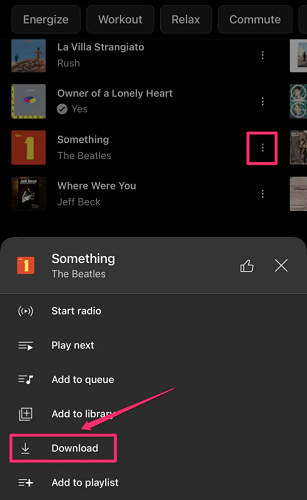
Step 3. Find the music you want to download, hit the three dots on the right and then hit "Download".
Part 2. How to Download Music from YouTube for MP3 Player on Computer
A traditional MP3 player without internet access or Google Play requires a different approach: download YouTube Music as MP3 or another audio format supported by your device, then transfer the files manually. Remember, though: Songs downloaded on the YouTube Music app are cache files with DRM protection, meaning those files won't play on your MP3 player, even if you manage to transfer them over.
Audio format support varies by MP3 player model, so check your device's specifications before choosing a format. MP3 is a practical default when you're unsure which formats your player supports. You can use a compatible YouTube Music downloader to save music from YouTube to your computer, then transfer the audio files to your player.
Best Way to Download YouTube Playlist to MP3 Player on Computer
Working on both Windows and macOS systems, TuneFab YouTube Music Converter is a specially designed application to download YouTube to MP3 players. Thanks to the built-in YouTube Music web player, you can search, listen to, and download songs without a YouTube Premium subscription.
This program lets you download YouTube Music tracks to MP3, M4A, WAV, and FLAC. It also preserves ID3 tags in MP3 files, supports batch downloads, and offers speeds of up to 35×, making it a practical option for preparing music for your MP3 player.
Once you've prepared the audio files, follow the steps below to transfer them to your MP3 player.
Step 1. Use the USB cable supplied with your player, then turn on the device if required. If the player displays a USB connection mode, select the mode recommended in its manual. Some devices offer MSC (Mass Storage Class), which makes the player appear like a removable drive, while others use MTP (Media Transfer Protocol) and may require a compatible file-management workflow.
Step 2. Once your MP3 player is connected, locate its storage and look for a folder named "Music." Copy your converted audio files into this folder if your player provides one. If not, follow the folder and file-transfer instructions in the device's manual.
On Mac
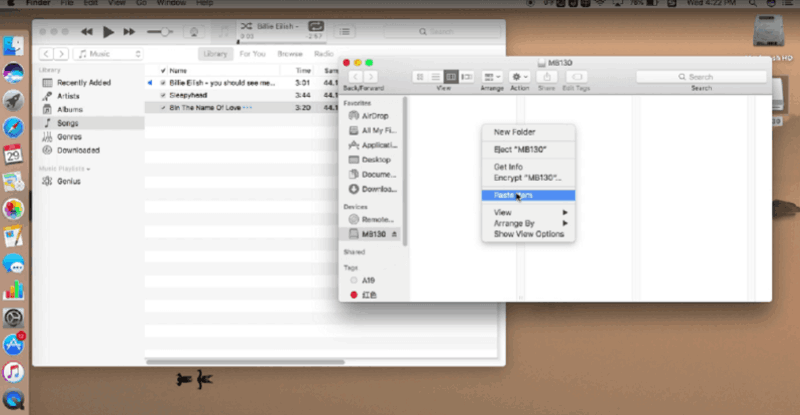
1. Connect your MP3 player to your Mac using the included cable.
2. Open Finder and check whether your MP3 player appears as an accessible drive. If it doesn't appear, check the player's USB mode and manual for macOS compatibility or any required file-transfer software.
3. Once done, select the MP3 player and navigate to "File" > "Eject" to eject it.
On Windows
1. Use a cable to connect your MP3 player to your PC.
2. Drag and drop the downloaded YouTube songs from the folder where they're saved to "This PC" > "Your MP3 Player." Copying and pasting also works.
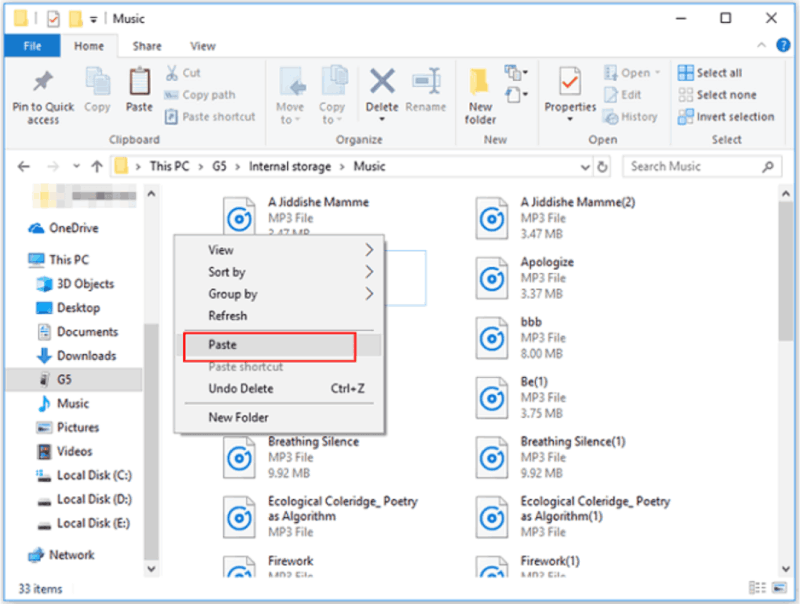
Step 3. After copying the files, use the system's eject option or the player's recommended safe-removal procedure before disconnecting the cable. This helps prevent incomplete transfers or file-system errors.
If the new songs don't appear on the player, open its music library and look for a "Rescan," "Refresh," or similar option if available. Some players update their music library automatically; others may need to rescan the storage or restart before newly copied tracks show up.
If songs appear with missing titles or artist names, check whether the files contain ID3 tags and whether your player reads those tags. Some players display filenames instead, so simple filenames and a consistent folder structure can also help.
Some MP3 players also have limits on the number of files or folders they can index, even when the storage has enough free space. If a large music library doesn't appear completely, check your model's file and folder limits, then try transferring the tracks in smaller batches.
Now, you can enjoy your downloaded YouTube music on a compatible MP3 player.
Other Ways to Download Music from YouTube to MP3
Via Online Tool
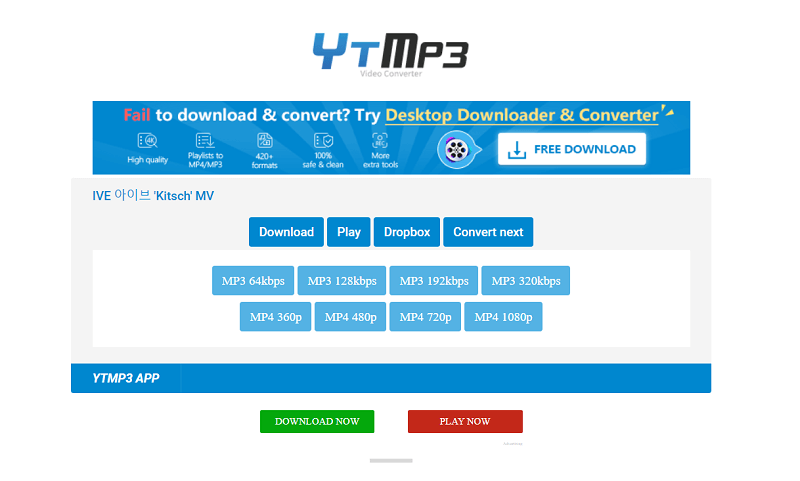
If you don't want to get an extra tool, YTPM3 can also be a useful idea. As an online YouTube to MP3 downloader, YTPM3 downloads YouTube music by copying and pasting the music link. Although the process is simple, it requires you to only work on individual songs, not a playlist or an album.
Via YouTube Studio
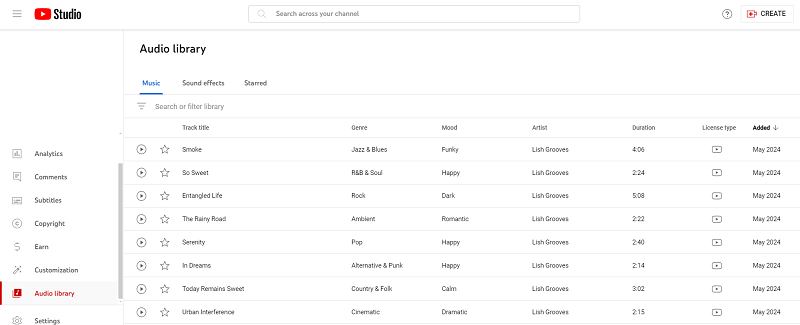
If you upload videos to your YouTube channel, you may notice that it offers a "YouTube Studio," where the "Audio Library" contains a variety of royalty-free music and sound effects for you to use or download. If you find music you like there, you can download it directly in MP3 format for future use.
Additionally, if you have other creative or film editing needs, you can also download the MP3 audio you need from those MP3 music download sites.
Part 3. How to Download Music to MP3 Player from YouTube on Android Phone
An Android phone offers another way to download YouTube Music to MP3 players without using a computer. You can use an Android-compatible app or an online service, such as the YouTube Music to MP3 tool in the TuneFab account center, to prepare audio files for transfer.
To move these files directly from your phone to an MP3 player, you can use a USB OTG adapter, provided that your phone supports OTG, the connection supplies enough power, and the player can be recognized and mounted for file access.
Note: Check both devices' specifications before trying this method. Bluetooth file transfer may also be an option if both devices support it.
Step 1. After downloading YouTube Music to your Android phone, get an OTG adapter cable (USB-C or Micro USB, depending on your Android phone’s port).
If no notification appears, check that your phone supports OTG, that the adapter is compatible, and that the connected player can be recognized and powered by the phone. Some devices may require an externally powered connection or may not support direct phone-to-player file transfer.
Step 2. Connect your MP3 player to the OTG adapter using its original USB cable.
Step 3. Plug the OTG adapter into your phone. You should see a notification like “USB device detected” or “USB drive connected.”
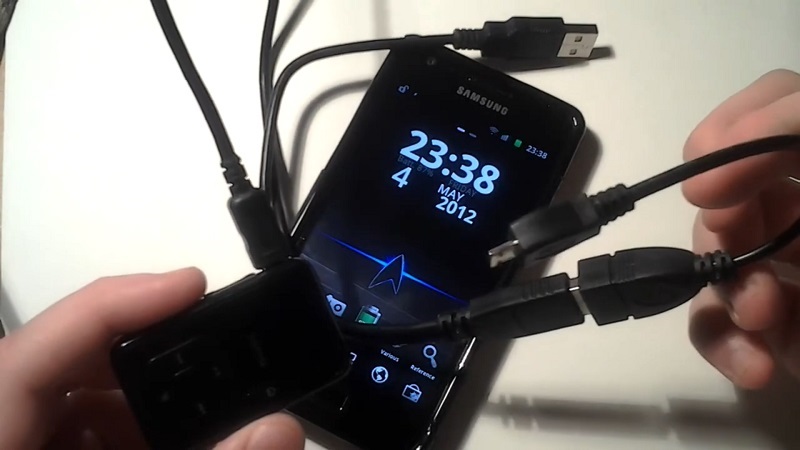
Step 4. Open your phone’s file manager app and locate the MP3 player’s folder. Browse your phone’s storage and find the MP3 music files you want to transfer.
Step 5. Long-press the files to select them, then tap “Copy” or “Move.”
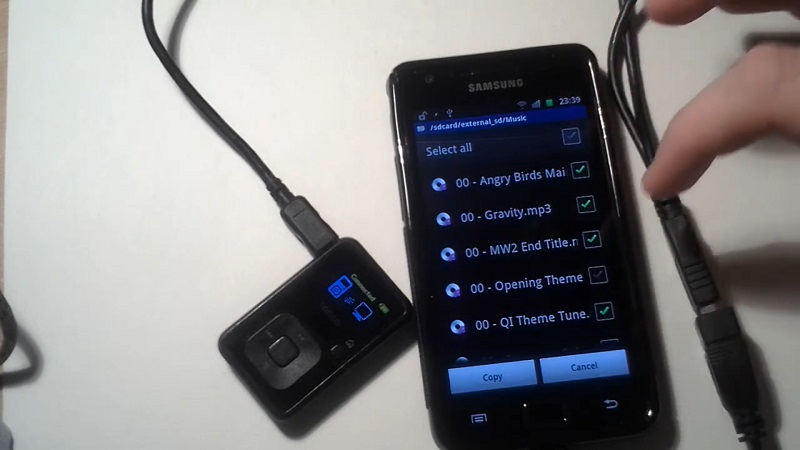
Step 6. Navigate to the MP3 player’s “Music” folder or main directory. Paste the files and wait for the transfer to complete.
Once done, safely eject the USB device (on some phones, tap “Eject” or “Safely remove”). Unplug the cables, and your MP3 player will be ready to play the newly added music.
Part 4. FAQs on Downloading YouTube Music to MP3 Player
Q1: Can You Download YouTube Music as MP3 Files from iPhone to MP3 Player?
It depends on the iPhone, adapter, and MP3 player. An iPhone may be able to access compatible external storage through the Files app and a supported adapter, but that doesn't guarantee that every MP3 player will be recognized or support direct file transfer.
YouTube Music app downloads remain app-managed content rather than ordinary MP3 files. To play music on a traditional MP3 player, you need compatible local audio files and a transfer method supported by both devices.
Q2: How to Find the Location of Downloaded Music from YouTube?
If you are using the TuneFab YouTube Music Converter, go to "Local Library" and click the file icon, which will take you to the location you chose before. You can review the details of it from Part 2.
If you are using an online YouTube music downloader, the location of the download files depends on what browser you use. The music is usually saved to the default download location of the browser. You can customize your preferences by accessing the settings and choosing your preferred download location.
Q3: Why Doesn't My MP3 Player Recognize the Songs I Transferred?
First, check whether the audio format is supported by your exact player model. Then confirm that the files are in the correct folder and that the player has finished scanning its storage. If the tracks still don't appear, try a small batch of files, check the player’s file or folder limits, and verify that the filenames and ID3 tags are readable by the device.
Q4: How Much Storage Space Do You Need for YouTube Music on an MP3 Player?
The storage space you need depends on the number of songs, their length, and the audio bitrate. As a rough estimate, a four-minute MP3 track encoded at 320 kbps takes around 9–10 MB, so 1 GB of available storage can hold roughly 100 tracks of that length. Leave some room for other files and system data, especially if you plan to transfer several playlists.
Q5: Does Converting YouTube Music to FLAC Improve Sound Quality on an MP3 Player?
Converting YouTube Music to FLAC does not automatically improve its original sound quality. If the source audio uses lossy compression, converting it to FLAC cannot restore details that have already been lost. FLAC can preserve the audio data in the converted file without introducing another lossy compression step, provided the conversion process does not re-encode the audio using a lossy codec.
Whether FLAC is the right choice also depends on your MP3 player's format support and available storage space. If your player supports FLAC, it may be a suitable option for keeping lossless audio files, but a higher-quality format alone does not guarantee better sound than the original source.
Q6: Can You Transfer YouTube Music Files Between Different MP3 Players?
Yes. You can generally move compatible local audio files from one MP3 player to another using a computer or another file-management method supported by both devices. However, transferring files does not guarantee that the new player can play them. The destination device must support the audio format, and some players may handle playlists, track information, or folder structures differently.
Before switching players, check the new device's supported formats and keep a separate copy of your music library on your computer or another storage device. This makes it easier to transfer your collection again if you replace your player in the future.
Conclusion
You can download YouTube Music to an MP3 player in three ways, depending on your device: use YouTube Music Premium on a compatible Android-based player, transfer local audio files from a computer, or use an Android phone with a supported USB OTG connection. For traditional MP3 players, make sure your music is saved as ordinary audio files in a format the device supports.
TuneFab YouTube Music Converter offers a convenient way to prepare YouTube Music tracks in formats such as MP3, M4A, WAV, and FLAC, with batch downloading and ID3 tag support for MP3 files. Once your files are ready, check your player's format and connection requirements before transferring them, so you can build a music library that's ready for offline playback.
100% Secure
100% Secure

