


Quick Answer: Can you convert M4P to WAV? What should you expect?
Yes, but it depends on whether your M4P file is DRM-protected. If the file comes from Apple Music or older iTunes purchases, it is usually encrypted and requires a dedicated converter to process. For DRM-free M4P files, tools like iTunes or online converters may work.
If you've tried to play an M4P file outside of Apple Music or iTunes, you may have found that it simply won't open, or cannot be used in editing tools or transferred to other devices. This is especially common when working with older iTunes purchases or Apple Music downloads that come with playback restrictions.
In many cases, users look to convert M4P to WAV not to improve sound quality, but to make the audio usable in more scenarios, such as audio editing, DAW workflows, or playback on unsupported devices. In the following sections, we'll walk through several practical methods for different file types, helping you choose the most efficient way to convert M4P to WAV.
- Method 1. Convert Protected M4P to WAV via Apple Music Converter 🔥
- Method 2. Convert DRM-Free M4P to WAV via the iTunes App
- Method 3. Convert DRM-Free M4P Files to WAV via Online Tools
- Method 4. Convert M4P to WAV via iTunes Audio Converter (Alternative)
- Method 5. Record M4P Clips to WAV for Free via Audio Recorders
- FAQs About Converting M4P to WAV
- Conclusion
Method 1. Convert Protected M4P to WAV via Apple Music Converter
If your M4P files come from Apple Music or older iTunes purchases, they are usually protected and cannot be converted directly using standard tools. In this case, you'll need a dedicated converter that can first process Apple Music DRM removal, then export the audio as a usable format like WAV.
TuneFab Apple Music Converter is designed for this type of scenario. It allows you to access your Apple Music library, select songs or playlists, and convert them into WAV or other formats for use outside the Apple ecosystem. Instead of focusing only on format conversion, this method is more about making restricted files usable in real situations, such as transferring music to unsupported devices, working with audio editing software, or keeping a local copy that is not tied to an app.
100% Secure
100% Secure
Why this method works for protected M4P files?
- Handles protected files: Works with Apple Music and older iTunes M4P tracks that cannot be processed by iTunes or online tools.
- Supports WAV output: Exports Apple Music in uncompressed WAV or other common formats, suitable for editing or compatibility needs.
- Batch and fast conversion: Useful if you need to convert full playlists or albums instead of individual tracks, supporting up to 35X fast speed.
- ID3 Metadata Preservation: Preserves metadata like title, artist, and album for easier file management.
- No iTunes or Apple Music dependency: Runs with a built-in player, avoiding syncing issues or extra setup.
In short, TuneFab is best suited if you are dealing with protected M4P files or need a more efficient way to convert large music libraries into WAV format. Let's see how to use it.
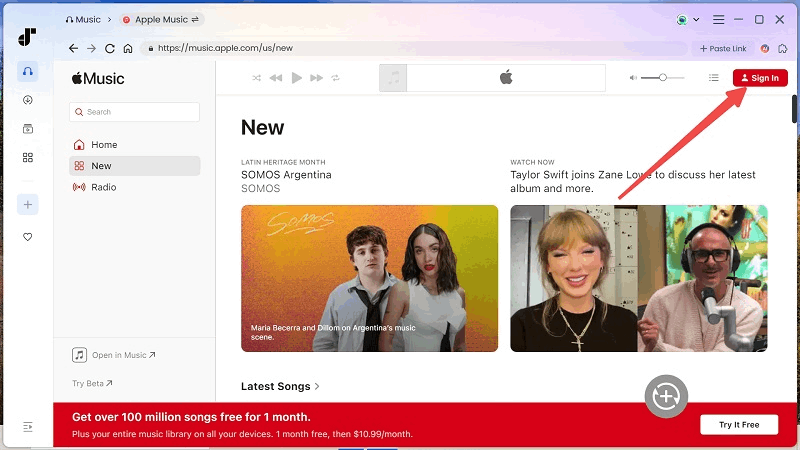
Step 1. Run TuneFab Apple Music Converter on the desktop. Once access the built-in Apple Music player, please complete the account login first.
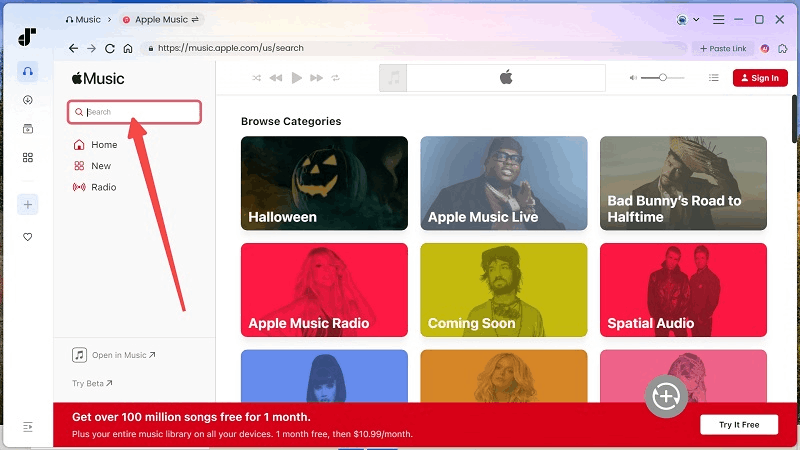
Step 2. In the web player, you can directly search and add your favorite Apple Music songs to the converting list by clicking on the floating Add to Convert buttons to import to the conversion list.
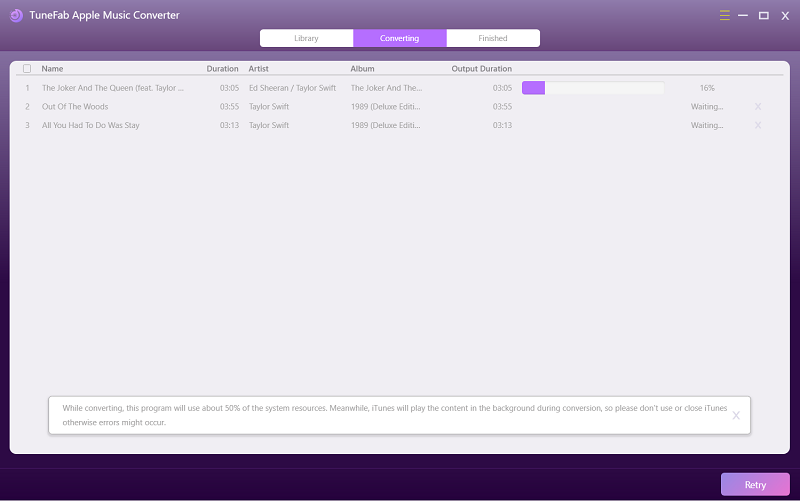
Step 3. Now, move to the Converting window to further customize the audio parameters in preferences. Please select WAV as the output format. For audio quality, you can determine by yourself simply by personalizing the SampleRate and Bitrate settings.
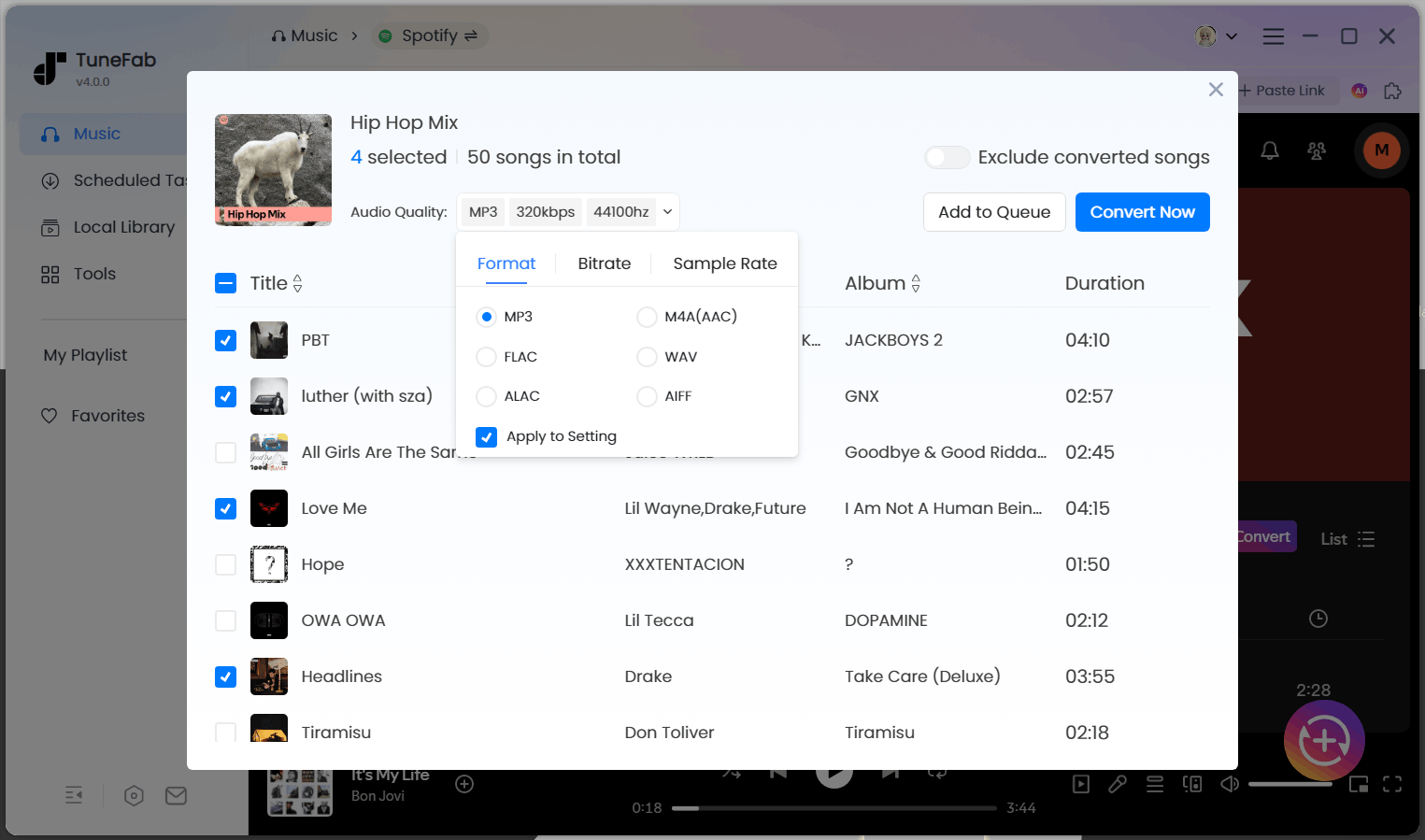
Step 4. Eventually, simply click on the Convert Now button to proceed with the M4P to WAV conversion. Then TuneFab Apple Music Converter will function to convert and download Apple M4P songs to local WAV files at uncompressed quality for you.
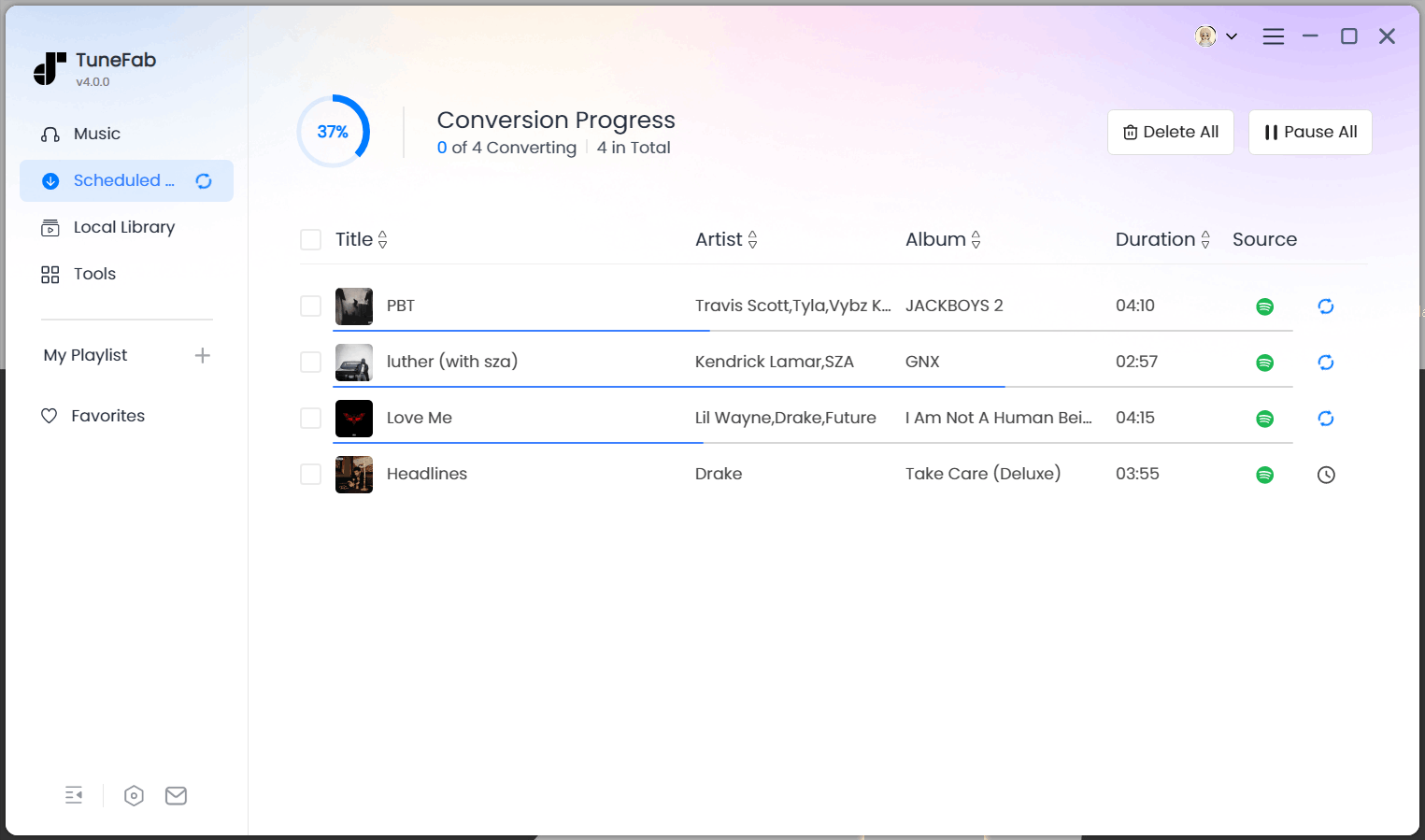
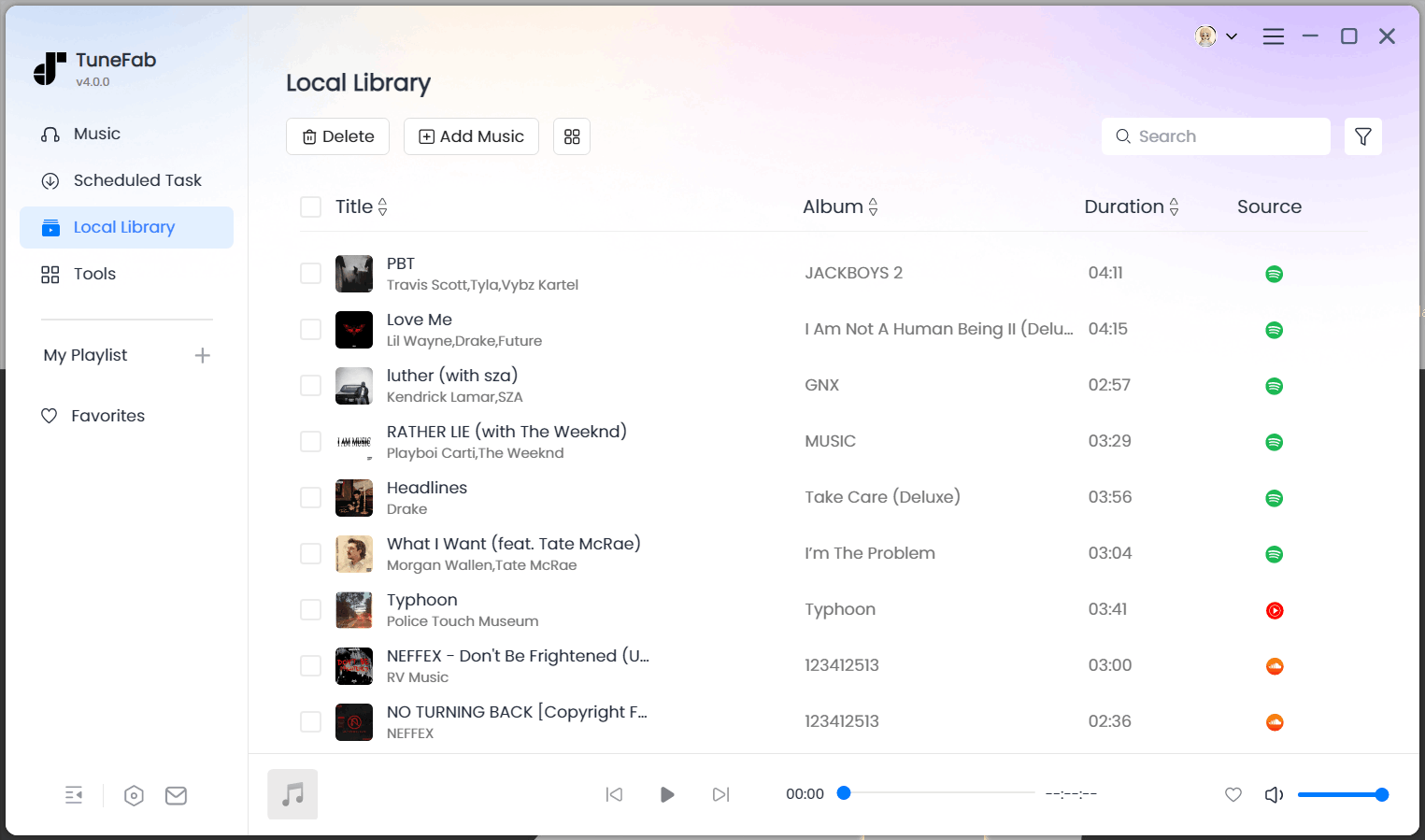
Once the download completes, you can access the converted WAV files under the Local Library module, and directly play them within TuneFab, or locate them under the output folder you set before.
You May Also Like:
Method 2. Convert DRM-Free M4P to WAV via the iTunes App
If your M4P files are already DRM-free, you can use iTunes (or the Apple Music app on Mac) to convert them to WAV without installing additional software. This method works by re-encoding the audio into a new format, making it a convenient option for simple conversions within your existing music library.
However, this method only applies to unprotected M4P files. It does not remove DRM, so Apple Music tracks or older protected purchases cannot be processed this way.
Step 1. In iTunes, add unprotected M4P files to the library, and then go to Preferences >> Import Using to set WAV Encoder first.
Step 2. Please navigate to your iTunes Library and directly select the M4P songs you wish to convert to WAV.
Step 3. Now, simply click on File >> Convert and then choose the Create WAV Version option. Then the WAV copies of these M4P songs will be generated.

Note: If your songs were purchased from the iTunes Store, you can re-download them as DRM-free M4A files (iTunes Plus). However, iTunes does not provide WAV downloads directly, so you will still need to convert the files to WAV manually after downloading.
Method 3. Convert DRM-Free M4P Files to WAV via Online Tools
If your M4P files are DRM-free, online converters like FreeConvert can be a quick way to convert them to WAV without installing any software. These tools work directly in your browser and are suitable for small, one-off conversions.
However, online converters are best for small, DRM-free files only, which may have file size limits, limited batch support, and depend on internet speed. If your files come from Apple Music or are still restricted, they will usually fail to upload or convert.
Step 1. Use your web browser to go to FreeConvert M4P to WAV Converter.
Step 2. Click on Choose Files to select M4P songs to upload to the converter. Or you can directly drop them to the interface.
Step 3. Once uploaded, the M4P songs will automatically be converted to WAV. Once the Download option is provided, click on it to download the converted WAV files offline.

Method 4. Convert M4P to WAV via iTunes Audio Converter (Alternative)
If your M4P files were purchased from the iTunes Store before 2009, they may still be protected and cannot be converted using iTunes itself. In this case, a separate tool is required to process these older files and export them into standard formats like WAV.
TuneFab iTunes Music Converter is designed for this specific scenario. It works by accessing your iTunes library, detecting protected tracks, and converting them into playable formats for use outside the original Apple environment. Compared to modern Apple Music converters, this type of tool is mainly used for older iTunes purchases rather than streaming content, and is typically helpful if you still maintain a legacy music library.
Step 1. Get iTunes prepared. And when you run TuneFab iTunes Music Converter, iTunes will automatically be ready and synchronize with the program in no time. The whole iTunes Library will be loaded in TuneFab iTunes Music Converter for you to select playlists and songs to convert.
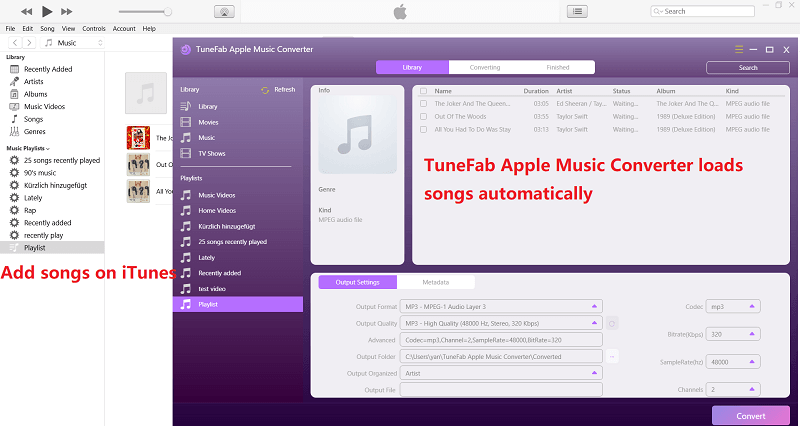
Step 2. Simply choose the M4P songs you wish to decrypt DRM and convert to WAV in TuneFab iTunes Music Converter.
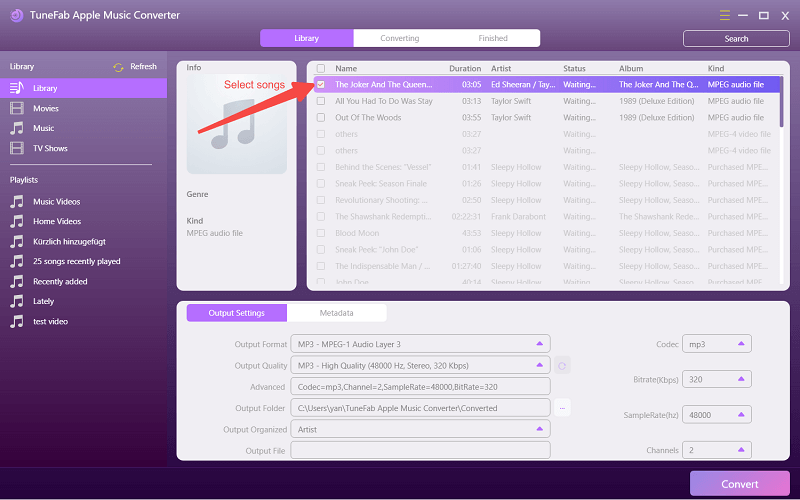
Step 3. Move down to the setting area to adjust the output format as WAV and also other audio parameters, including the Output Quality, Codec, Bitrate, SampleRate, and Channel in preferences.
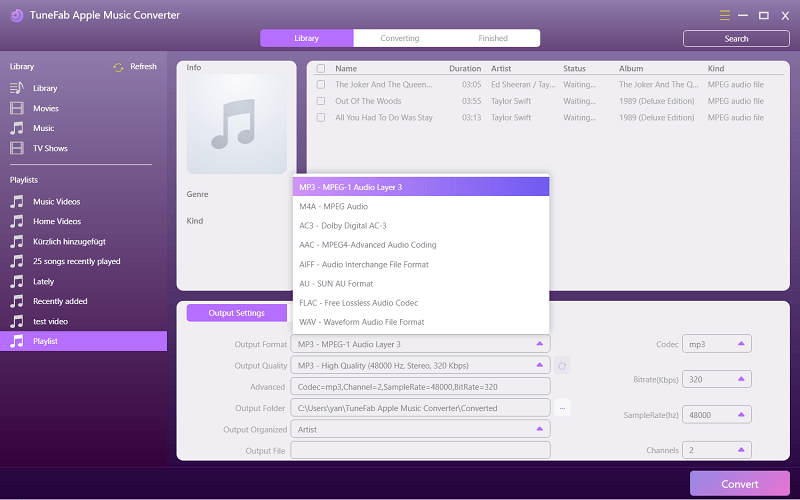
Step 4. To proceed with the M4P to WAV conversion, simply click on the Convert button and TuneFab iTunes Music Converter will do the rest for you.
Method 5. Record M4P Clips to WAV for Free via Audio Recorders
If you only need to extract part of a track or cannot convert your M4P files using other methods, recording can serve as a workaround. This approach captures the audio during playback and saves it as a new WAV file, making it useful for simple tasks like creating short clips or handling files that can't be processed directly.
However, recording has clear limitations. It works in real time, so longer tracks take more time, and the output quality depends on your settings. Metadata is usually not preserved, and you may need to manually trim and organize the files. As a result, recording is best considered a last-resort option, while dedicated converters are more efficient for larger or regular use.
Step 1. Install and run Audacity on your desktop to prepare for the recording.
Step 2. Start streaming an M4P song, meanwhile, click on the REC button on the menu bar of the Audacity interface to proceed with the music capturing.
Step 3. When the recording ends, go to File >> Export to select Export as WAV, then the recorded M4P audio can be saved locally as a WAV file.

FAQs About Converting M4P to WAV
Can you convert M4P to WAV?
Yes, but it depends on whether the file is DRM-protected. If your M4P files come from Apple Music or older iTunes purchases, they are usually protected and cannot be converted directly using standard tools. In this case, a dedicated converter like TuneFab Apple Music Converter is required. For DRM-free M4P files, tools like iTunes or online converters may work.
Does converting M4P to WAV improve audio quality?
No. Converting M4P (AAC) to WAV does not improve audio quality. WAV is an uncompressed format, but it cannot restore data that was already lost during AAC compression. The main benefit of converting to WAV is compatibility for editing, not better sound.
Can FFmpeg convert M4P to WAV?
FFmpeg can convert M4P to WAV only if the file is DRM-free. It cannot remove Apple's FairPlay DRM, so protected M4P files will fail to convert or produce unusable results. For encrypted files, a dedicated converter is required.
Is M4P the same as MP4?
No. M4P and MP4 are different formats. M4P is an audio format used by Apple, often with DRM protection, while MP4 is a multimedia container typically used for video. Although the names are similar, tools designed for MP4 files usually do not work with M4P audio.
How can I play M4P files without iTunes?
If the file is DRM-protected, it can only be played on authorized apps like Apple Music or iTunes. To play M4P files on other devices or players, you typically need to convert them into a compatible format such as WAV or MP3 using a suitable tool. DRM-free M4P files, however, may already work with some third-party players.
Conclusion
Converting M4P to WAV is not just about changing the file format, but the key factor is whether your files are DRM-protected. If your M4P files come from Apple Music or older iTunes purchases, they usually cannot be converted directly, and a dedicated solution like TuneFab Apple Music Converter is required. For DRM-free files, simpler methods like iTunes or online tools may work for occasional use.
It's also important to understand that converting to WAV does not improve audio quality. Instead, WAV is mainly useful for compatibility or audio editing scenarios. Choosing the right method depends on your file type and how you plan to use the audio. For protected files or larger music libraries, a more efficient and reliable approach will help you save time and get consistent results.
TuneFab Apple Music Converter
Remove DRM and convert Apple Music M4P files to WAV without quality loss.

