

When you stream music on Spotify, you’re actually listening to audio delivered in the OGG Vorbis format, a highly efficient codec designed to provide better sound quality with smaller file sizes. However, even if you download songs for offline playback, you still can’t freely use those Spotify OGG files outside the Spotify app. Because Spotify applies DRM protection to all downloaded tracks, the files cannot be transferred to MP3 players, USB drives, VLC, or other media players.
If you want to play Spotify music more freely across different devices and platforms, converting Spotify OGG Vorbis to MP3 is one of the most effective solutions. In this guide, you’ll learn what OGG Vorbis is, why Spotify uses it, where Spotify OGG files are stored, and how you can convert Spotify music to MP3 without sacrificing audio quality.
Quick Overview:
Spotify uses Ogg Vorbis, an efficient open-source audio format that balances sound quality and streaming speed while keeping file sizes small. Depending on your plan, audio quality ranges from lower bitrates for free users to up to 320 kbps for Premium, with Spotify also using formats like AAC (web player) and FLAC (lossless streaming in select cases).
However, Spotify Ogg files are DRM-protected, meaning they can’t be freely exported or played outside the Spotify app. If you want broader compatibility, the common solution is to convert Spotify OGG Vorbis to MP3, so the music can be used on MP3 players, USB drives, VLC, and other devices.
Part 1. What is OGG Vorbis? Why Does Spotify Use It?
OGG Vorbis is a free and open-source audio compression format that provides efficient compression while maintaining good audio quality. Compared with MP3, OGG Vorbis can usually deliver better sound quality at similar bitrates while keeping file sizes smaller.
However, regular OGG Vorbis files and Spotify OGG Vorbis files are not exactly the same thing. Standard OGG files are normal audio files that can be freely played, copied, or transferred across different devices and media players. In contrast, Spotify OGG files are encrypted with DRM protection and are only used as cached streaming or offline playback data inside the Spotify app.
One of the biggest advantages of OGG Vorbis is its superior compression efficiency. At similar bitrates, OGG Vorbis often produces better sound quality than MP3, preserving more audio details while keeping files compact. For example, a 192 kbps OGG Vorbis file can sound comparable to, or even better than, a higher bitrate MP3 file in many listening scenarios.
Because of this balance between audio quality and file size, OGG Vorbis has become a preferred format for music streaming services like Spotify, where fast delivery, stable playback, and efficient data usage are all essential.
Why Does Spotify Use OGG Vorbis?
Spotify mainly uses OGG Vorbis because it offers an ideal combination of high audio quality and efficient streaming performance. As an open-source codec, OGG Vorbis also helps Spotify avoid expensive licensing fees associated with proprietary audio formats.
Another major reason is bandwidth efficiency. OGG Vorbis delivers smaller file sizes than many traditional audio formats while still preserving rich sound details, allowing Spotify to stream millions of songs smoothly across different internet conditions and devices.
For large-scale streaming platforms, this format also improves server performance and reduces data transmission costs. As a result, Spotify can provide stable playback experiences for both free and Premium users worldwide without heavily compromising audio quality.
Does Spotify Still Use OGG Vorbis in 2026?
Yes. In 2026, Spotify still primarily uses OGG Vorbis for music streaming on its desktop and mobile apps. Premium subscribers can stream at up to 320 kbps OGG Vorbis quality, while free users typically stream at lower bitrates.
However, Spotify now uses different audio formats depending on the playback environment:
- Desktop and mobile apps: OGG Vorbis
- Spotify Web Player: AAC
- Lossless streaming (where available): FLAC
This shows how Spotify’s audio ecosystem continues evolving to balance compatibility, streaming efficiency, and high-fidelity listening experiences across different platforms and devices.
Part 2. How to Find Downloaded Spotify OGG Vorbis Local Files
If you have subscribed to Spotify Premium plans, you will be allowed to enable Spotify's offline mode to download Spotify songs to the device you're using, but those downloads are limited and can not be transferred or played on other places. Here are the steps to locating your downloaded Spotify OGG local files.
Note:
Although Spotify downloads use the OGG Vorbis format, they are not regular audio files. Spotify applies DRM (Digital Rights Management) encryption to all downloaded tracks, preventing them from being freely copied or played outside the Spotify app.
For personal offline listening, a more reliable solution is to use a professional Spotify music converter. It can convert Spotify songs to common formats like MP3 while keeping good audio quality and better compatibility across devices.
Step 1. Launch the Spotify app on your Windows PC or Mac computer, click on the "three-dots" button in the top-left corner, and turn on the "Offline Mode" option.
Step 2. After that, you can see all your downloaded Spotify content listing on the tab, and you can easily check or play them.
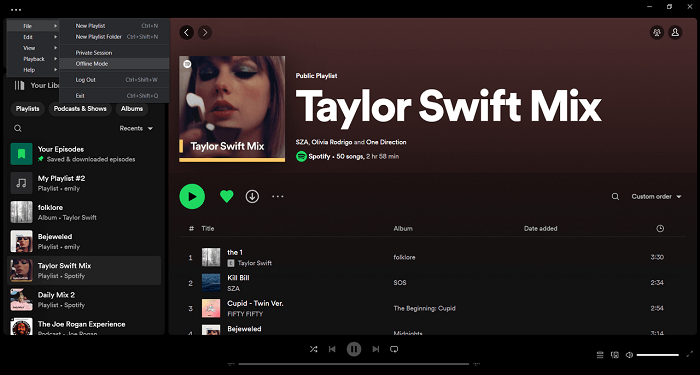
Since they are not the actual locally downloaded files, they will not be exported directly to a local folder on your computer. However, you may be able to find the downloaded Spotify OGG Vorbis file under Spotify's default saving path:
C:\Users\USERNAME\AppData\Local\Packages\SpotifyAB.SpotifyMusic_zpdnekdrzrea0. \LocalState\Spotify\Storage
If you want to change the "Offline Storage Location", you can go to the "Settings" menu and find the corresponding option.

Part 3. How to Convert Spotify OGG Vorbis to MP3 Format
As mentioned above, Spotify OGG is limited, and even if you can download Spotify songs and find these OGG files in your computer's local storage, they are only caches and cannot be transferred to other devices or played by other players. To help you remove DRM protection from Spotify to avoid these limits, a professional Spotify Music converter is strongly recommended.
TuneFab Spotify Music Converter is the ideal solution for Spotify OGG to MP3 conversions with lossless quality. Compatible with both Windows and Mac, this converter allows you to choose bitrates up to 320 kbps and customize SampleRate from 22050hz to 48000hz. Its powerful features make sure that you can have the same music playback experience after getting the converted songs offline.
👍 Key Features of TuneFab Spotify Music Converter:
- It has a built-in Spotify web player to let you access the whole Spotify Music Library to download all Spotify content without Premium.
- It provides common DRM-free MP3, M4A, WAV, FLAC, AIFF, AAC, and ALAC formats to convert Spotify OGG Vorbis.
- It supports up to 35X faster batch downloading speed to rip Spotify songs/playlists/albums/podcasts to your desired places.
- It preserves the ID3 information for Spotify songs after conversion for easier management and more convenient further usage.
Here's the step-by-step guide for you to convert Spotify OGG to MP3 local files.
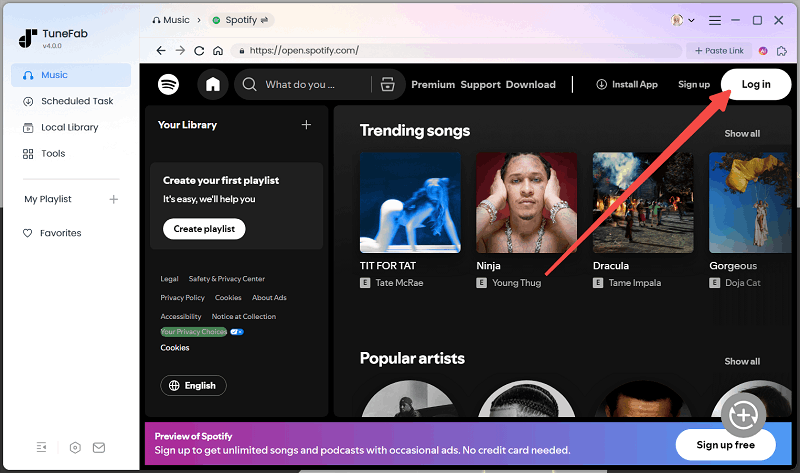
Step 1. Sign in In-built Spotify Web Player
First, you need to install TuneFab Spotify Music Converter on your Windows/Mac computer. Then open it and enter the in-built Spotify Web Player to sign in using your own Spotify account (no need for Premium).
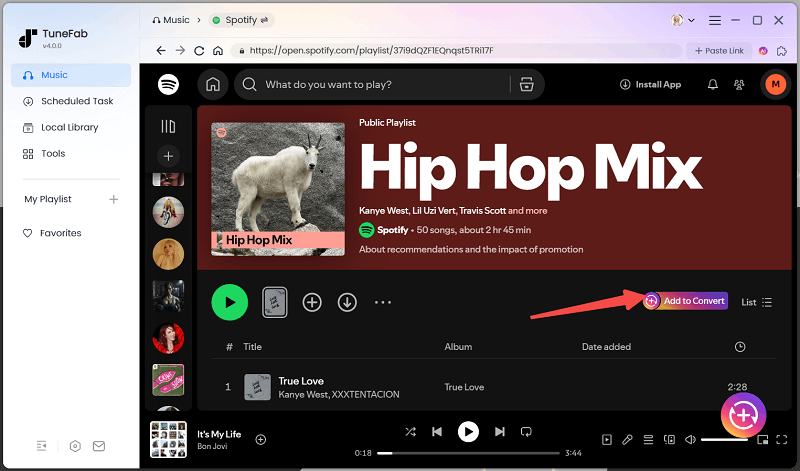
Step 2. Select Spotify Playlists to Convert
Then you can directly use the Spotify Web Player to search and add the Spotify playlists you want by clicking the "Add to Convert" button.
Step 3. Select MP3 Format and Adjust Quality
After adding your Spotify songs, click the “Convert all files to” menu in the top-right corner and select MP3 as the output format. Besides MP3, TuneFab also supports FLAC, WAV, AAC, AIFF, ALAC, and more to fit different playback needs.
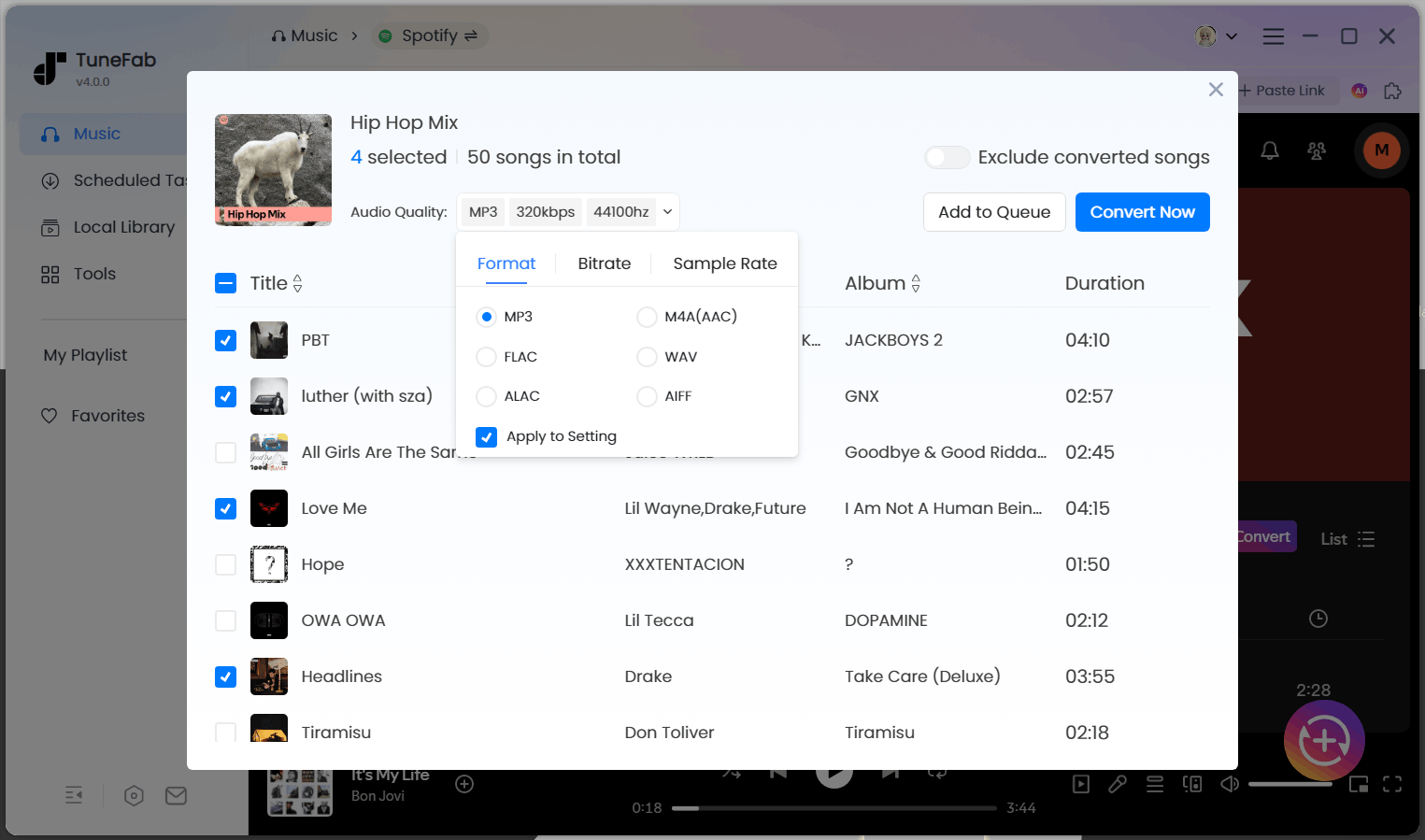
Tip: To preset the audio quality, go to “Preferences” > “Advanced”, where you can adjust both the Bitrate and Sample Rate settings before conversion.
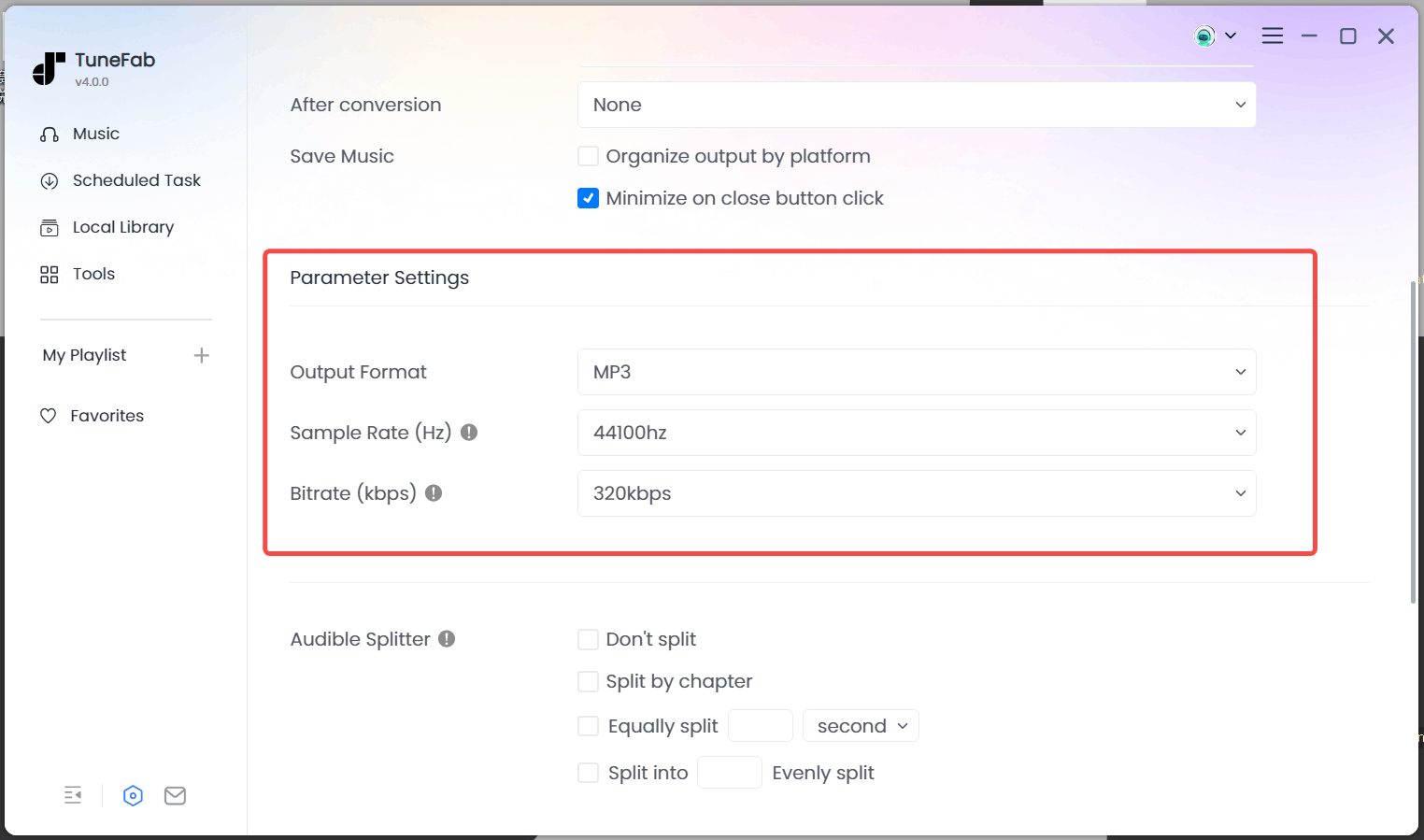
Recommended Bitrate and Sample Rate Settings
| Usage Scenario | Recommended Settings |
| Casual listening | 128 kbps, 44.1 kHz |
| Daily high-quality playback | 256 kbps, 44.1 kHz |
| Best audio quality | 320 kbps, 44.1 kHz |
| Video production/audio editing | 320 kbps, 48 kHz |
For most users, 44.1 kHz is the ideal sample rate because it matches the standard quality used by most music streaming services. If you plan to use Spotify music for professional video projects or audio editing, 48 kHz may provide better compatibility.
MP3 vs FLAC vs WAV vs AAC: Which Format Should You Choose?
- MP3: Best overall compatibility for phones, cars, MP3 players, and portable devices
- FLAC: Best for lossless audio quality and audiophile listening
- WAV: Ideal for music production, editing, and studio workflows
- AAC: Better optimized for Apple devices and the iOS ecosystem
👀 Related Article:
Step 4. Convert Spotify Songs to MP3
Finally, after configuring the output format and audio quality, simply click the "Convert Now" button to start converting Spotify OGG Vorbis to MP3. Thanks to TuneFab’s fast batch conversion technology, your Spotify songs can be downloaded and saved locally within just a few minutes.
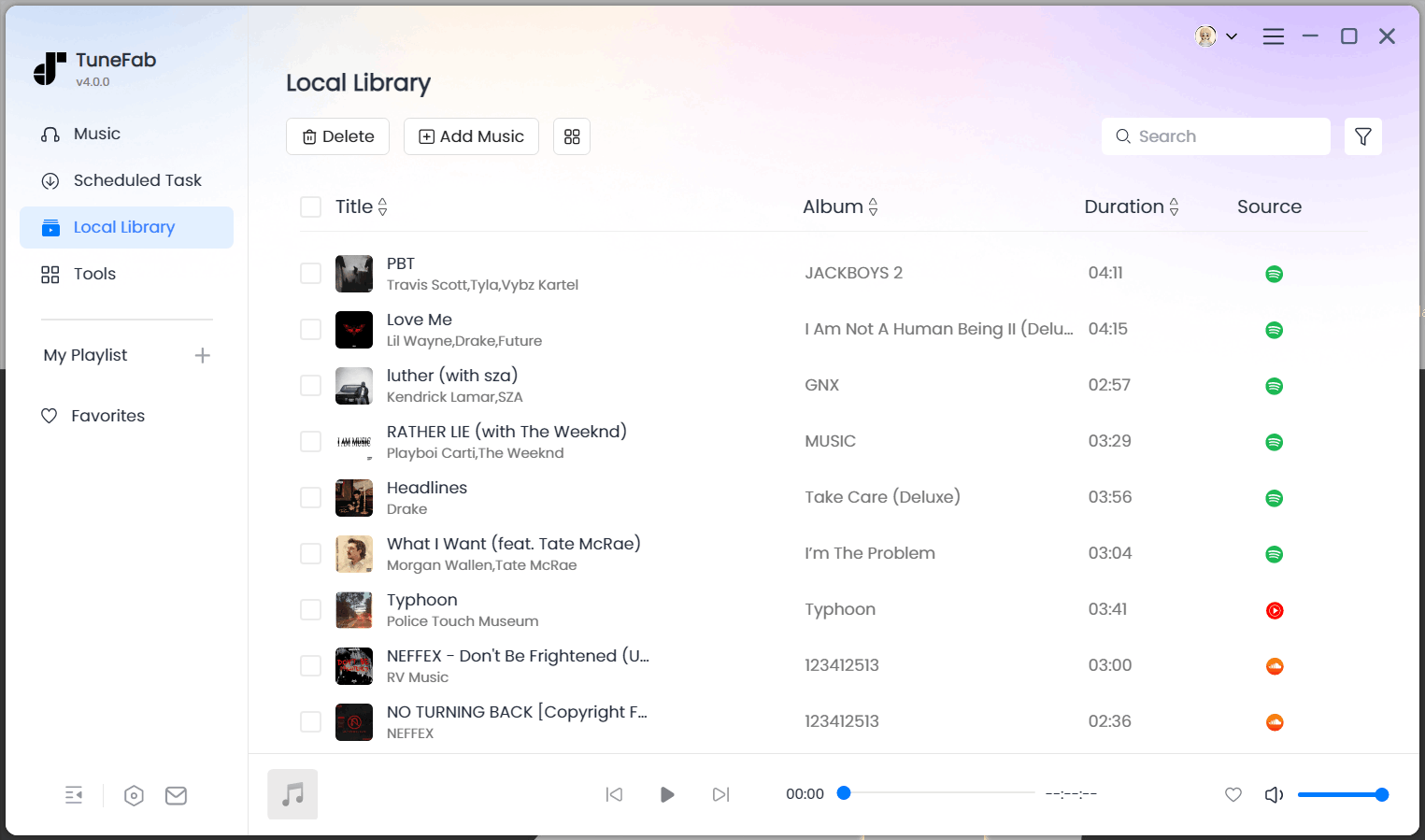
If you want to convert music from Spotify to OGG, you can first download the tracks as MP3 files with TuneFab, then use tools like FreeConvert to convert them to OGG format.
Part 4. FAQs About OGG Vorbis Spotify
Q1: Is Spotify OGG Vorbis Lossless?
No. Spotify OGG is a lossy audio format, not a lossless one. Although it delivers excellent sound quality with efficient compression, some audio data is still removed during encoding to reduce file size.
For most listeners, Spotify Premium’s 320 kbps OGG Vorbis quality is already very close to CD-quality audio. However, if you want true lossless listening, formats like FLAC or WAV are better choices.
Q2: Does Spotify Use Other Formats Besides OGG Vorbis?
Yes. While OGG Vorbis is the main format for Spotify's streaming service, it also uses other formats in different parts of the platform. For example, if you are streaming Spotify content to Chromecast via the "Spotify Connect" feature, it may use AAC format for the service. Also, if you want to add local files to your Spotify library, the app supports various formats like MP3, M4P (if the files are downloaded from the iTunes Store), and MP4 if the files contain video.
Q3: AAC, MP3, Spotify OGG Vorbis vs FLAC: Which One Wins?
The best format depends on your needs. Spotify OGG offers good sound quality with smaller file sizes, but Spotify OGG files are DRM-protected and cannot be freely used outside the Spotify app. AAC provides efficient compression and works especially well on Apple devices, while MP3 remains the most compatible format across almost all devices and media players.
FLAC is different because it is lossless, preserving the highest audio quality at the cost of larger file sizes. If you want the best compatibility after converting Spotify music, MP3 is usually the best choice. If audio quality matters more, FLAC is the better option.
Q4: Can VLC Play Spotify OGG Files?
No. VLC cannot directly play downloaded Spotify OGG files because they are protected by DRM encryption. Even though Spotify stores offline downloads in OGG Vorbis format, these files are actually encrypted cache data that only the Spotify app can recognize and decode.
To play Spotify music in VLC or other media players, you will first need to convert the songs into standard DRM-free audio formats like MP3 or FLAC.
Q5: Can I Convert Spotify OGG Vorbis Without Premium?
Yes. Some professional Spotify music converters allow you to convert Spotify songs without requiring a Premium subscription. These tools usually come with a built-in Spotify web player, enabling you to access and convert Spotify tracks directly.
After conversion, you can save Spotify songs as MP3, FLAC, WAV, and other common formats for offline playback on any device.
Summary
Spotify uses OGG Vorbis because it offers an excellent balance between audio quality, streaming efficiency, and bandwidth usage. However, Spotify OGG files are DRM-protected cache files that cannot be freely played or transferred outside the Spotify app.
If you want to enjoy Spotify music on MP3 players, USB drives, VLC, car stereos, or other devices, converting Spotify OGG Vorbis to MP3 is the most practical solution. With TuneFab Spotify Music Converter, you can easily download and convert Spotify songs to MP3, FLAC, WAV, and other common formats while preserving high audio quality and ID3 tags for unrestricted offline listening.

