


If you love organizing your music library and prefer the flexibility of iTunes for offline playback, you might have run into a common challenge: Spotify songs aren’t directly compatible with iTunes. Whether it’s for creating personalized playlists, syncing music across devices, or simply enjoying your favorite tracks without relying on Spotify’s app, transferring songs from Spotify to iTunes can save you a lot of hassle.
In this guide, you’ll discover 2 practical methods to move your Spotify music into iTunes effortlessly, so you can enjoy your songs anywhere, anytime.
TuneFab is one of the best tools to help you convert Spotify playlists to iTunes. It not only includes a Playlist Transfer feature that lets you move your playlists directly from Spotify to Apple Music for syncing with iTunes, but also allows you to download Spotify playlists as MP3s so you can add them to iTunes and listen offline.
Part 1. Can You Convert Spotify to iTunes?
Spotify does not offer a built-in way to convert or transfer music directly to iTunes. This is mainly because all Spotify tracks are protected by DRM, meaning they can only be played within the Spotify app even if you have downloaded them.
However, depending on what you actually want, there are two workable solutions:
- If you only want to move playlists (not audio files), you can use playlist transfer tools (like TuneFab Playlist Transfer) to migrate your Spotify library to Apple Music, and then sync it to iTunes. 👉 Jump to Part 2
- If you want to download Spotify songs as local files and store them in iTunes for offline playback, you’ll need a Spotify music converter. 👉 Jump to Part 3
In short, Spotify to iTunes is not a direct process—but you can achieve it either by transferring playlists or converting songs into compatible formats.
Related Readings:
- How to Convert Spotify Song/Playlist to MP3
- Spotify to WAV Converter: Get Spotify WAV Files Losslessly
Part 2. How to Convert Spotify to iTunes (Library Transfer)
For users who want to move Spotify music to iTunes while preserving original playlists, artists, and overall library structure, a playlist transfer method offers the most efficient and least disruptive solution. Instead of downloading songs as local files, this approach focuses on recreating your Spotify library in Apple Music, which can then be automatically synced to iTunes through Apple’s cloud ecosystem.
This method works by matching tracks between platforms rather than transferring actual audio files. In other words, tools like TuneFab Playlist Transfer scan your Spotify playlists, identify the same songs available in Apple Music’s catalog, and rebuild those playlists on your Apple Music account. Because no files are downloaded, the process is significantly faster and avoids storage limitations on your device.
TuneFab Playlist Transfer simplifies the entire migration process by automating playlist matching and transfer between platforms. It supports a wide range of mainstream streaming services, allowing you to move not only playlists but also albums and individual tracks with minimal effort.
One of its biggest advantages is speed and stability when handling large libraries. Even if you have hundreds or thousands of songs, the tool can process them in batches without freezing or crashing. At the same time, its OAuth-based login ensures that your account credentials are not stored, making the transfer process secure and privacy-friendly.
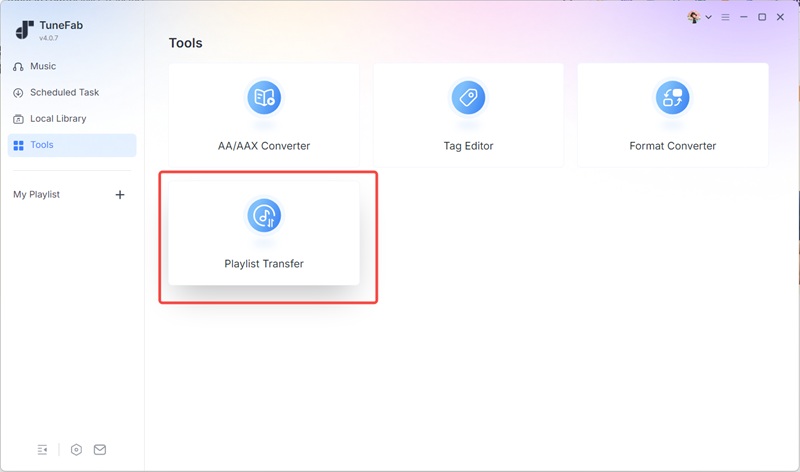
Step 1. Select Spotify as the Source Platform
Launch TuneFab and enter Playlist Transfer. Then choose Spotify as the source music service. After logging into your Spotify account, the tool will automatically load your playlists, albums, and saved tracks. This step ensures that your entire Spotify library is ready for selection and transfer without manual exporting.
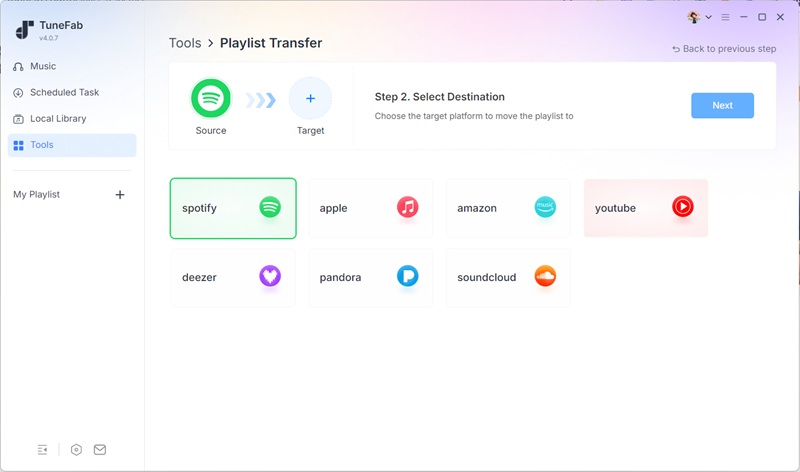
Step 2. Choose Apple Music as the Destination
Next, set Apple Music as the destination platform where your Spotify playlists will be recreated. You’ll be prompted to sign in with your Apple ID to authorize access. This connection allows the tool to match and rebuild your Spotify content directly within your Apple Music library.
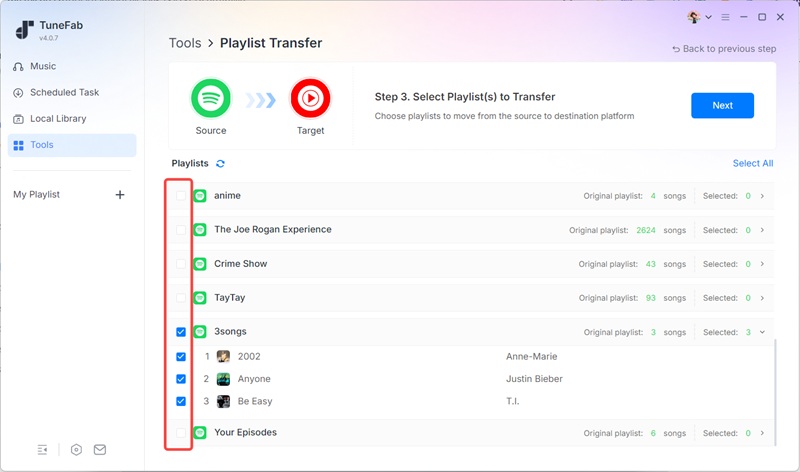
Step 3. Select Playlists or Songs to Transfer
Once both platforms are connected, you can choose the specific playlists, albums, or individual tracks you want to move. The tool provides full flexibility, so you can transfer everything at once or only selected content. This helps avoid unnecessary clutter and keeps your new library organized from the start.
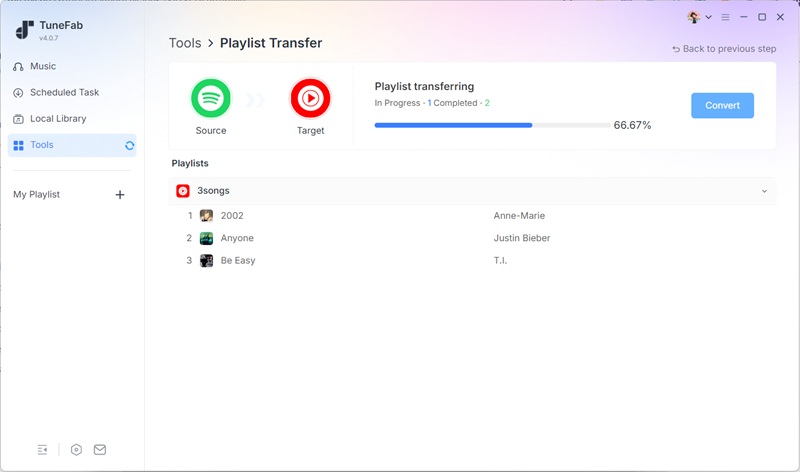
Step 4. Start the Playlist Transfer Process
Click the “Convert” button to begin transferring your Spotify library to Apple Music. During this process, TuneFab will scan and match each track with its corresponding version in Apple Music’s catalog. Depending on the number of songs, the transfer may take a few seconds to several minutes.
Step 5. Sync Apple Music Library to iTunes
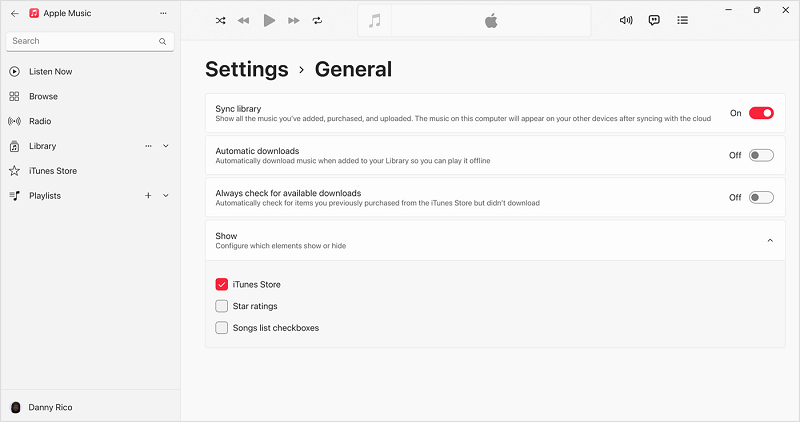
After the transfer is complete, you’ll need to enable library syncing to make the playlists appear in iTunes. On your iPhone or Mac, turn on “Sync Library” in Apple Music settings and make sure all devices are signed in with the same Apple ID.
For Windows users, open iTunes and go to Edit > Preferences > General, then enable “iCloud Music Library.” Once this option is activated, your transferred playlists will automatically sync to iTunes without requiring manual import or file management.
Part 3. How to Download Music from Spotify to iTunes (as MP3)
As mentioned above, to download Spotify playlists to iTunes, you need to use a reliable Spotify music downloader. TuneFab Spotify Music Converter is such a tool that can help you download Spotify to MP3, WAV, AAC, M4A, FLAC, ALAC, and AIFF without protection.
For those who have a large Spotify music library to transfer to iTunes, this program also provides you a batch download feature with 35X conversion speed, so that you can get Spotify downloads within seconds and import all of them to iTunes library effortlessly.
Main Features of TuneFab Spotify Music Converter:
- Output Spotify Music in iTunes-compatible formats: MP3, WAV, AAC.
- Batch Download Spotify at 35X speed, making the transfer in high efficiency.
- Make all content from Spotify to iTunes possible, such as songs, playlists, albums, podcasts, and audiobooks.
- Make songs transferred to iTunes in lossless quality.
- Keep downloaded Spotify songs with ID3 tag information, so that iTunes can organize and display music as personal preference.
No matter if you are using accounts with Spotify Premium or Spotify Free plan, you can use this converter to convert Spotify music to iTunes without the Spotify app. Now let's move on to the following full tutorials to learn about how it works.
Step 1. Download and Launch TuneFab Spotify Music Converter
Click on the "Try It Free" button to download the TuneFab Spotify Music Converter on PC/Mac. After downloading and installing, launch the program and you will see its main interface. Log in to Spotify with your account.
It supports both Free and Premium accounts, so you can download Spotify songs with TuneFab and enjoy offline listening without needing a Premium subscription.
Step 2. Add Spotify Music/Playlists/Albums to Convert
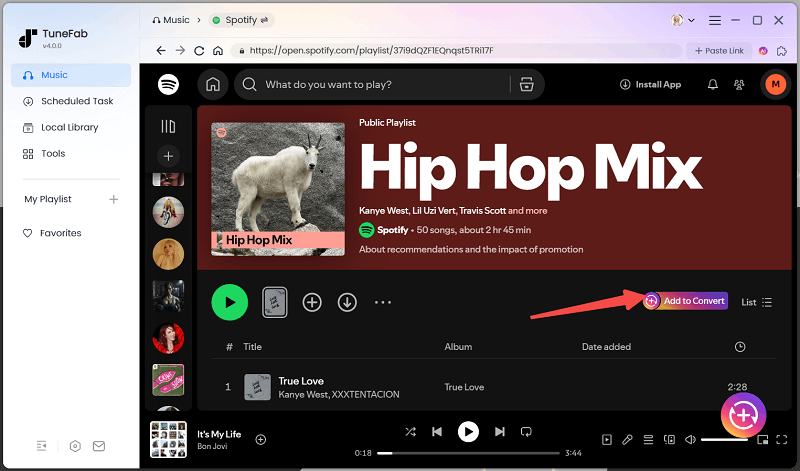
Now go to the Spotify music library and select the songs you want to convert. You can select the artist's name, playlist name, and album title and hit "Add to Convert".
Important Tip: To make the Spotify playlist to iTunes transformation simpler, it's recommended to manage the output folders before you get the conversion started. Create some new folders on your computer with the playlist name. When you are adding a playlist on this Spotify to iTunes converter, change the output folder on the app according to the name.
Step 3. Select Output Folder and Output Format
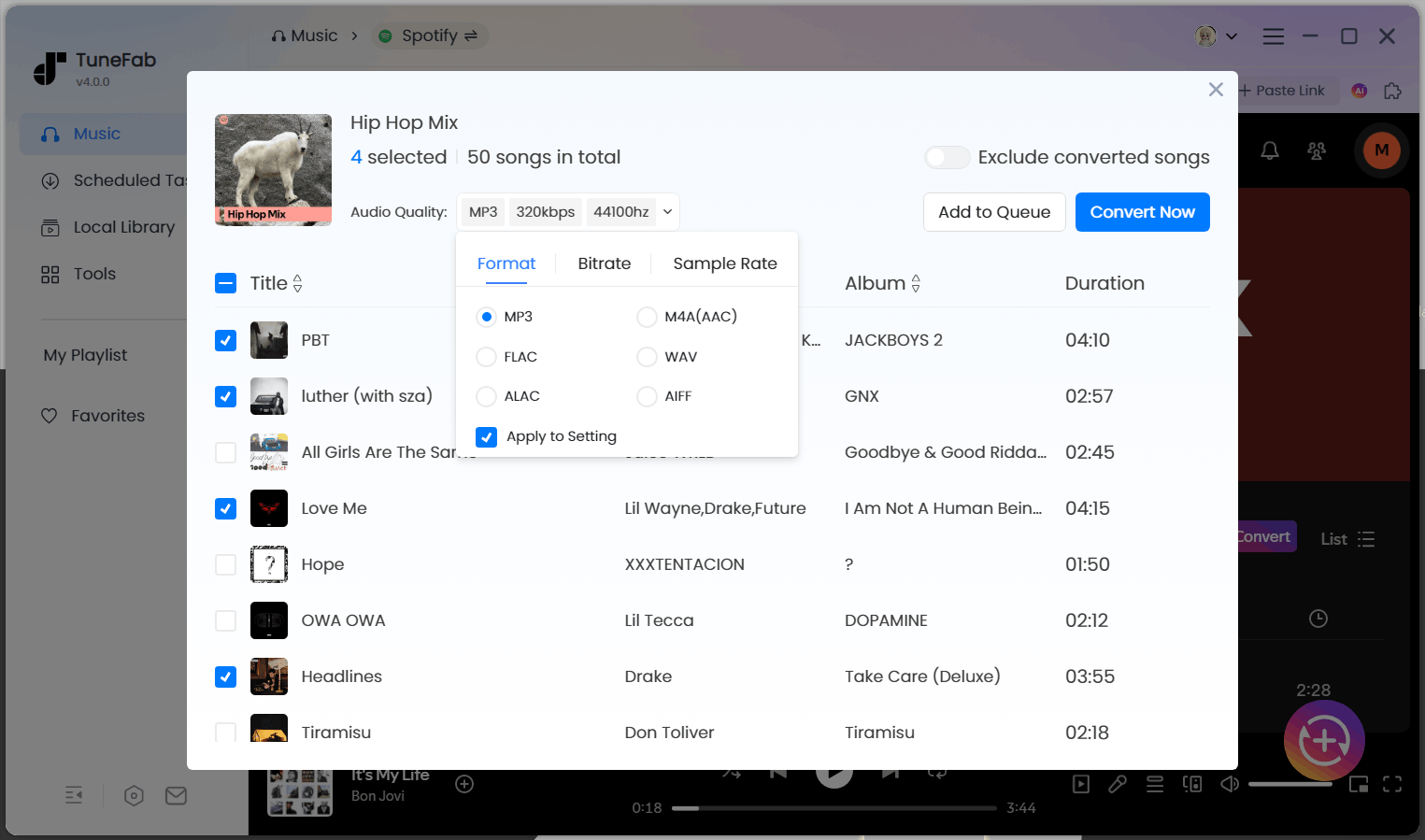
After adding Spotify songs to TuneFab, you can now choose the output format, sample rate, and bitrate to save the converted files.
Step 4. Start Converting Spotify Music to MP3
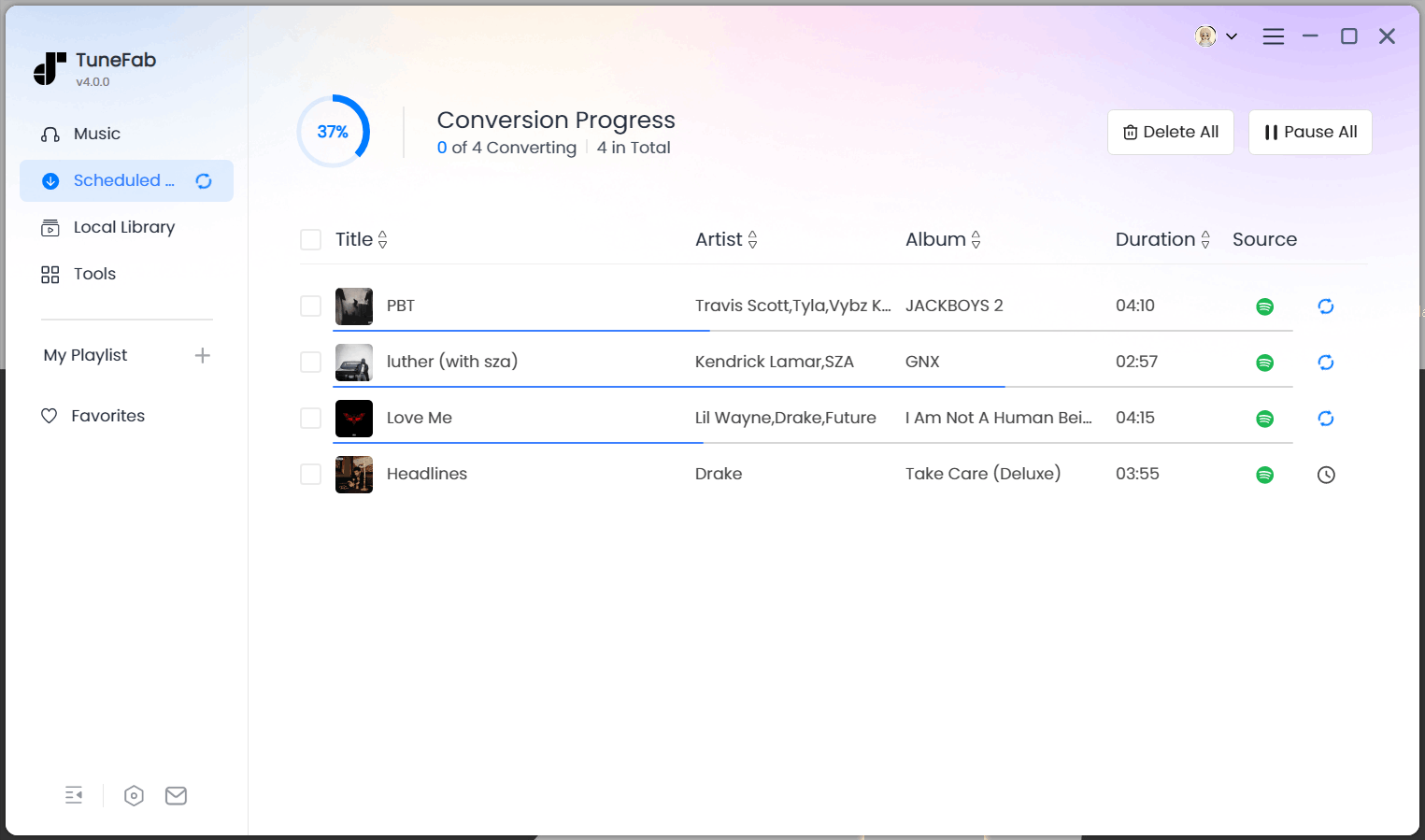
Once all settings are done, you can click on the "Convert Now" button to remove Spotify protection and get them as MP3 files.
Step 5. Convert Spotify Songs to iTunes
Launch iTunes/Apple Music on PC/Mac. Go to the Music section and right-click on "Music Playlists" and hit "New Playlist".
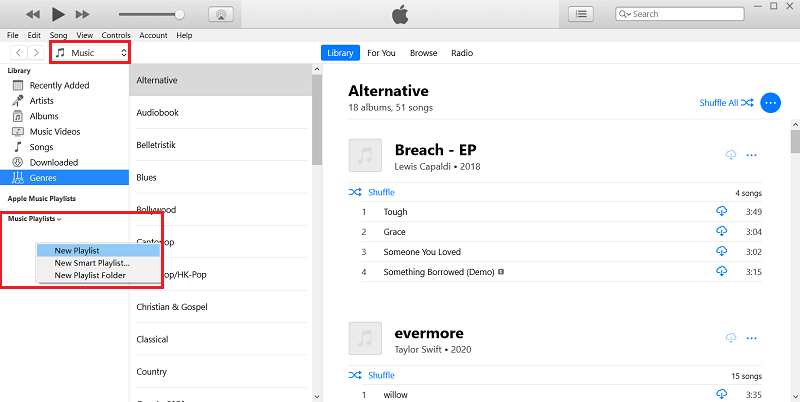
Then double click on the newly created playlist and rename it with the name you use on Spotify. Navigate to the TuneFab Spotify Music Converter output folders and look for the one with the name matching the playlist. Highlight all songs from it and drag and drop them to the playlist you created on iTunes.
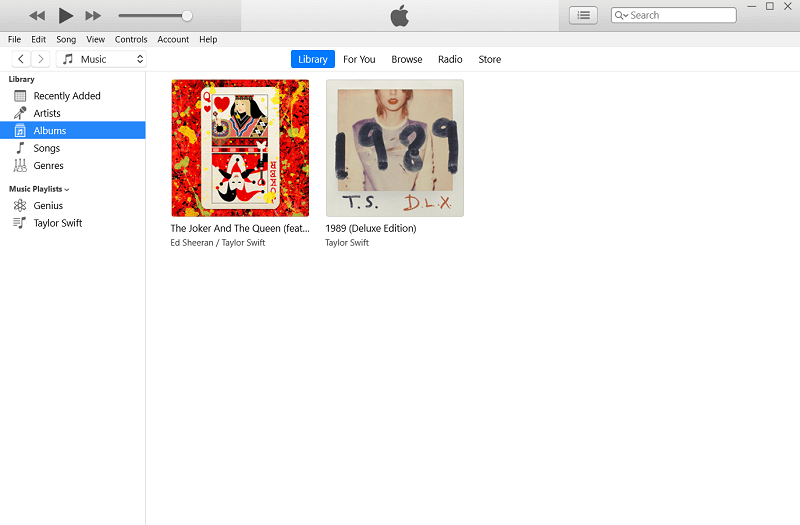
As all songs are ID3 preserved, songs transferred from Spotify to iTunes will be automatically matched on the "Album", "Artists" or "Genres" categories.
Part 4. Comparison of the 2 Methods
The two methods above both help move Spotify music to iTunes, but they work in very different ways and suit different needs. The playlist transfer method focuses on quickly syncing your library across platforms, while the audio conversion method is designed for downloading songs as local files for full control and offline use.
To help you choose the right option more easily, the table below compares their key differences in terms of usage, flexibility, and limitations.
| Method | Playlist Transfer | Audio Conversion |
| What it transfers | Playlists only | Actual audio files |
| Offline playback | ❌ No | ✅ Yes |
| Requires subscription | Apple Music required | ❌ Not required after download |
| Audio ownership | ❌ No | ✅ Yes |
| Setup difficulty | Very easy | Moderate |
| Best for | Library syncing | Permanent music storage |
Part 5. FAQs
Can You Transfer Music from Spotify to Apple Music?
Directly transferring music from Spotify to Apple Music is not officially supported by either service. Both Spotify and Apple Music have their own ecosystems and typically do not provide built-in tools or features to migrate playlists or songs from one platform to the other.
However, some third-party services, like Soundiiz, and TuneMyMusic, can help you move playlists and songs between music streaming platforms. With these programs, you can easily convert Spotify playlists to Apple Music online.
How to Back Up the Music Transferred from Spotify on iTunes?
After transferring songs from Spotify to iTunes with TuneFab Spotify Music Converter, you can back up them with the iTunes consolidation function.
Step 1. On iTunes, click "File > Library > Organize Library…".
Step 2. Check the box "Consolidate files" and then iTunes will make a copy of your iTunes library with folders well-organized. By default, you can find the copy from "Music" on your computer.
Will Audio Quality Be Affected When Converting Spotify Songs to iTunes?
Audio quality is generally not affected if you use a reliable Spotify to iTunes converter like TuneFab and choose appropriate output settings. Most professional tools can preserve the original sound quality during the conversion process, especially when exporting to high-bitrate formats like MP3 (320kbps) or lossless formats such as FLAC or WAV.
However, quality loss may occur if you select lower bitrate settings or use unstable tools. For example, converting to a low bitrate (e.g., 128kbps) will compress the audio and reduce clarity. To maintain the best listening experience in iTunes, it’s recommended to use higher bitrate options and avoid repeated conversions of the same file.
In short, the final audio quality largely depends on the converter you choose and the output settings you apply, rather than the conversion process itself.
Part 6. Conclusion
Although Spotify doesn’t support direct transfer to iTunes, it’s still possible to move your music using the right approach. Depending on your needs, you can choose between playlist transfer and audio conversion.
- Using TuneFab Playlist Transfer is the easiest way to sync your music library across platforms, making it ideal for users who want to keep their playlists without downloading files.
- Using TuneFab Spotify Music Converter, on the other hand, gives you full control by turning Spotify songs into local files, allowing offline playback, backup, and flexible management in iTunes.
If you prefer convenience and ecosystem syncing, transferring playlists to Apple Music is a quick solution. But if you want long-term access and true ownership of your music, converting Spotify songs to iTunes-supported formats is the more complete option.
By understanding these two methods, you can choose the one that best fits your listening habits and build a more flexible music experience beyond Spotify.

