


"Can Apple Music be used on Squeezebox?"
No, Squeezebox does not natively support Apple Music. There is no official Apple Music integration for Logitech Media Server, so you cannot simply sign in and play your Apple Music subscription on a Squeezebox player the way you can with some built-in music services.
That does not mean Apple Music is completely unusable on Squeezebox. In practice, users usually go in one of two directions: an AirPlay-style bridge from an Apple device, or a local-file method that works with a regular LMS music library. This guide explains both options, then focuses on the local-file method step by step.
Does Squeezebox Support Apple Music?
Not in a native way. The main issue is that Apple Music is not available as a built-in service inside the Logitech Media Server ecosystem, so it does not work like a normal direct music source on Squeezebox.
That is also why Apple Music tracks do not behave like ordinary local audio files in LMS. If you want to understand that part better, you can also read How to Remove DRM from Apple Music to learn why Apple Music songs do not work like regular MP3 files.
So if direct playback is not available, the real question becomes: what can you use instead?
How to Stream Apple Music on Squeezebox
If you still want to use Apple Music with Squeezebox, there are two practical directions people usually try.
Option 1. Use an AirPlay-Style Bridge
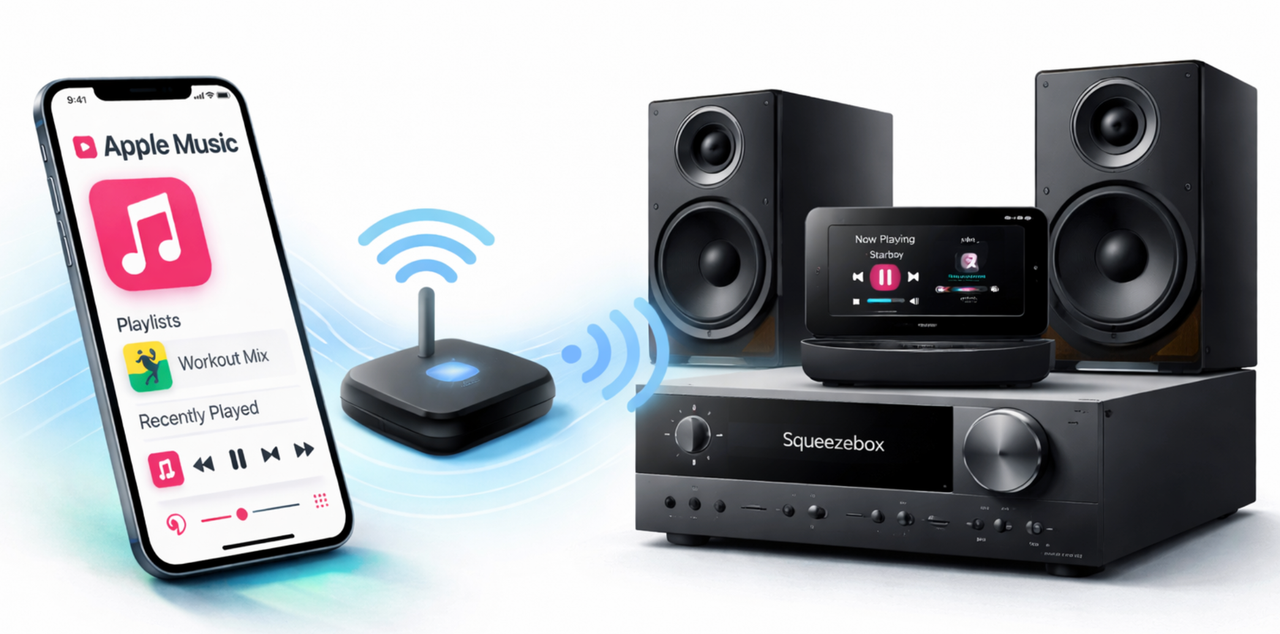
One option is to send Apple Music audio from an iPhone, iPad, or another Apple device to your Squeezebox setup through an AirPlay-style bridge or plugin. This is closer to live streaming and can be enough if your goal is simply to hear Apple Music through your Squeezebox speakers.
The trade-off is that this setup depends more on your Apple device, your network, and the bridge itself. It may also feel less like a normal built-in LMS music source.
Option 2. Add Apple Music as Local Files to Logitech Media Server
The other option is to prepare Apple Music tracks in a standard audio format that Logitech Media Server can scan as local music. This is usually the more practical route if you want a setup that is easier to manage inside your own LMS library.
If you need a standard audio file first, start by converting Apple Music to MP3. If you also want to understand why protected Apple Music tracks need extra handling, see our guide on how to convert protected Apple Music to MP3.
Instead of trying to stream Apple Music directly, you add the songs to your LMS music folder and play them like other local tracks in your collection.
For the rest of this guide, we will focus on this second method.
What to Know Before You Add Local Files to Squeezebox
Before you add Apple Music to Squeezebox as local files, there are a few limits worth knowing.
1. This is not native Apple Music playback on Squeezebox. You are not adding Apple Music as an official service inside Logitech Media Server. You are building a local-file workflow instead.
2. This method is different from an AirPlay bridge setup. If your goal is to stream Apple Music live from an iPhone or iPad to Squeezebox, an AirPlay-style route may be closer to what you want.
3. Logitech Media Server still needs to manage the library. So if your LMS setup runs on a computer or NAS, that system needs to stay available for your Squeezebox player to access the music files.
How to Add Apple Music to Squeezebox as Local Files
If you want Apple Music tracks to fit more naturally into your regular LMS library, the local-file route is usually the easier one to manage. The workflow is simple: save the songs in a format LMS can read, add that folder to your library, then rescan and play them on your Squeezebox.
One tool that can help with this process is TuneFab Apple Music Converter. It supports popular output formats like MP3 and M4A, while also serving as a lossless converter for audiophiles by allowing you to download Apple Music in FLAC and WAV formats. Plus, it preserves essential metadata such as song titles, artists, and album information, making your music library easier to organize and manage.
Step 1. Install TuneFab Apple Music Converter
Download and install TuneFab Apple Music Converter on your Windows or Mac computer, then open the program.
Step 2. Sign In and Add the Songs You Want
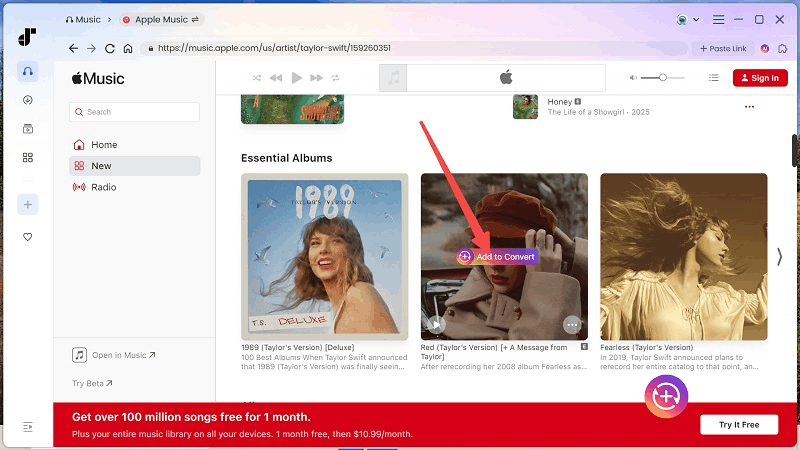
Sign in to the built-in Apple Music web player with your Apple Music account. Then add the songs, albums, or playlists you want to convert to the conversion list.
Step 3. Choose an Output Format
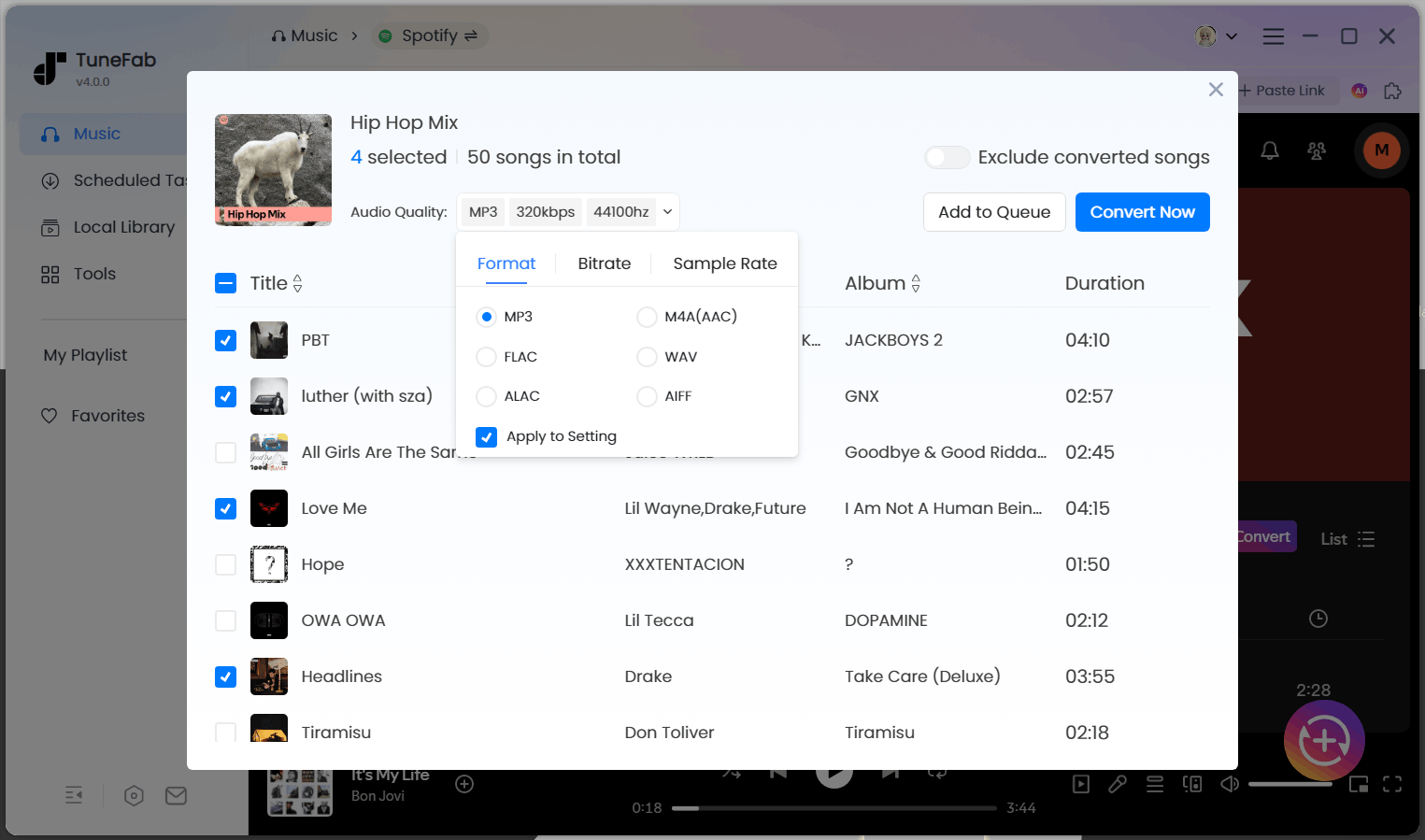
Choose an output format such as MP3. For most users, MP3 is the simplest choice for LMS compatibility. You can also adjust settings like bitrate, sample rate, and output folder if needed.
Step 4. Convert Apple Music Tracks
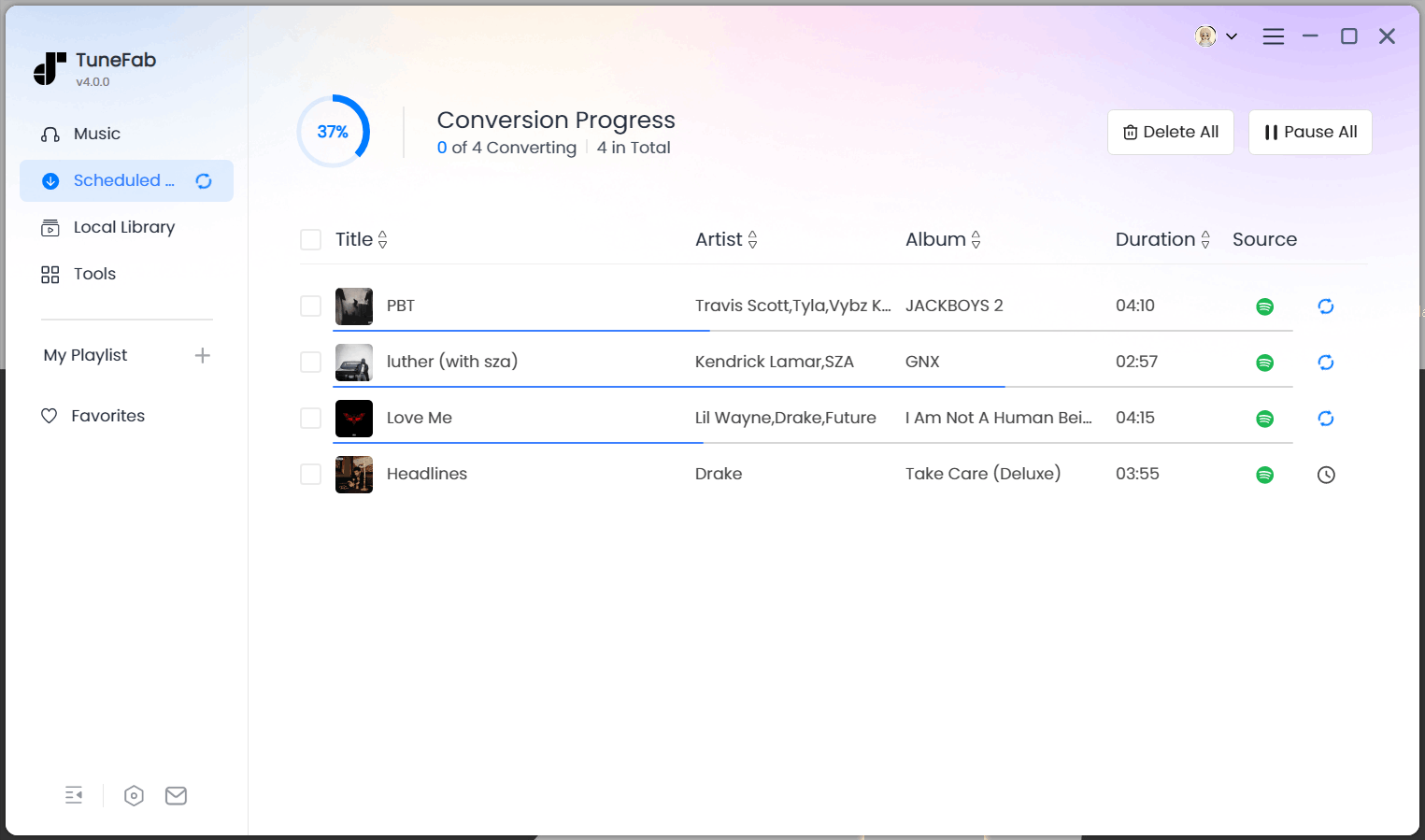
Click Convert to process the selected tracks. After the conversion finishes, your output files will be saved to the folder you selected.
Step 5. Add the Converted Files to Logitech Media Server
Open Logitech Media Server on the computer or NAS that manages your Squeezebox library. In the library settings, choose the folder that stores your converted music files, then run a library rescan so LMS can index the new tracks.
Step 6. Play the Files on Your Squeezebox
On your Squeezebox player, open your music library and browse to the newly scanned songs. Once LMS has indexed the folder, the converted tracks should appear in your library like other local music files.
Conclusion
Since Apple Music does not work as a native LMS service on Squeezebox, using a workaround is the practical way to make the two work together. In real use, that often means either an AirPlay-style bridge or a local-file setup.
If you want a solution that fits more easily into a regular Logitech Media Server library, the local-file method is usually the better choice. By converting Apple Music tracks to a standard format and adding them to LMS, you can play them on Squeezebox like other music in your collection.
To make that process simpler, TuneFab Apple Music Converter can help you save Apple Music songs in Squeezebox-friendly formats such as MP3, FLAC, WAV, and M4A. If you want an easier way to build and manage a local library for Squeezebox playback, it is a practical tool to start with.

