


Apple Music offers a vast library, but it also comes with platform restrictions, downloaded tracks remain tied to the app, and access disappears once your subscription ends. This is where third-party tools like Sidify Apple Music Converter come in, aiming to turn streaming tracks into local files that can be played freely across devices.
In practice, however, tools like Sidify are not as straightforward as they appear. From our hands-on testing and user feedback analysis, Sidify shares a very similar framework with products like NoteBurner and TunePat, using a comparable interface and workflow behind the scenes. While many users praise its ease of use and batch conversion capabilities, discussions on platforms like Reddit also reveal ongoing concerns around audio quality, real-time recording behavior, and trial limits.
In this review, we go beyond feature lists. Based on real testing, user reviews, and pricing structure analysis, we'll break down how Sidify actually performs, and more importantly, whether it's worth paying for based on your specific needs.
More Apple Music Converter Reviews:
HitPaw | TunesKit | ViWizard | UkeySoft | NoteBurner | DRmare | myFairTunes
- Real Test: What Happens When You Actually Use Sidify
- Where Sidify Works Well, and Where It Falls Short
- What Real Users Say (Beyond the Official Claims)
- Free Trial, Pricing, and Hidden Costs Explained
- Is Sidify Safe to Use? What You Should Know First
- If Sidify Doesn't Feel Right: A More Flexible Alternative
- Final Verdict: Who Should Use Sidify in 2026?
Real Test: What Happens When You Actually Use Sidify
To understand how Sidify Apple Music Converter performs beyond its marketing claims, we tested it using the free trial version. We focused on the parts that matter most to users when first trying the tool: login requirements, how tracks are added to the queue, available conversion modes, speed consistency, and the actual output quality under the free plan.
Since Sidify is officially available on both Windows and macOS, the goal here is not to test edge cases, but to replicate what a new user would realistically experience after installation.
Test Setup
- Devices: Windows 11 PC / MacBook Air (M2, 2022)
- Version: Free trial (unlocked features not enabled)
- Test Content: Individual songs + full playlists
- Platform Support: Windows & macOS
- Focus Areas: Login behavior, queue workflow, conversion modes, speed, and output results
Step-by-Step Experience (What We Actually Observed)
Instead of following an ideal "guide flow," here's how the process actually unfolded during testing:
Step 1. After opening Sidify, we were taken straight into an Apple Music web player-like interface. There was no need to choose a platform manually, which makes the onboarding feel straightforward.
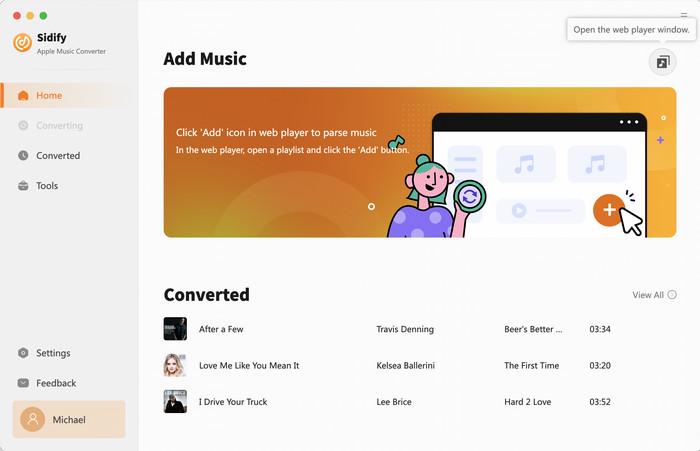
Step 2. When attempting to add songs, a pop-up suggested logging into an Apple Music account for a more stable experience. However, we were able to skip this step and still add tracks to the conversion queue without interruption.
Step 3. Inside the queue panel, three processing modes were available: Record Mode, YouTube Mode, and Intelligent Mode. This is one of the more flexible parts of Sidify, even in trial mode, users can see and switch between different conversion approaches.
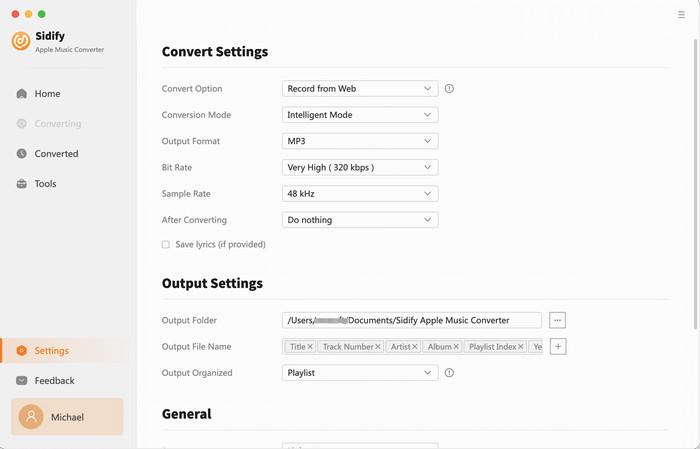
Step 4. Unlike some competing tools, Sidify allows users to adjust output format and parameters (e.g., MP3, sample rate) before upgrading. We selected "MP3" for testing. Clicking "Convert" immediately triggered a purchase reminder, which is expected for trial users.
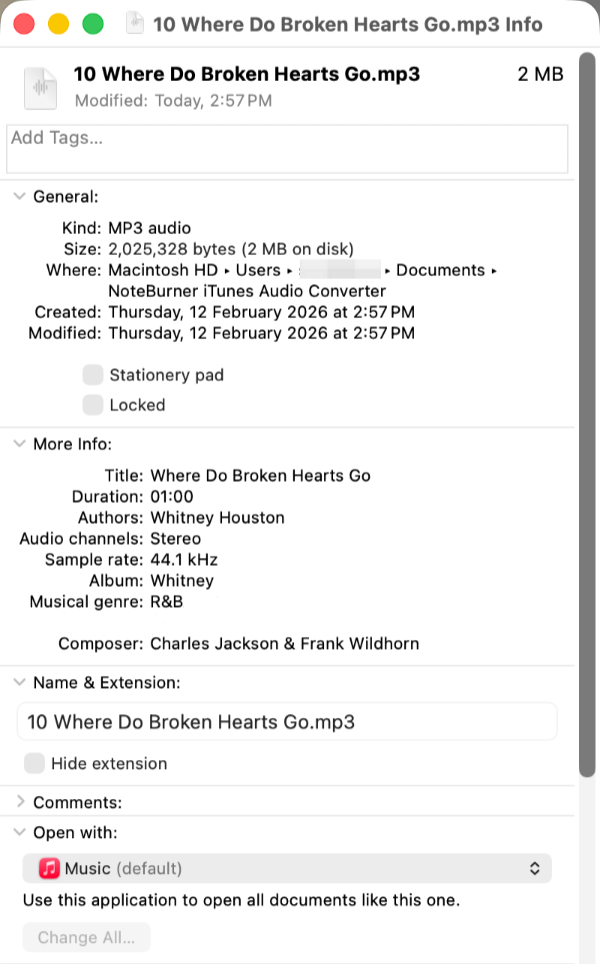
Step 5. Under the free plan, only the first 60 seconds of each track could be exported. In our test, converting a single song took nearly one minute to process one minute of audio, suggesting a near real-time conversion approach rather than accelerated processing.
Step 6. The exported files (MP3, 44.1 kHz) matched the selected settings. ID3 metadata, including artist, album, and cover artwork, was preserved correctly in all tested files.
Where Sidify Works Well, and Where It Falls Short
Based on our hands-on testing and user feedback, Sidify Apple Music Converter delivers a generally smooth experience for basic tasks — but its strengths and limitations tend to appear side by side. Here's how it performs across the areas that matter most in real use.
Interface & Ease of Use
Sidify offers a clean, structured interface that's easy to navigate, even for first-time users. The built-in web player layout feels familiar, and the conversion queue is clearly organized. Features like multiple conversion modes (Record, YouTube, Intelligent) also give the tool a more "advanced" feel compared to simpler converters.
However, the experience isn't entirely frictionless. Purchase prompts appear early in the process, and the need to deal with login suggestions and mode selection can slightly interrupt the otherwise straightforward workflow.
👉 Overall, it's beginner-friendly — but not completely seamless.
Output Settings, Formats & Audio Quality
One of Sidify's stronger points is its support for multiple output formats, including MP3, AAC, FLAC, WAV, and AIFF. More importantly, output settings (such as format and bitrate) are visible and adjustable even in the free version, which gives users a clearer idea of what they're getting before upgrading.
In our test, exported files (44.1 kHz) matched the selected settings, and ID3 metadata — including artist, album, and artwork — was preserved accurately.
That said, claims around "lossless" or high-fidelity output should be interpreted carefully. Some users have questioned whether the converted files truly match the original streaming quality, especially when using certain modes or platforms.
👉 In short, the tool offers flexibility — but not full transparency around audio fidelity.
Speed, Batch Handling & Stability
Sidify advertises conversion speeds of up to 10× faster, particularly for batch downloads. In practice, however, our test showed a different pattern: exporting a 60-second track took nearly the same amount of time, suggesting a conversion process closer to real-time under trial conditions.
User feedback on performance is also mixed. Some users report smooth batch processing for playlists, while others mention slower speeds, higher CPU usage, or occasional crashes — especially when handling larger libraries.
👉 Performance is usable for smaller tasks, but may become less predictable at scale.
Trial Limitations & Purchase Friction
The biggest limitation of Sidify lies in its free trial model. While it allows access to output settings and conversion modes, all exports are restricted to the first 60 seconds of each track.
In addition, purchase prompts appear immediately when starting the conversion process, which can make the experience feel gated early on.
This creates a subtle but important issue: although users can explore the interface and settings, they cannot fully evaluate real-world performance — such as full-track speed, stability, or output consistency — without upgrading.
👉 As a result, the trial feels more like a preview of features rather than a complete test of the product.
What Real Users Say (Beyond the Official Claims)
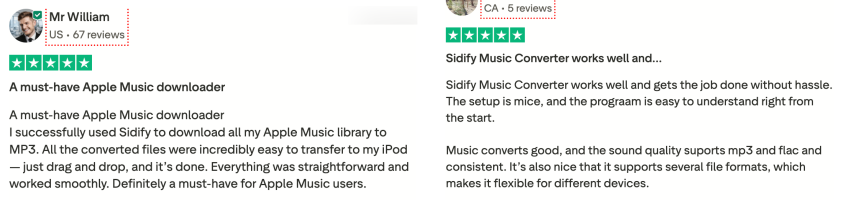
To avoid relying solely on short-term testing, we also examined aggregated user feedback from platforms like Trustpilot and Reddit, as well as recurring discussions across search results. While opinions vary depending on use cases, several patterns appear consistently.
What Users Often Like
Most users describe Sidify as easy to pick up, even without prior experience. The interface is clean and straightforward, and the process of converting songs or full playlists generally feels smooth once you get familiar with the workflow. Support for multiple output formats and consistent metadata preservation also make it practical for building and organizing a local music library, especially for playback on older devices.
Some users also highlight its overall stability for everyday use, noting that updates are relatively frequent and the software remains free from intrusive ads, which helps keep the experience focused and distraction-free.
Where Users Run Into Issues
At the same time, several recurring concerns show up across user discussions. The most common frustration is the 1-minute trial limitation, which makes it difficult to fully evaluate real performance before purchasing. Others mention occasional compatibility issues with certain converters or accounts, along with reports of crashes or instability after updates.
There are also concerns around subscription handling, including auto-renewal and refund experiences, as well as ongoing debates about whether the output quality truly matches "lossless" expectations in all cases. While these issues don't affect every user, they are worth considering before making a decision.
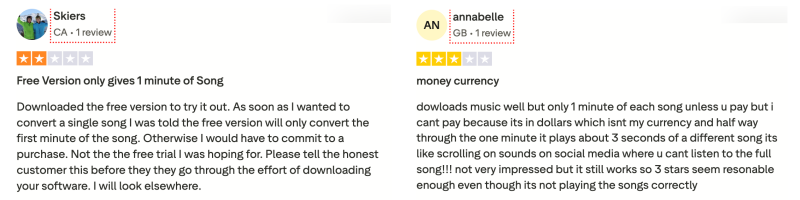
Overall, user feedback aligns closely with our testing: Sidify is not difficult to use and delivers acceptable results for basic needs, but its trial limitations, performance expectations, and post-purchase experience require a more careful evaluation before committing.
Free Trial, Pricing, and Hidden Costs Explained
Sidify Apple Music Converter does offer a free trial, but it comes with a major limitation: only the first 60 seconds of each track can be exported.
In practice, this makes the trial feel more like a way to explore the interface and settings rather than a true evaluation of performance. You can see how the tool works, but you won't be able to fully test full-track conversion speed, stability, or output consistency before paying.
Below are the current pricing plans based on Sidify's official website:
| Plan | Price | Platform | License | Updates | Refund Policy | Notes |
|---|---|---|---|---|---|---|
| 1-Year Plan | $44.95 | Single Platform | 1 PC / Mac | 1-Year Free Updates | 5-Day Money-Back | Auto-renewal enabled |
| Lifetime Plan | $89.90 | Single Platform | 1 PC / Mac | Lifetime Updates | 30-Day Money-Back | One-time payment |
| All-in-One Plan | $159.90 | 17+ Platforms | 1 PC / Mac | Lifetime Updates | 30-Day Money-Back | Best for multi-platform users |
From a pricing perspective, Sidify sits in the mid-to-high range compared to similar desktop converters, especially considering that full functionality can't be meaningfully tested before purchase. So the real question is not just "how much it costs," but whether the purchase model fits your expectations.
Worth it for:
- Users who are comfortable learning the interface first and evaluating performance after purchase
- Those who value visible output settings and multiple conversion modes
- People working with smaller music libraries or occasional conversions
Less ideal for:
- Users who want to fully test full-length conversion before paying
- Those sensitive to speed, consistency, stability, or real-world performance gaps
- Anyone concerned about subscription renewal or refund flexibility
In short, Sidify's pricing isn't unreasonable on its own, but the limited trial and "pay-before-full-test" model make it more suitable for users who are already fairly confident about what they're buying.
Is Sidify Safe to Use? What You Should Know First
From a software perspective, Sidify itself is generally considered safe when downloaded from its official website. It is a long-standing product with a large user base, and most users report a clean installation process without bundled ads or obvious security risks. However, as with any tool that interacts with streaming services, users should be cautious about where they download it from and avoid unofficial or "cracked" versions, which often carry malware or phishing risks.
At the same time, it's important to understand the broader context. Tools like Sidify process streaming audio for offline use, and their use may fall into a gray area depending on local copyright laws and platform terms. In addition, some users have raised concerns about account-related issues or subscription handling (such as auto-renewal and refunds). For these reasons, it's best to use such tools responsibly, stick to official sources, and review purchase terms carefully before committing.
If Sidify Doesn't Feel Right: A More Flexible Alternative
For many users, the hesitation around Sidify doesn't come from what it can do, but from how much you can actually verify before paying. With a 60-second export limit and performance that varies depending on mode and setup, it can be difficult to confidently judge its real efficiency, output consistency, or stability in longer tasks.
In that context, tools like TuneFab Apple Music Converter take a slightly different approach. Instead of limiting evaluation to partial outputs, it allows users to test full-track conversions early on, with visible output settings and a more consistent workflow. This makes it easier to understand how the software performs in real scenarios before committing to a purchase.
100% Secure
100% Secure
What the Experience Looks Like in Practice
From our testing, the workflow feels more direct and less interrupted:
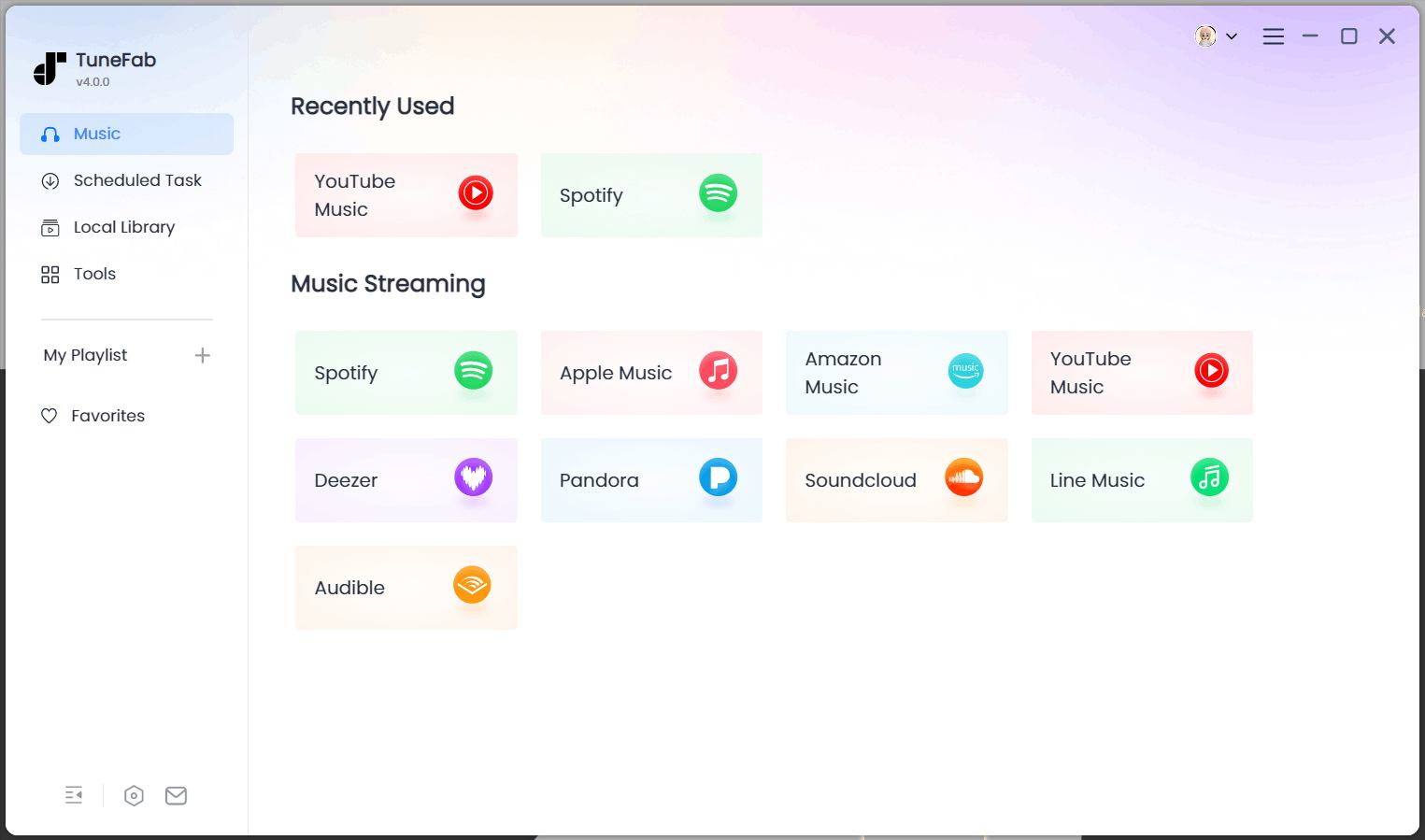
1. After launching the program, you can access the built-in Apple Music web player and start browsing immediately, without being forced into login steps upfront.
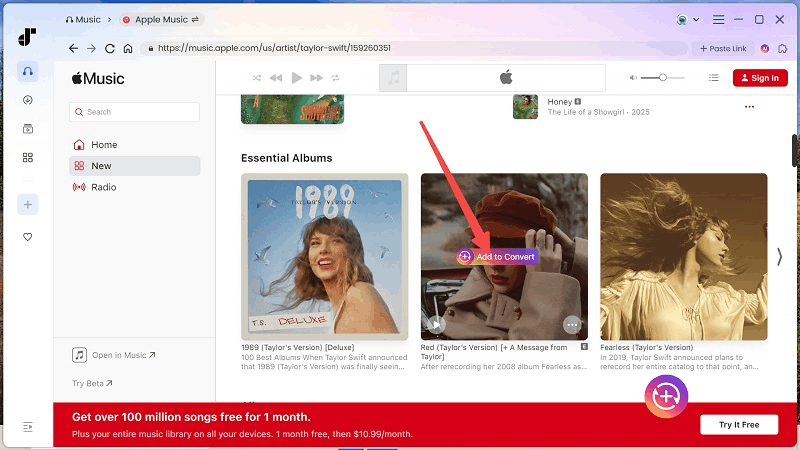
2. Songs and playlists can be added to the conversion list with a clear "Add to Convert" interaction, without extra prompts breaking the flow.
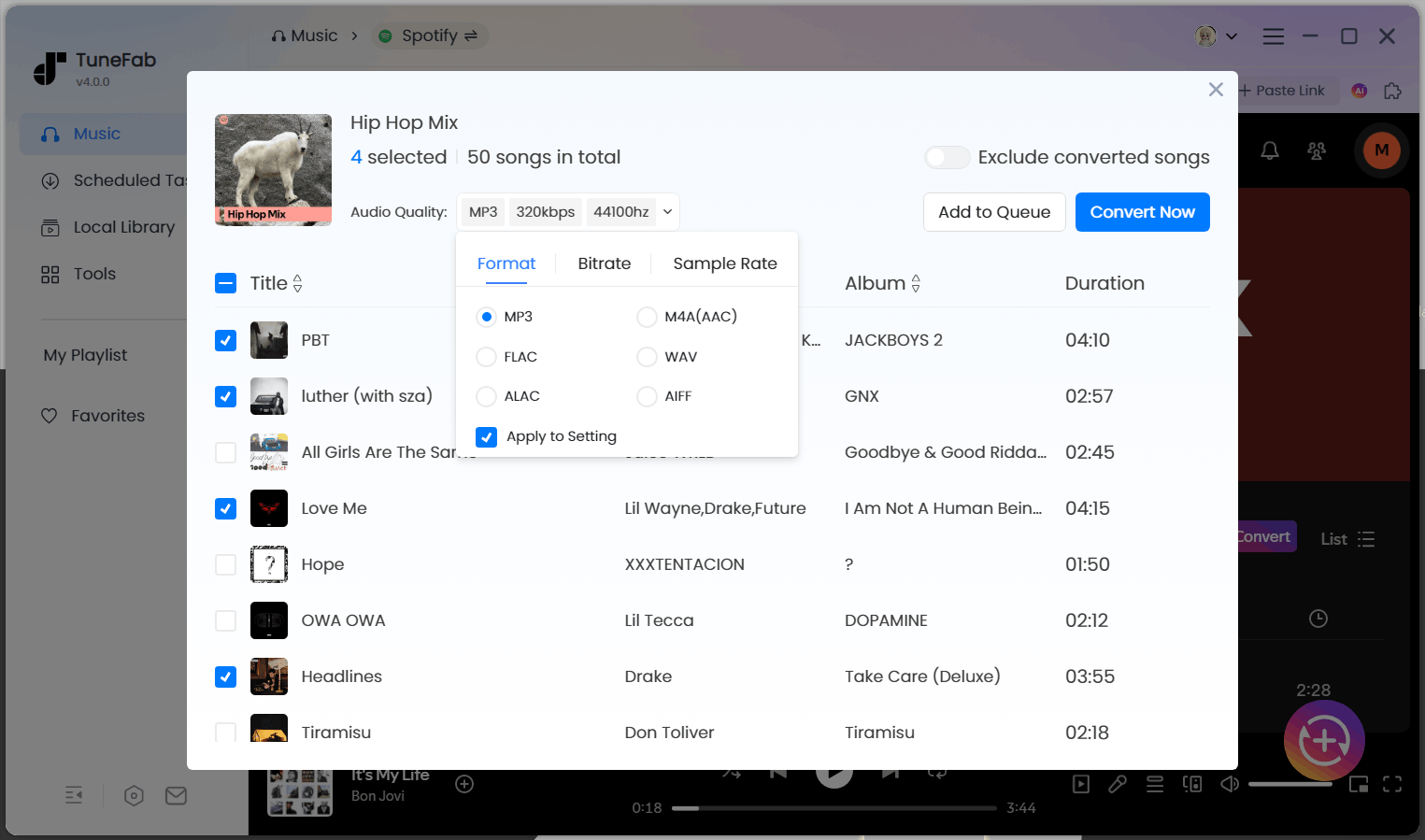
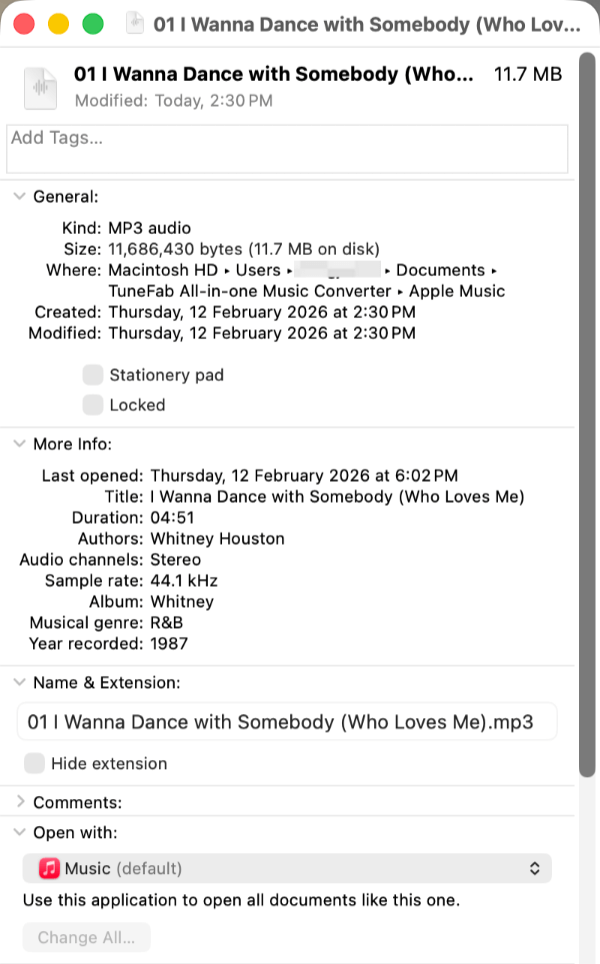
3. Output format and bitrate (e.g., MP3 at 320 kbps) can be selected before conversion, and these settings are reflected in the final files.
4. During testing, converting a single track took around 8 seconds, with stable results across multiple files.
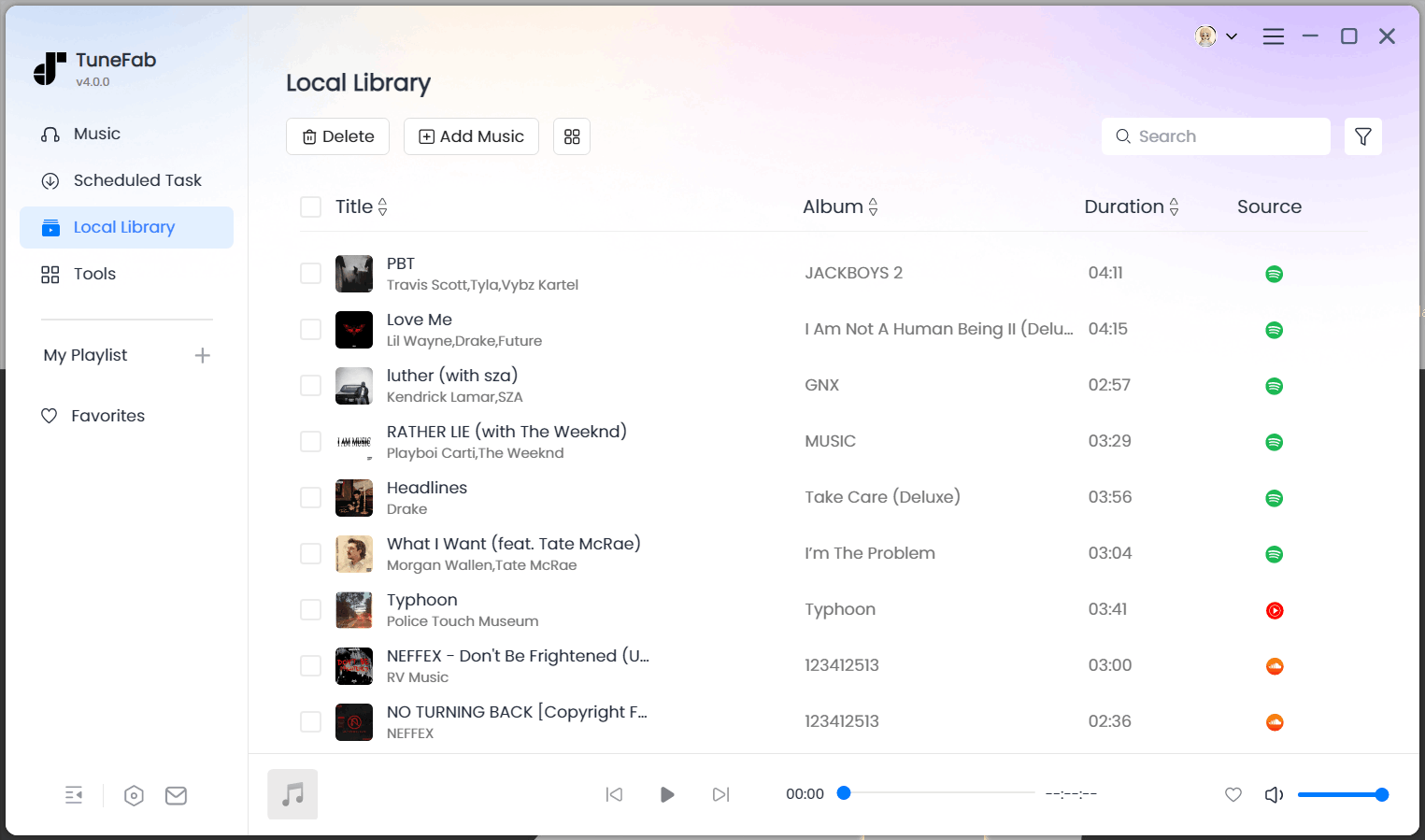
Another practical difference is how the trial behaves. Instead of restricting every track to a short preview, TuneFab allows exporting a limited number of full tracks, which gives a more realistic sense of speed, quality, and overall performance.
Tips: To help you to make a wiser decision, check out these posts too.
Final Verdict: Who Should Use Sidify in 2026?
Sidify Apple Music Converter makes sense for users who value a clean interface, straightforward workflow, and visible output settings from the start. It supports a wide range of formats and offers enough flexibility for basic conversion needs. If you're working with a smaller library, don't mind the 1-minute trial limitation, and are comfortable exploring the tool first before making a full decision, Sidify can be a reasonable option.
That said, if your priority is to fully evaluate performance before paying, such as testing full-length tracks, checking real conversion speed, or ensuring stable batch processing, Sidify's trial model may feel restrictive. In these cases, you will prefer TuneFab Apple Music Converter, which provides a more transparent trial experience with fewer interruptions, allowing for a clearer and more confident purchase decision.
TuneFab Apple Music Converter
One click to remove DRM from Apple Music without quality loss.

