


Quick Verdict: Who Should Try NoteBurner and Who Should Skip It?
NoteBurner Apple Music Converter is a feature-rich tool with flexible output formats and visible settings. However, the 60-second export limit and slightly complex workflow can make it harder to fully evaluate before buying. It's a better fit if you want detailed control and don't mind testing within limits, but it's less ideal if you prefer a more direct conversion experience. Thus, for a simpler, more transparent workflow, consider a better alternative - TuneFab Apple Music Converter.
100% Secure
100% Secure
For many Apple Music users, the need for a converter usually comes from a simple situation: you want to keep your music available offline, transfer it to other devices, or avoid being limited to the Apple Music app. That's where NoteBurner Apple Music Converter, referred to as NoteBurner iTunes Audio Converter on Windows, comes into play. Instead of just streaming, they promise to turn your playlists into local files you can keep and use more freely.
But before committing to any tool like this, what most people really want to know is not what it claims on paper, but how it actually feels to use. In this review, we'll focus on its real performance, including what you can and cannot test in the free version, where it works well, and where it starts to feel limiting. And if it doesn't quite match what you're looking for, we'll also walk you through a better alternative that offers a more straightforward experience.
How NoteBurner Apple Music Converter Works in Real Use
On paper, NoteBurner Apple Music Converter presents itself as a full-featured tool for converting Apple Music into common formats like MP3, AAC, FLAC, and WAV. It highlights flexible output settings, preserved audio quality, and fast conversion speed, along with additional tools such as CD burning and metadata editing. Compared to simpler converters, it positions itself as a more customizable solution if you want control over formats and parameters.
But beyond these feature highlights, what matters more is how the tool actually behaves during real use, especially in its free trial. Instead of focusing on instructions, the following walkthrough reflects what the experience feels like step by step, including where things work smoothly and where some friction appears.
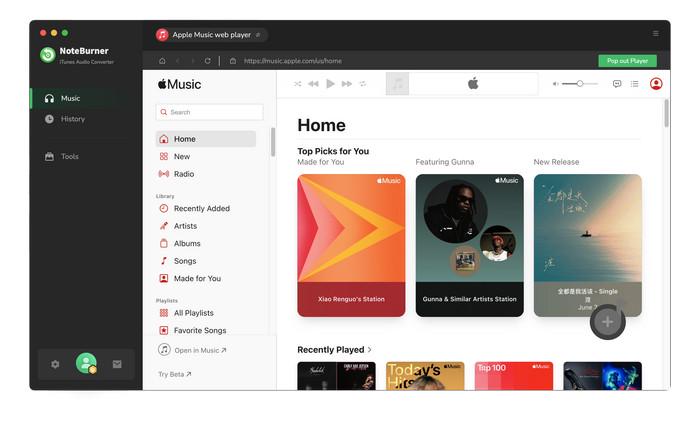
Step 1. You Can Add Tracks Without Logging In First
When we first launched NoteBurner, we were able to add songs to the conversion queue without logging into an Apple Music account. The software did display a prompt suggesting that signing in would provide a more stable experience, but it didn't strictly block access.
From a user perspective, this lowers the initial barrier — you can explore the interface and queue setup without committing right away. At the same time, the prompt also hints that skipping login may not deliver the most reliable workflow, leaving some uncertainty about how stable the process will be in longer sessions.
Step 2. The Conversion Queue Lets You Adjust Modes and Output Settings
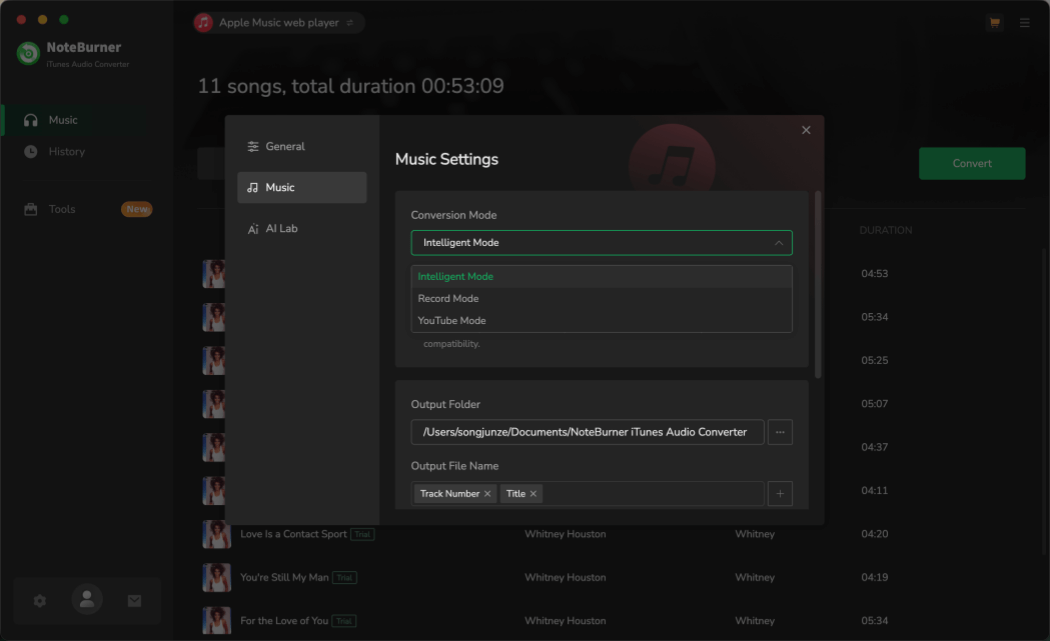
Inside the conversion queue, NoteBurner provides multiple processing modes, including Record Mode, YouTube Mode, and Intelligent Mode. Even in the free trial, output settings such as format and audio parameters remain visible and adjustable, which is not always the case with similar tools.
This level of transparency can be a plus for users who want to understand and fine-tune how their files are processed. However, it also adds a layer of complexity. For users who prefer a more direct "add and convert" workflow, the presence of multiple modes and settings may require a bit more time to get familiar with.
Step 3. The Purchase Prompt Appears Right Before Conversion
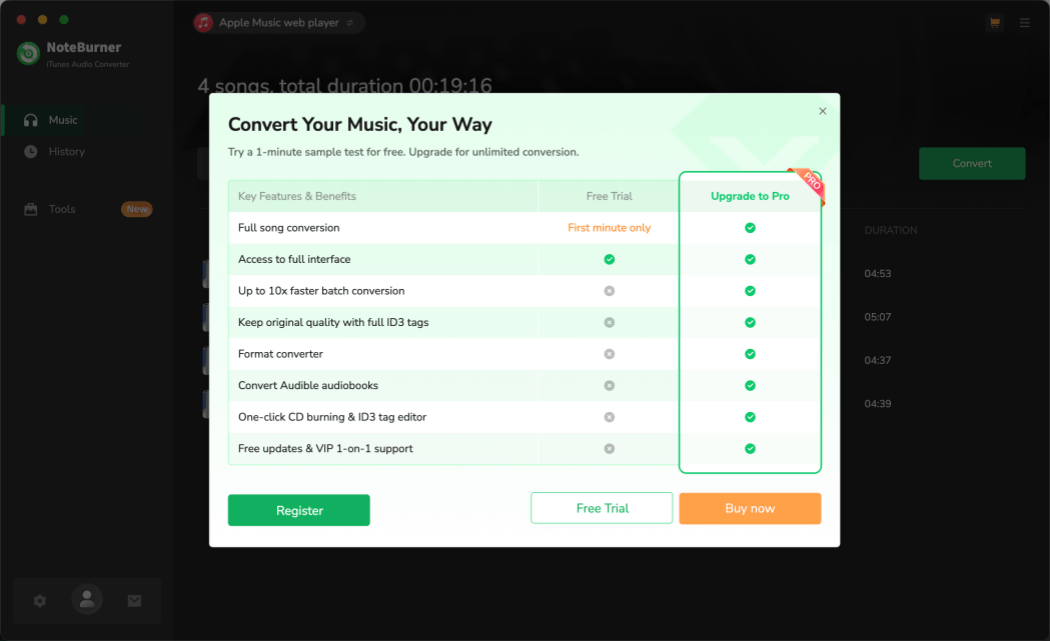
After setting everything up and clicking "Convert," a purchase prompt appears before the process continues. This doesn't prevent you from using the free trial, but it does interrupt the flow at a key moment.
In practice, this makes the trial feel more like a guided preview of the software rather than a fully smooth conversion experience. It allows users to understand the interface and logic, but also introduces a small amount of friction right when you expect the process to begin.
Step 4. A 60-Second Trial Export Took Nearly a Minute in Our Test
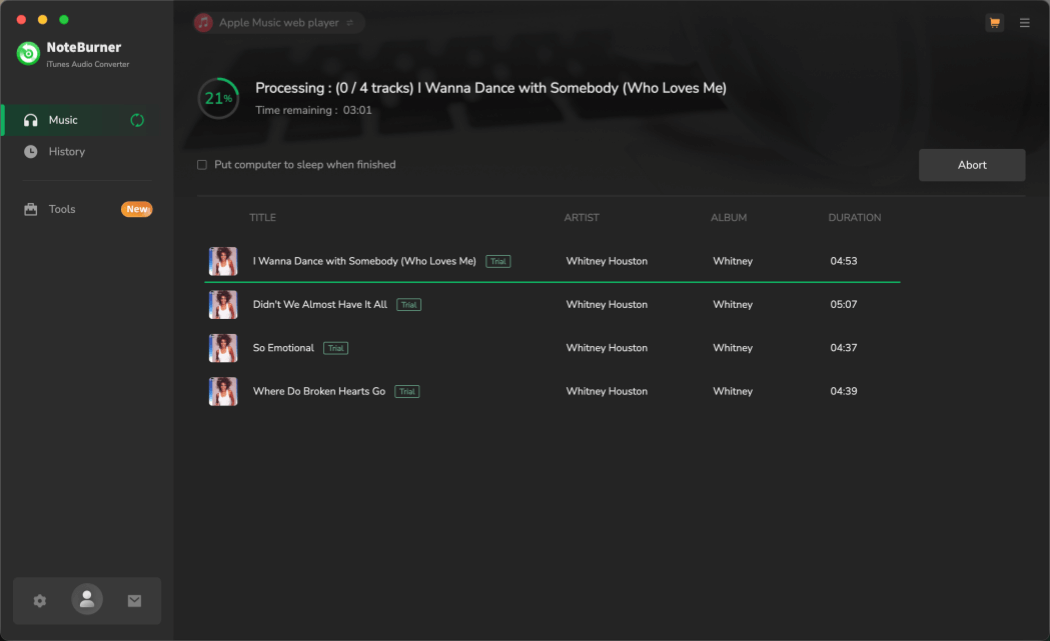
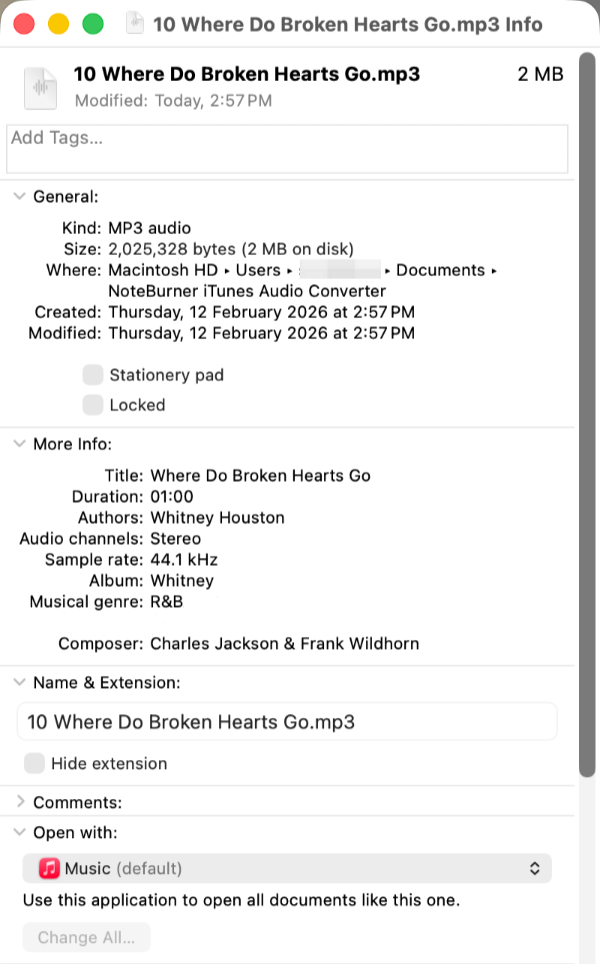
The free version of NoteBurner only exports the first 60 seconds of each track. In our test, converting that 60-second segment took close to a full minute to complete. While actual performance can vary depending on system conditions, network, and selected mode, this result didn't create a strong sense of efficiency during the trial.
More importantly, the limitation itself makes it difficult to fully evaluate real-world performance. Because you can't process full tracks, it's harder to judge how the software handles longer files, batch conversions, or overall workflow efficiency in practice.
Step 5. ID3 Tags and 44.1 kHz Output Were Preserved Correctly
On the output side, the results were consistent with the selected settings. The exported file (MP3 format, 44.1 kHz) matched the configured parameters, and ID3 metadata — including track title, artist, and album artwork — was preserved correctly.
So while the free trial is restrictive, it still gives users a basic way to verify output settings and metadata handling before paying.
What NoteBurner Does Well and Where It Falls Short
After going through the actual workflow, a clearer picture starts to emerge. NoteBurner isn't a tool that fails to deliver. In fact, many of its core features work as expected. But at the same time, the overall experience reveals a few trade-offs that may affect how different users perceive its value. Instead of looking at features in isolation, it makes more sense to evaluate where the tool feels strong and where it may feel limiting in real use.
What Stands Out and What May Feel Limiting in Real Use
From a practical standpoint, NoteBurner Apple Music Converter comes across as a fairly mature and capable tool rather than an unfinished one. It covers most standard conversion needs and offers a level of control that some users will appreciate.
What stands out:
- Flexible output formats with visible settings, even in the free trial
- Consistent output quality, with ID3 metadata and audio parameters preserved correctly
- Additional built-in tools (like tag editing and CD burning) for more advanced use cases
- A feature-rich setup that suits users who prefer more control over the conversion process
Where it may feel limiting:
- The 60-second trial makes it hard to fully evaluate real performance before paying
- Multiple modes and layered settings can introduce extra learning time
- Purchase prompts and workflow interruptions add small but noticeable friction
- The overall experience may feel less direct compared to simpler, more streamlined tools
It's also worth noting that NoteBurner shares a very similar interface and conversion logic with Sidify, as both belong to the same software family. If you are familiar with either one, the experience here will likely feel consistent, including both its strengths and its limitations.
What Real Users Say: Positive Feedback and Common Concerns
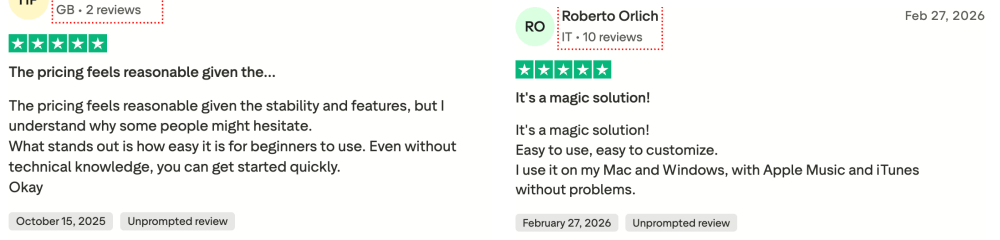
Beyond hands-on testing, user feedback paints a fairly consistent picture. Many users describe NoteBurner as easy to navigate, with a clean interface and a setup process that doesn't require much technical knowledge. For everyday use, it's often seen as stable and reliable, especially when handling playlists or organizing larger music libraries.
What users appreciate:
- Simple and intuitive interface, even for beginners
- Stable performance for batch conversion and library management
- High output quality with preserved metadata
- Consistent results across different formats and long-term use
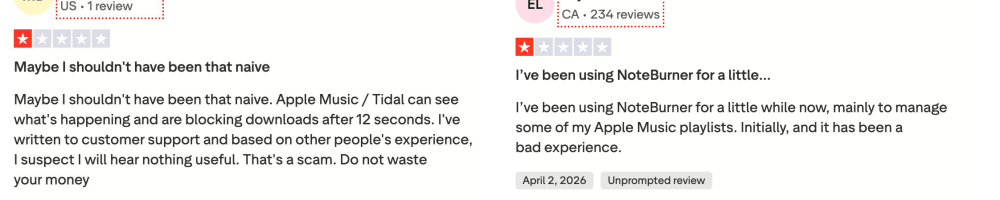
At the same time, some recurring concerns also come up in reviews, and they largely align with what we observed during testing.
Common concerns:
- The 60-second free trial is too limited to properly evaluate the tool
- Occasional issues with specific tracks or slower performance after updates
- Customer support is generally helpful, but response times can vary
- Some users mention minor workflow friction during setup or conversion
Overall, user feedback reinforces a balanced conclusion: NoteBurner is a capable and reliable tool for many use cases, but its limitations, especially around the free trial and evaluation depth, can make it harder for users to feel fully confident before committing to a paid plan.
Is NoteBurner Free? Can You Use It Safely and Legally?
After understanding how NoteBurner performs in real use, the next question becomes more practical: can you actually use it for free, and is the trial enough to make a decision? Pricing and usage limitations play a big role here, especially for users who want to test the tool before committing to a paid plan.
NoteBurner Pricing and Free Trial: What You Can Really Use
NoteBurner offers both a free trial and paid licenses, but the difference between them is more significant than it may first appear. While the free version is available to download and use, it functions more as a limited preview than a fully usable solution.
Here's a simplified breakdown of its current pricing plans:
| Plan | Price | Billing | What You Get | Limitations |
| Free Trial | $0 | Free |
• Full interface access • Adjustable settings • Add & process tracks |
⚠ First 60 seconds only ⚠ Purchase prompt before conversion ⚠ Not enough for full testing |
| 1-Year License | $44.95 | Subscription |
• Full-length conversion • 1-year free updates • Batch conversion support • Windows & macOS |
⚠ Auto-renewal enabled ⚠ One device only |
| Lifetime License | $89.90 | One-time |
• Unlimited conversion • Lifetime updates • No subscription • Full feature access |
⚠ Higher upfront cost ⚠ One device only |
So, can you use NoteBurner for free? Yes, but only to a limited extent. The free trial lets you explore the interface, adjust output settings, and process tracks, but because it only exports the first 60 seconds of each song, it doesn't provide a complete picture of how the software performs in real scenarios. You can verify that the tool works, but it's much harder to judge efficiency, batch processing, or overall workflow before upgrading.
Is NoteBurner Safe and Legal to Use?
From a software safety perspective, NoteBurner is generally considered safe when downloaded from its official website. It's a desktop application without intrusive ads or bundled malware, and most users report stable performance during normal use. As with any tool that involves account access, it's still recommended to use strong passwords and download only from trusted sources to avoid potential risks.
When it comes to legality, the situation is more nuanced. Tools like NoteBurner process streaming audio and create local copies, which may conflict with the terms of services like Apple Music. In some regions, making personal backups may fall into a gray area, while redistributing or sharing converted files is typically not allowed. Ultimately, users are responsible for how they use such tools and should be aware of local regulations and platform policies before proceeding.
More Apple Music Converter Reviews:
HitPaw | TunesKit | ViWizard | UkeySoft | Sidify | DRmare | myFairTunes
If NoteBurner Doesn't Fit Your Needs: Best Alternative
For some users, NoteBurner works as expected. But as we've seen, its limitations often show up during the evaluation stage, especially when the free trial doesn't allow full-length testing, or when the workflow feels slightly interrupted by prompts and layered settings. If your goal is to quickly test, convert, and move on without overthinking the setup, these small frictions can start to matter.
That's where a more straightforward alternative like TuneFab Apple Music Converter comes in. Instead of relying on external apps or multiple modes, it offers a built-in Apple Music web player, allowing you to browse, add, and convert tracks in one place. It supports batch conversion, multiple output formats (MP3, M4A, FLAC, WAV), and preserves audio quality and ID3 metadata, all within a more streamlined workflow.
Why Some Users Prefer TuneFab Over NoteBurner:
- No 60-second trial limit - test 3-minute full tracks before purchasing
- Built-in Apple Music web player - no iTunes or extra setup needed
- Simpler workflow - fewer modes, less setup friction
- Batch conversion feels more direct and stable
- Output settings are clear without adding complexity
How to Convert Apple Music with TuneFab (Simpler Workflow)
Step 1. Launch TuneFab Apple Music Converter and enter the built-in web player. Simply log in to your Apple Music account, no need to install iTunes or switch between different modes.
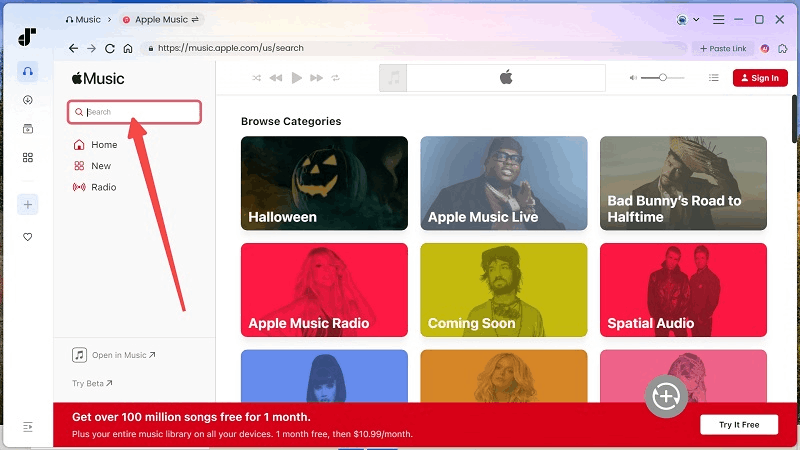
Step 2. Browse your library just like in Apple Music and add tracks to the conversion list. The process is straightforward, without extra prompts or interruptions during setup.
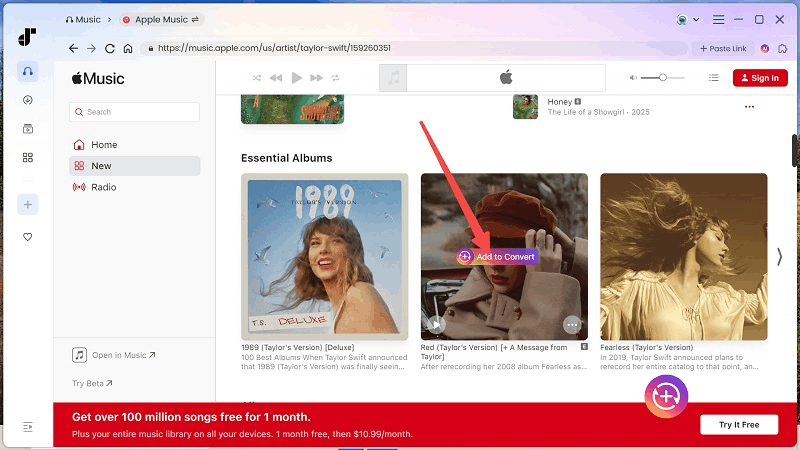
Step 3. Select your preferred format (MP3, M4A, FLAC, WAV) and adjust quality settings if needed. All options are clearly displayed without requiring mode switching.
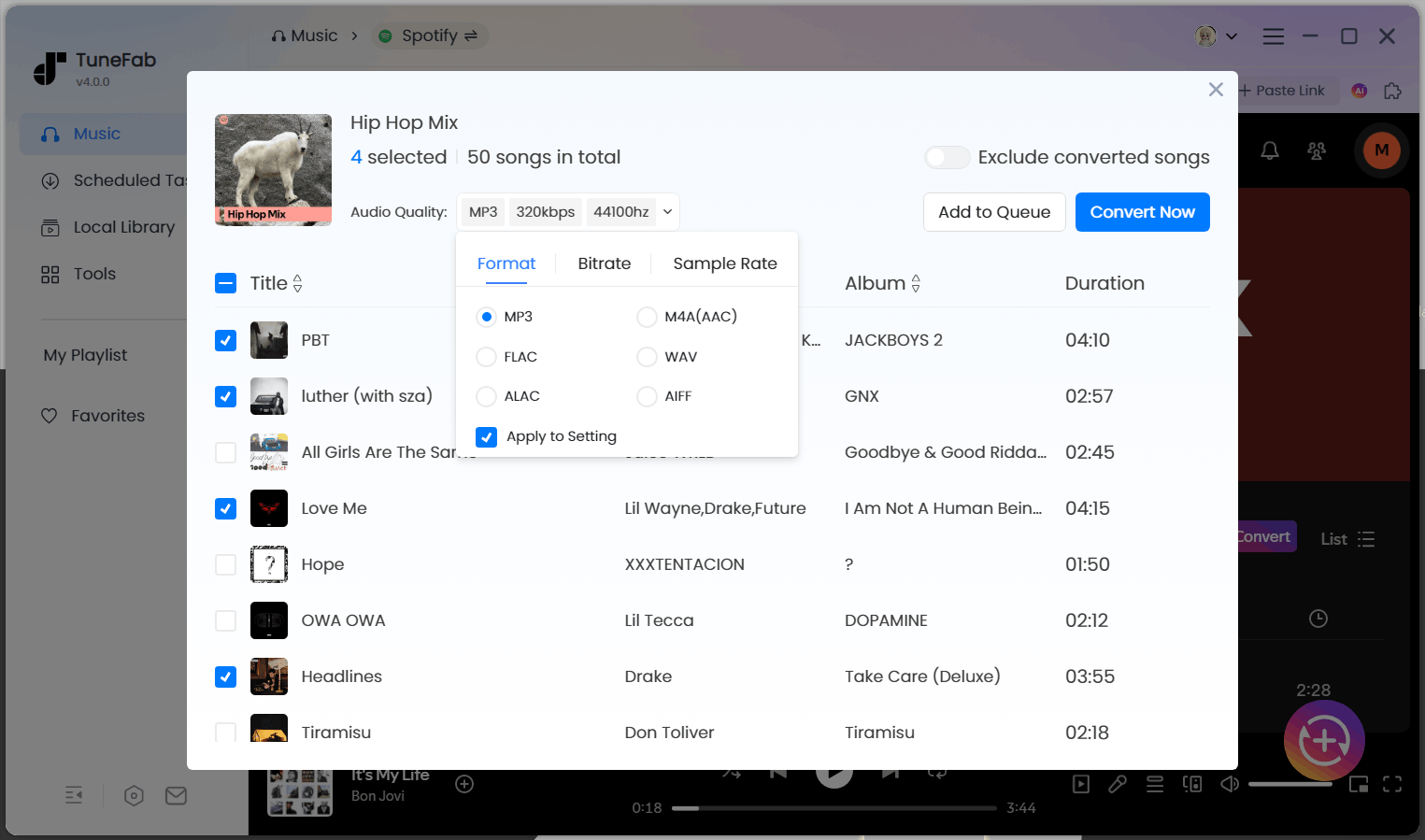
Step 4. Click "Convert Now" to process your selected tracks. Unlike limited trials, you can test full songs (up to 3 minutes) and batch conversions to better understand real performance.
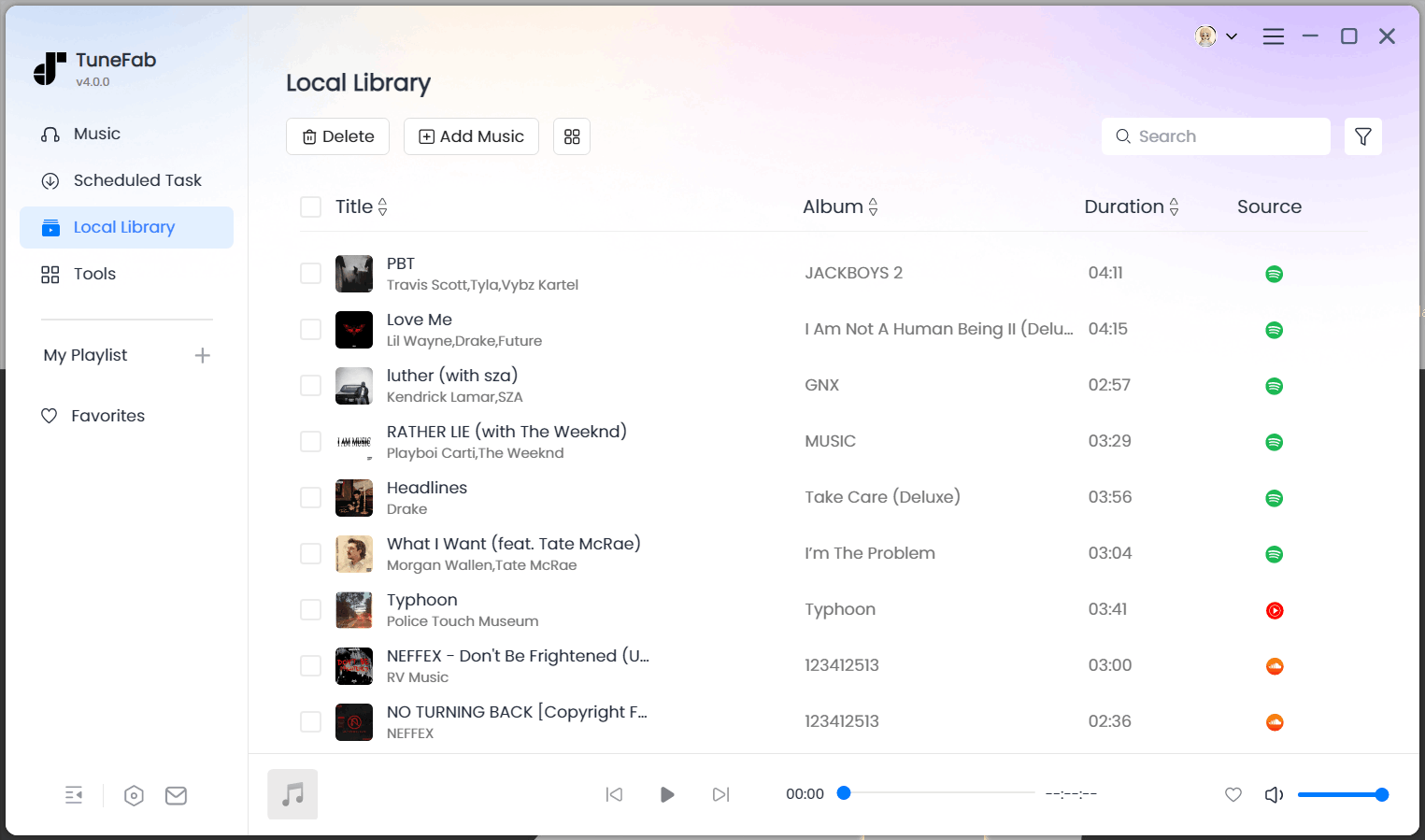
Further Info: To learn more about the tools, check out these posts as follows.
TuneFab vs. NoteBurner: Which Is Better?
When choosing between NoteBurner and TuneFab, the difference isn't just about features, but is more about how you prefer to use the tool. Both are capable Apple Music converters, but they take slightly different approaches in terms of workflow, trial experience, and ease of use.
| Criteria | NoteBurner | TuneFab |
| Setup & Workflow | Layered workflow (modes + prompts) |
Direct workflow (built-in web player) |
| iTunes Required | Yes (mode dependent) |
No |
| Free Trial | ⚠ 60 sec limit | ✔ Full track test |
| Formats | MP3 / AAC / WAV FLAC / AIFF / ALAC |
MP3 / M4A WAV / FLAC |
| Audio Quality | High quality | Lossless up to 320kbps |
| Batch Conversion | Supported | Supported (simpler flow) |
| Ease of Use | Moderate (more settings) |
Easy (clean workflow) |
| Best For | More control & formats |
Simple use & full testing |
If you care about flexible settings and don't mind a more layered setup, NoteBurner can still meet your needs. But if your priority is a more direct workflow, fewer interruptions, and a clearer way to test before paying, TuneFab tends to feel more straightforward in practice.
Final Verdict: Is NoteBurner Worth Trying in 2026?
NoteBurner Apple Music Converter remains a capable and feature-rich tool, especially for users who value flexible output formats and visible settings. It does what it claims in most cases, and for those who don't mind working within its trial limits, it can still be a workable option to explore.
That said, the main challenge lies in how much you can actually evaluate before paying. With the 60-second trial restriction and a slightly layered workflow, it may be harder for some users to confidently decide whether it fits their long-term needs. If your priority is to fully test performance, keep the setup simple, and move through the process with fewer interruptions, a more straightforward alternative like TuneFab Apple Music Converter may offer a better overall experience.
TuneFab Apple Music Converter
One click to remove DRM from Apple Music and convert songs to MP3

